Home/opinion/Zeldin’s EPA Rollback of the Clean Power Plan Sparks a Public Fight With Christine Todd Whitman
opinion
Zeldin’s EPA Rollback of the Clean Power Plan Sparks a Public Fight With Christine Todd Whitman
An American Thinker op-ed hails Lee Zeldin's dismantling of the Obama-era Clean Power Plan and dismisses former Bush EPA chief Christine Todd Whitman's warnings about children's health as a 'false dichotomy.'
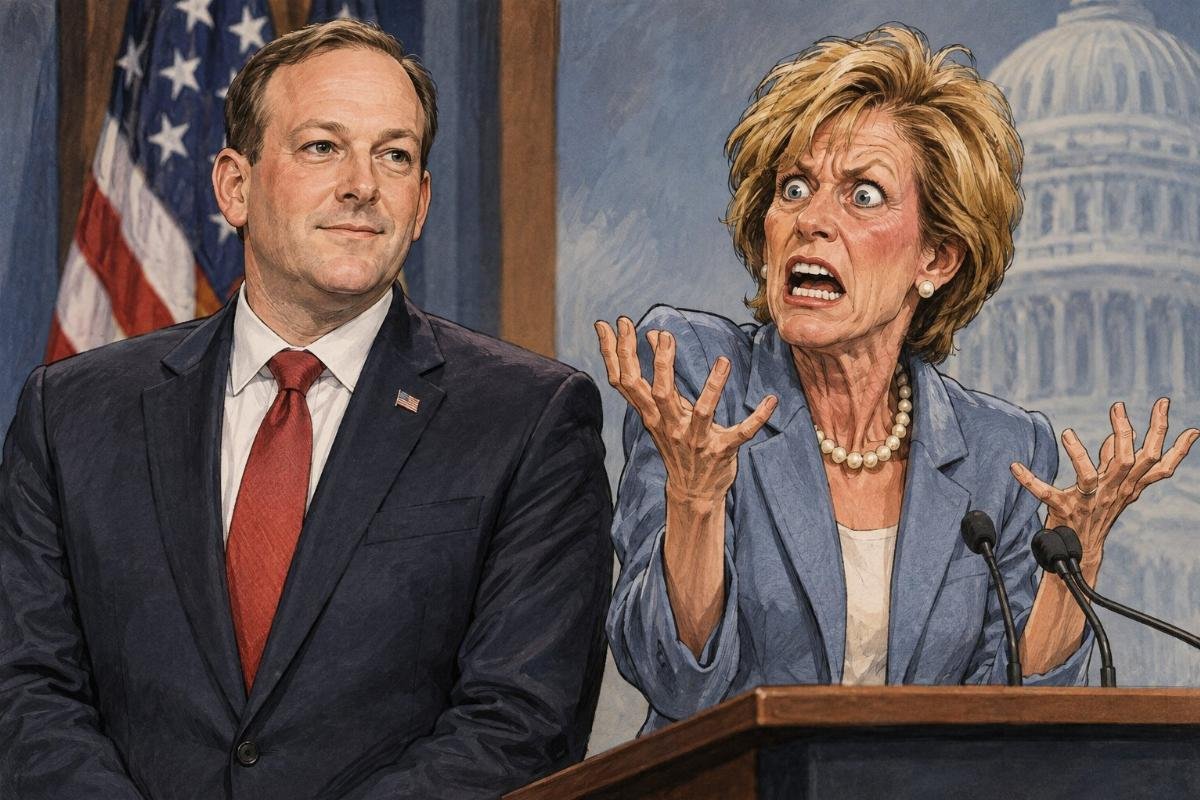
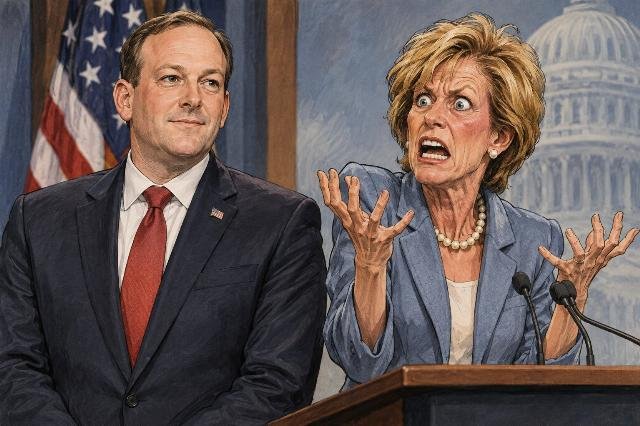
The fight over the federal government’s authority to regulate power-plant emissions has a new flashpoint, and it is playing out as a public argument between two EPA administrators from opposite ends of the Republican coalition. Writing in American Thinker, commentator Bill Ponton frames the contrast between current EPA administrator Lee Zeldin and George W. Bush’s former EPA chief Christine Todd Whitman as emblematic of a broader realignment — one that has moved the party away from what he calls the “uniparty” consensus on environmental regulation.
At the center of the dispute is the Clean Power Plan, the Obama-era rule that sought to limit carbon emissions from existing power plants. Ponton, whose September 21, 2026 column anchors the outlet’s culture and EPA coverage, describes the rule as “a ticking time bomb” that would have stripped the country of reliable electric power, and credits Zeldin with defusing it. He characterizes the rollback as a victory of “sanity over madness” and “an historic reversal of the decades-long encroachment by the EPA into every facet of American life.”
Not everyone sees it that way. In an interview this week, Whitman — who ran the agency from 2001 to 2003 — did not hold back.
“It’s unconscionable. I mean, what they’re doing is really hurting human health, and the impact is particularly strong on the elderly and on children who metabolize differently. And we’re putting their futures in danger, there’s just no question about it, I do not understand this.”
Whitman went further, arguing that the agency under Zeldin has abandoned its founding purpose. “EPA’s sole mission is to protect human health and the environment, and now they’re saying human health doesn’t matter, it’s only the economics,” she said, pointing to Zeldin’s stated position that the agency would weigh an industry’s bottom line in regulation rather than human health impacts.
Ponton’s response is blunt. He accuses Whitman of “promulgating a false dichotomy, the logical error of presenting a thriving economy and high standards of human health as mutually exclusive choices, when, in reality, they are inextricably linked.” A strong economy, he argues — and with it cheap, reliable power — is precisely what makes a healthy citizenry and a clean environment possible in the first place. Zeldin, he writes, understands that linkage and has pursued it with “great determination.”
Ponton also takes a personal swipe at Whitman, suggesting that her repeated warnings about risks to children reflect an assumption that she holds “a monopoly on concern for child welfare because she is a woman.” It is a rhetorical move that underscores how much the terms of the environmental debate inside the Republican Party have shifted since Whitman’s tenure, when carbon regulation was treated as a matter of bipartisan consensus rather than a live partisan battle.
A debate over the agency’s mission, not just one rule
Strip away the partisan framing and the underlying disagreement is substantive. Whitman’s core claim is that the EPA’s statutory mandate is health and environmental protection — full stop — and that weighing industry economics as a primary consideration effectively guts that mandate. Ponton’s counter is that environmental protection is not a free-standing goal but a byproduct of prosperity and reliable energy. Both positions are presented as matters of principle rather than as competing empirical findings, and Ponton’s column does not cite specific health or economic data beyond his general assertion that the two goods are “inextricably linked.”
The column also gestures at what comes next. Ponton predicts that “there will be other bombs set by future Democrat administrations to sabotage our power grid in the name of climate salvation,” language that anticipates continued fights over grid reliability, emissions rules, and the pace of any energy transition regardless of who holds the White House. For now, he writes, the reversal of the Clean Power Plan deserves to be celebrated — and Zeldin thanked for securing it.
What makes the exchange noteworthy is less the specific rule than the way it crystallizes a generational split. Whitman represents an era when an EPA administrator nominated by a Republican president could be expected to defend the agency’s regulatory reach in mainstream terms. Zeldin represents a newer posture in which the agency is framed as an obstacle to American energy and economic strength. Ponton’s column reads the Whitman interview as proof of “how far under Trump we have come since the days of the uniparty” — a framing that treats her dissent not as a serious counterargument but as a relic.
Whether that framing holds will depend on what happens to emissions and grid reliability in the coming years, questions neither the column nor the interview resolves. What the exchange does make clear is that the argument over the EPA is no longer primarily a technical dispute about particular pollutants or compliance timelines. It is a fight over first principles — about what the agency is for, whose interests it answers to, and whether environmental protection and economic growth can be pursued together or must be traded off. On that question, Whitman and Zeldin occupy positions that may be irreconcilable, and the column’s author has no interest in pretending otherwise.
For readers of the debate, the practical stakes remain the same as they have been for a decade: the cost and reliability of electricity, the pace of emissions reductions, and the health outcomes that follow from both. Ponton’s closing note that “the ability to speak our minds is crucial to the republic we cherish” is framed as a defense of open debate, though it also reads as a signal that, in his view, the Whitman position has been aired enough.
The column appears in the outlet’s Culture and EPA section, an editorial space where the publication’s contributors regularly argue for deregulatory energy policy. Whatever one makes of the contrast, the two figures on either side of it make for an unusually clear illustration of where the Republican environmental debate stands in 2026.