

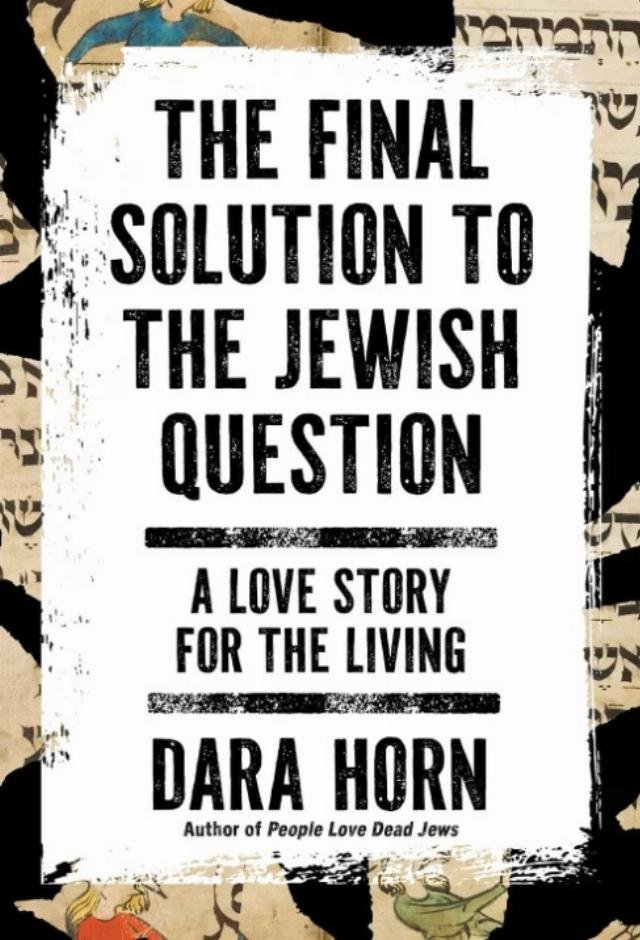
For decades, the operating assumption in Jewish communal life has been simple and reassuring: teach the world about the Holocaust, and the world will turn away from antisemitism. Dara Horn spent much of 2022 testing that assumption, visiting Holocaust museums and talking to educators across the country. Her conclusion, as summarized in a new review in American Thinker, is that the formula does not work.
“Holocaust education was incapable of addressing contemporary antisemitism,” Horn writes, in a line the review quotes directly. The bedrock belief that learning about the Shoah inoculates people against anti-Jewish hatred, she argues, was never demonstrated — it was simply repeated until it became policy.
A Book That Could Have Been Too Depressing to Read
Reviewer Susan Quinn opens by admitting she almost skipped Horn’s latest book entirely. She had read Horn’s earlier nonfiction work, People Love Dead Jews: Reports from a Haunted Present, a couple of years ago, and found it grim — a portrait of the Jew’s place in society that she describes as “probably made too much sense.” So when The Final Solution to the Jewish Question: A Love Story for the Living arrived, Quinn hesitated.
What changed her mind was hearing Horn interviewed by podcaster Haviv Rettig Gur. The book, Quinn writes, turned out to be an inspiration rather than a lament — one that gave her hope Jews might finally make inroads against what she calls the curse of antisemitism.
That hope is notable given the moment Quinn describes. Antisemitic activity has surged in recent years, and she says nearly everyone she knows agrees the trend is worsening. Worse still, the remedies being proposed by organizations and activists are largely recycled — steps that have already been tried, and already failed. Into that void steps Horn with a strategy Quinn initially found counterintuitive, even impossible, but which she came to see as plausibly right.
The ‘One Big Lie’
Horn’s central premise, as Quinn lays it out, is that Jews — in coordination with the broader society — have been living what Horn calls One Big Lie. Part of that lie is the claim that Holocaust education alone will move gentiles to accept Jews. As the review notes, nearly half a century of this assumption has not delivered on its promise.
Rather than abandon education, Horn points to teachers who took a different route: teaching people, and especially children, about living Jews. Quinn finds it ironic that thirteen years of American public education devote almost no time to explaining that Judaism was foundational to the nation itself.
The example she highlights is a program called Student to Student, created by two women teachers. Its design is deliberately non-melancholy: Jewish teenagers speak to gentile teenagers about who Jews actually are. As one participant describes it in the book, “It’s just a positive and engaging presentation about who Jews are. We begin and end with Jewish peoplehood, including Israel and Zionism. We talk about Torah, holidays, Hebrew, the local and global Jewish community, the diversity and variety of Jewish life.”
The sessions are short — sixty minutes — and organizers reassure scheduling teachers that there is no evangelical intent, only education. But the format is built to be fun, not solemn. Volunteers bring food to explain Jewish dietary laws, write students’ names in Hebrew on the board, and stage mock Jewish weddings to demonstrate life-cycle rituals. When a classroom starts to slump, Horn recounts, the Jewish kids blow a shofar. Quinn confesses she was intrigued.
Why ‘We’re Just Like Everyone Else’ Backfires
The second plank of Horn’s argument is more uncomfortable: Jews are not like everyone else. They have lived distinctive lives for more than three thousand years, and the insistence that they want only to blend in, Horn argues, actively feeds the antisemitic imagination. If Jews claim sameness while living differently, antisemites conclude they are hiding something dangerous — and that removing them would set the world right. Assimilation, in this reading, is not a shield but a confession.
What Horn proposes instead is unusual for a book about prejudice. She wants the cultivation of curiosity, persuasion, truth-seeking, and problem-solving — universal skills rather than Jewish-specific defenses. Rather than passively absorbing lies, people would need the curiosity to ask what is true and the courage, particularly for Jews, to say it out loud.
Quinn quotes Horn’s explanation of why earlier efforts kept failing: “All these efforts were defensive by necessity. This is because the default (and for the most part unacknowledged) assumption in most non-Jewish societies is that Jews are suspect unless proven otherwise.” That default exists, Horn argues, because people who refuse to conform are perceived as a threat to a dominant culture’s need to feel validated. Her question is why Jews were not naming and challenging that assumption directly.
A Queen Esther Moment
Horn’s call is for Jews to seize the present moment and speak plainly. Quinn quotes her framing of the goal: “The purpose is to evoke curiosity about what it might take to preserve a counterculture under vast and often violent pressure from dominant societies.” And in a passage Quinn treats as the book’s emotional core, Horn writes that when a person finally chooses truth, freedom, and courage, “you don’t only discover your own strength. You also discover the thousands of grateful people who were all waiting for you to say it.”
The book’s closing challenge, as Quinn relays it, is that Jews worldwide have reached their Queen Esther moment — the same choice their ancestors faced. They can stay silent, or disappear, which Horn identifies as the default path. Or they can choose life and rise to the occasion.
No longer, in Horn’s telling, can Jews sustain the One Big Lie that they are just like everyone else, that Holocaust education will generate gentile empathy, or that Jewish existence requires justification.
Quinn ends her review with a line that reads as much political as literary: now more than ever, she writes, the ability to speak our minds is crucial to the republic we cherish. Whether Horn’s prescription works is an open question. But the review makes a case that the old prescription already got its decades-long trial — and that continuing to repeat it is the least hopeful option of all.
Source: www.americanthinker.com — https://www.americanthinker.com/blog/2026/09/book-review-the-final-solution-to-the-jewish-question-a-love-story-for-the-living/