
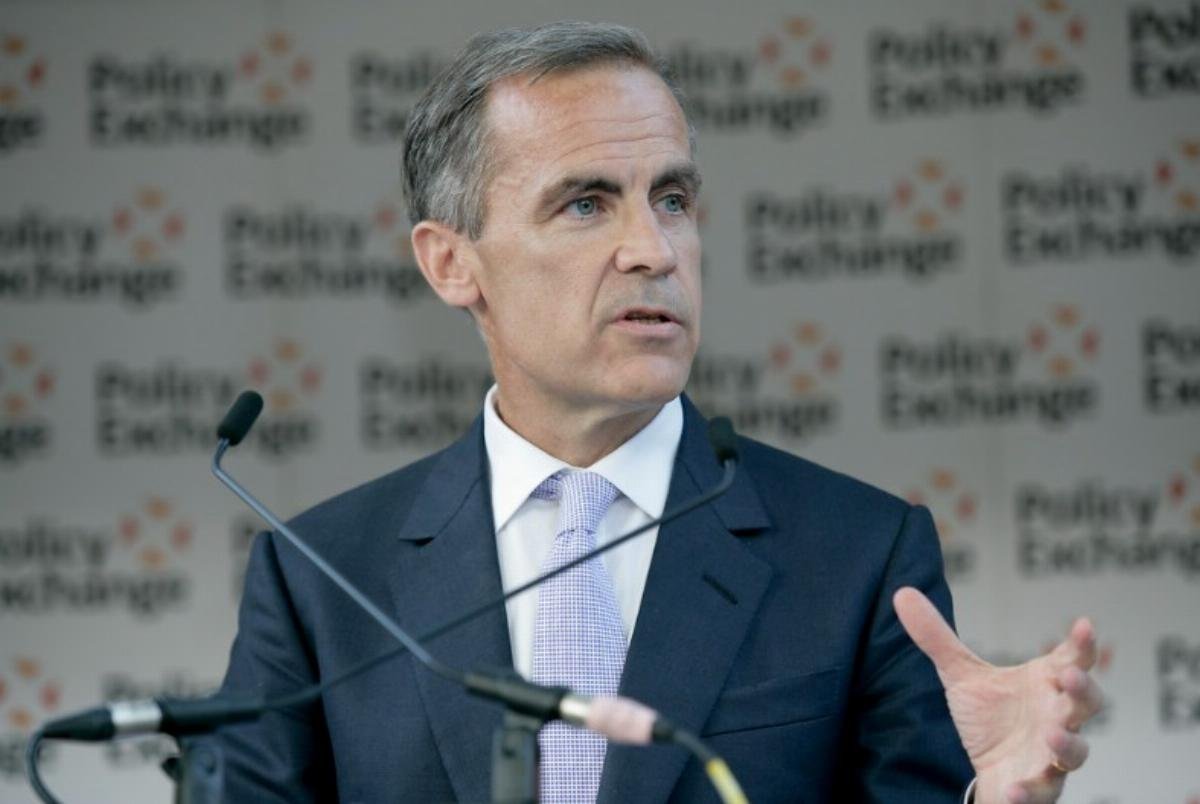
In a move that surprised few, Canadian Prime Minister Mark Carney announced late Friday that trade negotiations with the United States had collapsed, officially kicking off a U.S.-Canada trade war. The announcement came just days after both delegations had publicly expressed optimism about reaching a mutually beneficial framework. The timing—just before midnight on a Friday—was fitting for a prime minister who, according to American Thinker, has built his career on grand gestures and globalist rhetoric.
Carney, the former governor of the Bank of England, has long been a champion of climate change policies and international economic coordination. His critics, however, see a darker agenda. The American Thinker piece characterizes Carney as a ‘globalism personified’ figure who has spent his career advocating for central bankers to manage the world’s resources and economic activity. The article goes further, calling him ‘a totalitarian committed to the proposition that a small cabal of central bank oligarchs and political aristocrats should exercise complete power over everyone else.’
At the heart of the trade dispute is a fundamental disagreement over the nature of the U.S.-Canada economic relationship. Canadian officials, including Carney, have framed the collapse as a stand for sovereignty. In his midnight missive, Carney declared, ‘We will not allow any nation to determine our future. We will set our own course to keep building Canada strong for all.’ But American Thinker argues that this rhetoric masks a deeper vulnerability: Canada’s economy, the piece contends, is deeply dependent on the United States, serving as a ‘weigh station’ for foreign goods, particularly from China, that are stamped ‘Made in Canada’ and slipped into American markets.
Canada’s ‘Trojan Horse’ Economy
The analysis paints a picture of Canada as a middleman nation that profits from its unique trade access to the U.S., often at America’s expense. ‘Canadian banks and manufacturers act as middlemen for foreign nations skirting American trade laws,’ the article states. It alleges that China leverages Canadian shell corporations and financial institutions to ‘snow-wash’ goods, a practice that has hollowed out vital American industries over the decades.
This arrangement, according to American Thinker, has allowed Canadian governments to generate significant revenue while lecturing the U.S. on climate change. The piece notes that the U.S. has actually reduced its so-called ‘climate emissions’ by a larger percentage than Canada over the last 25 years, achieved through industrial innovation, while Canadian forest fires are often blamed on American capitalism. ‘This is akin to blaming Thor for thunder,’ the author quips.
At the same time, Canada sits on some of the largest energy reserves in the world but has chosen to throttle its own hydrocarbon output in the name of fighting global warming. This self-imposed vulnerability, the article argues, leaves Canada economically and militarily dependent on the U.S. for defense while relying on Chinese trade for revenue—a contradictory position in a world of great power competition.
Carney’s Climate Agenda and Economic Philosophy
Carney’s advocacy for climate action is well documented. As governor of the Bank of England, he spoke regularly about a future where central banks would manage planetary resources. American Thinker interprets this as part of a broader globalist project to control human behavior, arguing that the ‘global warming’ narrative has been used for decades to justify government management of all economic transactions.
The article traces this back to a perceived aristocratic European disdain for free markets. ‘Empowering political and economic elites to regulate all economic activity is just a modern form of feudalism,’ it claims. Carney, in this view, is a leftist-globalist who craves totalitarian control, using Chinese slave labor to build necessary things while exploiting complex international banking rules for profit.
The piece also takes aim at the North American Free Trade Agreement (NAFTA), which it calls a ‘thirty-year global campaign that has destroyed American industry and manufacturing.’ It argues that for decades, the U.S. has allowed European and Canadian businesses to profit from American markets while restricting reciprocal trade, effectively subsidizing allies at great cost to American workers.
America First vs. Canadian Sovereignty
The Trump administration, including Treasury Secretary Bessent and U.S. Trade Representative Greer, has explicitly sought to end this dynamic. American Thinker frames this as a long-overdue correction. ‘They will lie to their citizens and claim that President Trump is breaking all the rules and acting unfairly,’ the article predicts, arguing that the real story is that allied economies are ‘unsustainable without continuing American welfare.’
But this framing, while passionate, may overlook the genuine concerns of Canadian citizens and their government’s right to pursue policies aligned with their own values. The divide between the two nations is not just economic but ideological. Carney’s embrace of climate action and digital regulation reflects a broader Canadian political consensus that differs sharply from the American ‘America First’ approach.
What Comes Next?
As the trade war begins, the stakes are high for both nations. The American Thinker piece ends with a provocative offer to Alberta: ‘If you ever get tired of being treated as second-class citizens, you’re welcome to join your American friends!’ That kind of rhetoric, while likely rhetorical, underscores the bitterness of the current moment.
For Canadian citizens, the impact of the trade collapse will be felt in prices, jobs, and diplomatic relations. For American readers, the article offers a starkly critical view of Canada’s leadership and its economic model. Whether Carney’s vision of ‘keeping Canada strong for all’ will resonate amid a trade war remains to be seen. But one thing is clear: the era of unquestioned U.S.-Canada trade harmony is over, and both nations are now navigating an uncertain and contentious future.
Source: www.americanthinker.com — https://www.americanthinker.com/articles/2026/08/canada-chooses-climate-change-censorship-and-china/