
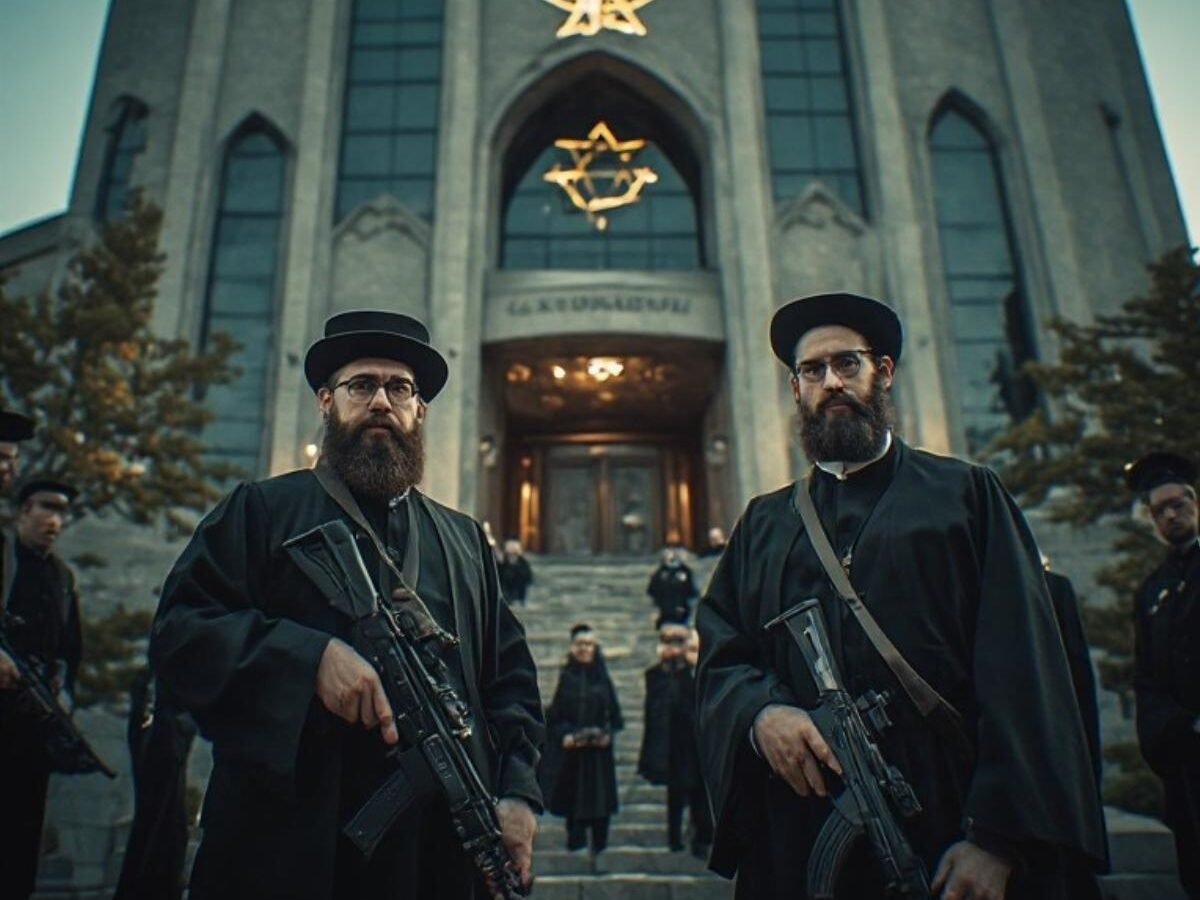
A federal court hearing this week drew attention to a legal clash between a Maryland county’s new gun restrictions and the religious liberties of Orthodox Jewish congregants, according to a report from American Thinker. The case, brought by Rabbi Menashe Shapiro and members of the Silver Spring Jewish Center, challenges a Montgomery County law that prohibits individuals with valid Maryland concealed-carry permits from bringing firearms into synagogues, churches, and other places of worship. The plaintiffs filed an emergency appeal, citing the approaching Rosh Hashana holiday as a reason for urgency.
The law, passed by the county’s Democratic majority, also designates hundreds of “sensitive” zones—including areas surrounding places of worship—where carrying a firearm would be subject to civil and potentially criminal penalties. Supporters of the measure argue it enhances public safety, but opponents, including the plaintiffs and gun-rights groups, contend it effectively nullifies the Second Amendment for law-abiding citizens.
Two constitutional claims
At the heart of the lawsuit are two central arguments, as detailed in the American Thinker piece. First, the plaintiffs assert that the law violates the Second Amendment. Rabbi Shapiro, who is both a plaintiff and an attorney in the case, along with Mark Pennak, a non-Jewish lawyer representing the group Maryland Shall Issue, argued that the Second Amendment guarantees an individual’s right to carry a firearm in public without needing government permission or demonstrating a “compelling reason.” Recent Supreme Court decisions, they contend, require that any restrictions be narrowly tailored and meet strict scrutiny.
The law, they argue, is anything but narrow—it creates a web of restricted zones that, in practice, gut the meaning of a concealed-carry permit. They also point out that the law appears to exempt gatherings of certain political and ideological groups, such as climate activists, pro-abortion supporters, and anti-Israel demonstrators, while singling out religious worship spaces. This selective application, they say, reveals an intent to target specific communities rather than to promote public safety.
Second, the plaintiffs argue that the law infringes on their First Amendment right to freely exercise their religion. Their Jewish faith, they say, obligates them to protect themselves and their neighbors from harm. “If a man comes to do you evil, kill him before he kills you,” one traditional teaching holds. The plaintiffs maintain that the government cannot selectively deprive them of the means to fulfill what they see as a religious duty, especially when the law’s exemptions demonstrate that it is not neutral.
A broader cultural battle
The American Thinker piece frames this legal fight as part of a larger cultural and political struggle over the nature of American civilization. The author, Howard Sachs, writes that the lawsuit represents “America-supporting David” standing up to the “Goliath of the state,” and he criticizes what he describes as a Democratic party that has “abandoned Americanism for leftism, radical Islamism, and open-border policies.” The piece warns of rising antisemitism, claiming that tens of thousands of people “intent on harming or killing Jews” now live in the United States, though it does not provide specific data to support this assertion.
Sachs praises the plaintiffs for arguing “civilly, articulately, and intelligently,” and he expresses hope that their case will succeed. The article does not include comments from Montgomery County officials or from supporters of the law, and it does not report the court’s decision on the emergency appeal.
Constitutional questions ahead
Legal experts following the case note that the outcome could have significant implications for how governments regulate firearms in places of worship and other sensitive areas. The Supreme Court’s 2022 ruling in New York State Rifle & Pistol Association v. Bruen established that gun laws must be consistent with the nation’s historical tradition of firearm regulation, a standard that has led courts to strike down several state and local restrictions. Whether a blanket ban on guns in synagogues and churches meets that test is a question that may ultimately reach the high court.
For the congregants of the Silver Spring Jewish Center, the issue is not merely academic. With Rosh Hashana approaching, they are seeking assurance that they can gather to worship without being forced to leave their means of self-defense at the door. As one of the plaintiffs’ attorneys put it, the Constitution’s protections are not subject to the whims of a legislative majority.
The case remains pending, and both sides are expected to present further arguments in the coming weeks.
Source: www.americanthinker.com — https://www.americanthinker.com/blog/2026/09/american-jews-fight-for-the-second-amendment/