
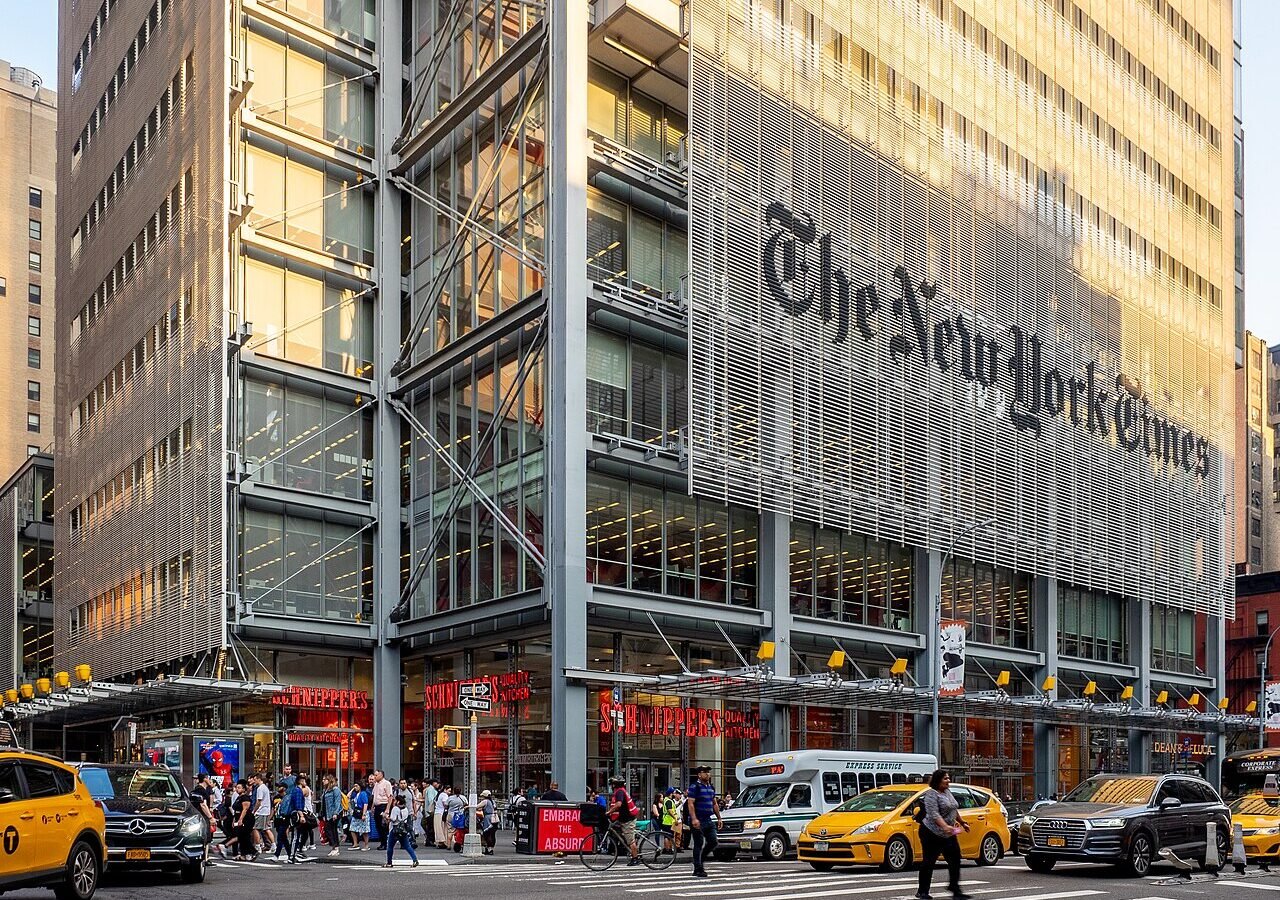
A federal jury in Alabama dealt The New York Times its first major defamation defeat in over half a century, awarding former University of Alabama basketball player Kai Spears more than $9 million in damages. The verdict, handed down Thursday, stems from a 2023 Times article that inaccurately placed Spears in a car with a teammate at the scene of a fatal shooting.
Spears sued for libel, arguing the paper’s ‘untrue statements linking him to a criminal event’ caused severe emotional distress, threats against his life, and disruption to his academic and athletic career. The Times maintained that reporter Billy Witz made an ‘honest mistake’ and took reasonable steps to corroborate his source, including approaching Spears in person. But the jury sided with Spears, marking a rare crack in the legal shield that media outlets have enjoyed since the Supreme Court’s 1964 decision in New York Times v. Sullivan.
The ‘actual malice’ standard under fire
The Sullivan ruling created the ‘actual malice’ doctrine, which requires public figures to prove that a media outlet knew a statement was false or published it with ‘reckless disregard’ for the truth. Critics, including some legal scholars and two sitting Supreme Court justices, argue this standard has become an almost insurmountable barrier for defamation plaintiffs and may actually encourage sloppy journalism.
‘Journalism [is] a privileged profession,’ wrote Carson Holloway, a political science professor at the University of Nebraska Omaha, in his book No Liberty to Libel: The Originalist Case Against New York Times v. Sullivan. ‘Journalists, unlike all other professionals, are sheltered from the legal consequences that ordinarily accompany negligence.’
Holloway’s argument, echoed by others, is that the standard creates a two-tier system of justice—one for the press and one for everyone else. Law professor David Logan has noted that under ‘actual malice,’ the safest legal route for media is to avoid fact-checking altogether, because the less they verify, the harder it is to prove reckless disregard. ‘[U]nder an actual malice regime, ignorance is bliss,’ Logan concluded.
Justice Neil Gorsuch made a similar point in his dissent in Berisha v. Lawson (2021), writing that ‘publishing without investigation, fact-checking, or editing has become the optimal legal strategy.’

The Times’ own trap?
The Spears case may illustrate that dynamic. At trial, the Times argued Witz had taken reasonable steps to verify his information. But Holloway notes that ‘mere carelessness does not rise to the level of actual malice,’ and Witz’s attempts at corroboration may have been just enough to trigger the doctrine’s protections—or, as the jury decided, not enough.
Even if the mistake was honest, the harm to Spears was real. His lawsuit described a mob that formed after the article, including death threats, and mental anguish that interfered with his life at the University of Alabama. Holloway’s book cites a historical libel case involving Theodore Roosevelt, where the judge analogized that negligently running over a child with a car is not excused by ‘good intentions.’ Libel, Holloway argues, should be treated no differently than any other wrongful injury.
Appeals and damages: the odds facing plaintiffs
While the jury verdict is a victory for Spears, the fight is far from over. The Media Law Research Center’s 2025 Report on Trials and Damages shows that while plaintiffs win 59 percent of defamation trials against media from 1980 through 2024, media defendants win 66 percent of appeals after a loss. Over a quarter of trial awards are reduced or eliminated post-trial, and the final award averages just 15 percent of the original judgment. Alabama caps certain damages, so Spears’ $9 million award will be cut by more than $2 million.
The MLRC data only covers cases that reach trial, ignoring the many suits dismissed early or never filed due to the financial and legal barriers plaintiffs face against corporate media. That, critics say, is the true chilling effect—not the one Sullivan’s defenders feared, but the one that silences defamed individuals.
Supreme Court could revisit Sullivan
The Times is unlikely to join calls for overturning the standard that bears its name. But the Spears verdict may add pressure on the Supreme Court to reconsider Sullivan. In the last term, the Court denied certiorari in Dershowitz v. CNN, giving Justice Clarence Thomas his third opportunity and Justice Gorsuch his second to signal their willingness to revisit the doctrine.
Thomas, in his McKee v. Cosby (2019) concurrence, argued from an originalist perspective: ‘We did not begin meddling in this area until 1964, nearly 175 years after the First Amendment was ratified.’ He found ‘little historical evidence suggesting that the New York Times actual-malice rule flows from the original understanding of the First or Fourteenth Amendment.’
Gorsuch, in Berisha, agreed but focused on how Sullivan has aged poorly in the digital era, calling the invented categories and tests ‘increasingly malleable and even archaic.’
For Holloway and other critics, the Spears verdict is a sign that the Sullivan era may be nearing its end. As Holloway puts it, the legal reasoning behind Sullivan is ‘as thin and weak as the paper it’s printed on.’ The promise of a fairer balance between reputation and press freedom may finally be within reach.
Source: thefederalist.com — https://thefederalist.com/2026/08/25/nyt-legal-loss-underscores-scotuss-need-to-fix-defamation-doctrine/