
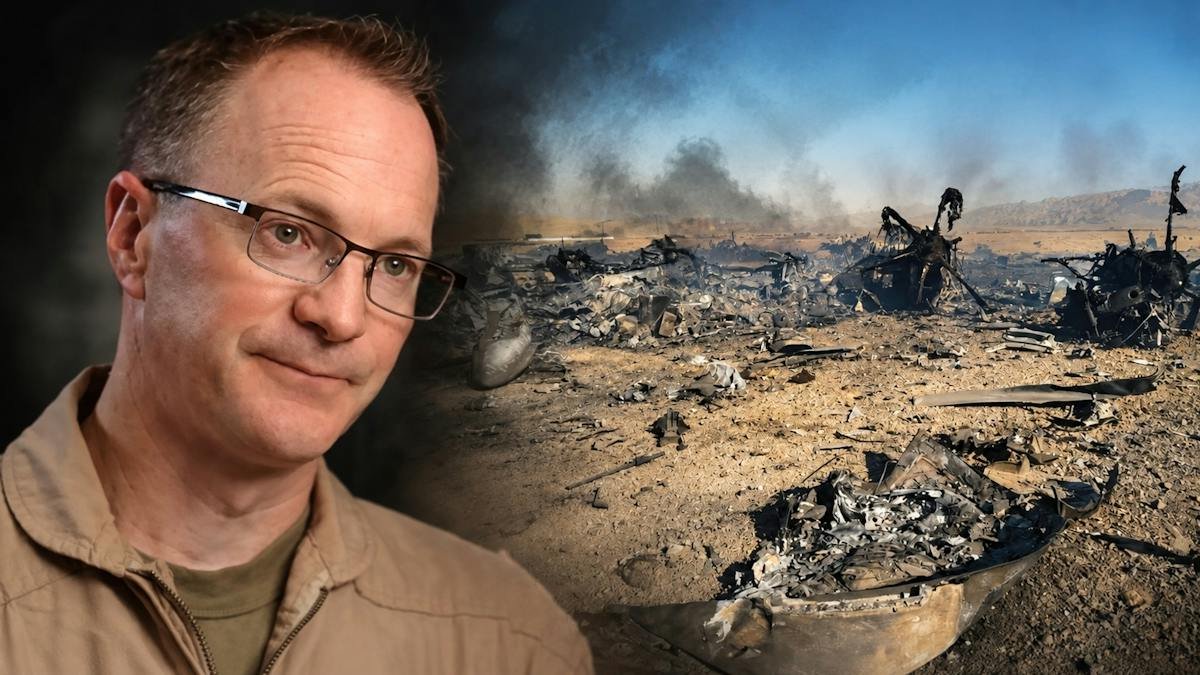
A U.S. Air Force colonel who survived being shot down over Iran in April described a broken back, a failed parachute, and nearly 50 hours evading Iranian search parties in his first public interview, telling CBS’s “60 Minutes” that his rescue stands as proof that America keeps its promises to the troops it sends into harm’s way.
The officer, identified only by his call sign “Bravo,” was serving as the weapons systems officer aboard an F-15E Strike Eagle flying under the mission call sign “Dude 44” when the jet was struck by an Iranian shoulder-fired missile over Isfahan, according to the Daily Wire’s account of the interview.
Bravo compared the initial hit to “getting hit by a freight train,” describing a strike so violent and instantaneous that it quickly became clear the aircraft could not be saved. He credited his pilot, a crewmate known as “Alpha,” with making the call to eject.
“I will be thankful to my dying day, for my pilot and crewmate Alpha, for saving our lives and ejecting us,” Bravo said, describing the two men floating “over the heart of Iran.”
A Parachute Torn Apart in the Night Sky
The missile’s blast shredded Bravo’s parachute, a discovery he called the most frightening moment of the entire ordeal. Looking up into the darkness and seeing nothing above him, he recalled pausing mid-descent to pray.
“Lord, your will be done. But if I’m getting through this, I need help,” he said he prayed.
By the estimates of professionals who reviewed the incident, Bravo struck the desert floor at somewhere between 70 and 100 miles per hour. The impact broke his back, arm, and shoulder, sprained his ankle, and left him bleeding from head wounds. He framed his survival as divine provision — enough mercy to spare him catastrophic injuries, but not enough to leave him untouched.
With Iranian search parties assembling and a bounty reportedly placed on his head, Bravo made the decision to climb. Scaling a 7,000-foot ridge in search of higher ground, he said, was the surest way to avoid ending up a propaganda prize for Tehran.

“Never let a lack of motivation put you on Iranian TV,” he quipped.</n
He attributed the feat to the warrior ethos he had spent months preaching to younger service members. Having talked the talk, he said, he owed it to them to walk it.
Watching Alpha’s Rescue From Above
Hours into his ordeal, Bravo watched from his elevated position as U.S. forces pulled off a risky daylight operation to recover Alpha. He described the scene in paternal terms, calling it the proudest moment of his life — with apologies, he joked, to his own children.
Seeing American forces come for his pilot firsthand, he said, made him deeply proud of the troops who continue to volunteer for dangerous missions. It also bolstered his own will to survive.
“It was a boon to my survival to know that America keeps its promise,” he said.

Bravo spent roughly two days on the run in extreme temperatures with almost no water, dodging search parties while evading capture. CIA deception operations and military strikes eventually cleared a path for Air Force Pararescue Operators — the elite teams known as PJs — to reach his ridgeline. When they arrived, his message was about as short as it gets.
“Let’s go,” he told them.
The Colonel Who Insists the Story Isn’t His
Asked directly whether he ever doubted that the U.S. military would come for him, Bravo answered without hesitation.
“Never a doubt. It’s what we do,” he said. “I have great faith in my Creator. Second only to that is my faith in the men and women of the United States military to do what we say we’re going to do.”
Rather than dwell on his own survival, Bravo repeatedly redirected credit toward those who planned and executed the 50-hour rescue — the training, the teamwork, the leadership decisions he said will be studied as “an example of what America is willing to do in order to uphold our promise and leave no man behind.”
“This is not a story about what I went through,” he said.
The interview also touched on his future in uniform. Asked whether he would sign up all over again, Bravo said he intends to keep serving however he can, and described the oath to defend the nation and the Constitution as easier to keep knowing that fellow service members on his left and right are prepared to answer the same call.
Source: www.dailywire.com — https://www.dailywire.com/news/american-pilot-shot-down-rescued-in-iran-tells-his-heroic-story