
The Democratic Party has no intention of moderating after electoral setbacks, according to a new commentary in American Thinker, which argues that the leftward drift of the party is structural rather than cyclical and will continue regardless of what happens at the ballot box.
The piece, written by Iowa-based freelancer DC Larson, opens with a version of an aphorism often misattributed to Gandhi — “First they ignore you, then they laugh at you, then they fight you, then you win.” Larson uses that line as a framing device: the promise of eventual victory, he writes, explains why Democrats will keep moving in what he calls a “terrible crusade” whether November results produce “woke tears or communist handstands.”
The argument: defeat doesn’t change the direction
Larson’s central claim is that the left treats political loss as a temporary condition rather than a signal to recalibrate. He lists several positions he says Democrats championed in 2020 — open borders, a path to citizenship for undocumented immigrants, what he calls “transgenderism” including for young children, and foreign aid spending — and notes that the party continues to press the same agenda today. Losing elections, in his telling, does not dissuade “revolutionaries” whose attention remains fixed on a long-game strategy.
To illustrate the point, Larson draws a parallel to Chinese Communist Party planning, noting that Beijing refers to its own long-range framework as a “Hundred-Year Plan,” and suggesting Democrats may be operating on a similar timeline. He points to what he describes as entrenched influence in education, law, and entertainment as evidence that the project is already well underway.
A roster of candidates, and a label the author rejects
The commentary names several figures it treats as emblematic of the party’s current direction. New York City voters, Larson writes, “installed Zohran Mamdani in Gracie Mansion,” a result he presents as an alarm bell that has only emboldened Democrats to promote other candidates he deems similarly objectionable — Abdul El-Sayad, Angie Nixon, Christopher Rabb, Cory Bush, and Melot Kiros among them.
Larson dismisses the term “Democratic Socialist” as a euphemism that softens what he considers a hostile ideological project, arguing that the politicians in question represent the same mindset that earlier generations of American service members fought overseas. He invokes the sacrifices of soldiers who died fighting “megalomaniacal foes” and says those veterans could not have imagined a future in which Americans would hand power to “fresh iterations of that same evilness.”
He credits the electoral successes of the so-called “Squad” in Congress with normalizing what he calls ideological extremism within the party, arguing that hostility toward the country has now reached “apex status” among Democrats.
The party-loyalty thesis
Perhaps the most politically interesting part of Larson’s argument is not about radicals at all. He concedes that true radicals are a small share of the Democratic coalition. The bigger force, he writes, is ordinary, long-time rank-and-file Democratic voters who will support anyone with a D next to their name — especially, he adds, when that candidate rages against President Trump.
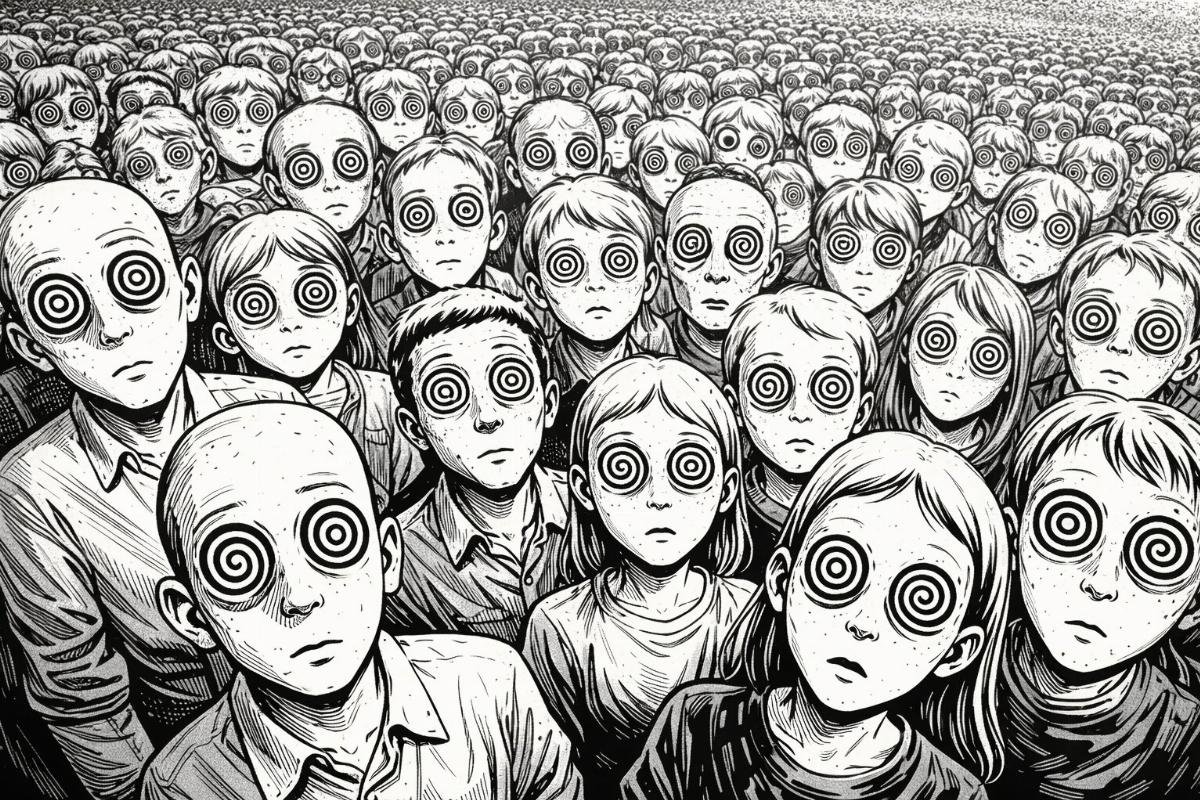
That means even Democratic candidates who are not personally radical would fall in line once in office, Larson argues, because party interest would dictate their votes. As the leftward surge continues, he predicts “obedient operatives” will simply fall into formation.
The implication is a strategic one for conservatives: the leftward trajectory of the Democratic Party is not something that can be reversed by winning elections, because the underlying coalition is wired for partisan loyalty rather than ideological moderation. The piece closes with a call-and-response riff on the opening quote — we cannot ignore them, we laugh at them, patriotism obliges us to fight them, and they must be made to “crumble in eternal ignominy.”
What the commentary doesn’t account for
It’s worth being clear about what kind of piece this is. Larson is a partisan commentator, not a neutral analyst, and his essay is a call to battle rather than a data-driven assessment of Democratic primary electorates. He offers no polling, no precinct-level results, and no evidence that rank-and-file Democrats are actually more radical than the candidates they nominate.
The claim that Democratic voters will back anyone with a D is also an assertion that cuts both ways — it’s the sort of thing partisans on both sides say about the opposing coalition, and it implicitly treats the Democratic base as undifferentiated, which the party’s own recent primary fights suggest is an oversimplification.
Still, the underlying question Larson raises is a live one in both parties: whether electoral defeat actually changes a party’s ideological direction, or whether it merely changes its messaging. The historical record is mixed. Parties sometimes moderate after landslides — and sometimes double down, betting that turnout and demography will eventually vindicate them.
Where Larson lands is unambiguous. He sees no course correction coming, no matter the results, and he wants his readers to plan accordingly.
Source: www.americanthinker.com — https://www.americanthinker.com/blog/2026/09/win-or-lose-democrats-will-keep-going-hard-left/