

In an essay published this week, American Thinker contributor Lars Møller argues that the conservative intellectual’s work is a Sisyphus-like labor: rolling the argument against totalitarianism uphill once more, only to watch the culture forget the twentieth century’s body count and start reaching again for the utopian promise.
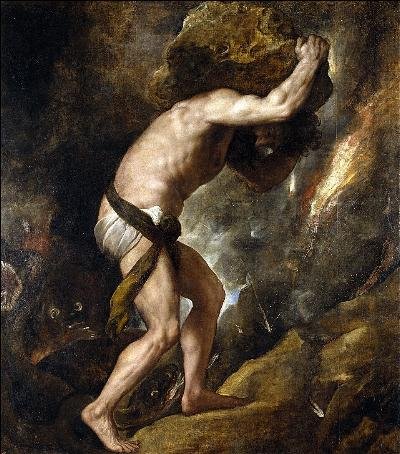
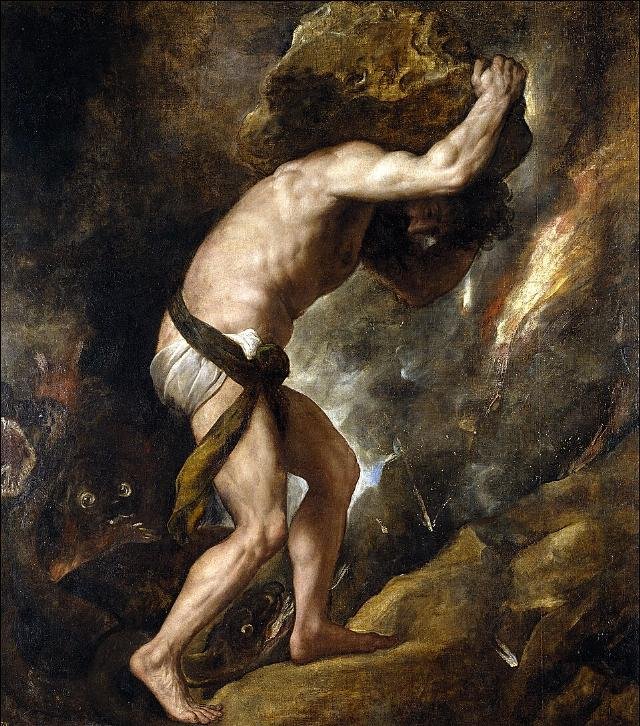
The October 2 piece, illustrated with Titian’s 1548 painting of Sisyphus, contends that the modern West confronts a recurring temptation whose lineage the author traces from the French Revolution’s 1789–1794 radical phase through the Bolshevik seizure of 1917, Maoist China, and the Khmer Rouge. In each case, Møller writes, the result was a “cannibalistic orgy in the name of ideology” — and in each case, he says, the lesson fails to stick.
The perversion defense
Møller’s central target is what he describes as the standard rejoinder from adherents of democratic socialism: yes, the Soviet Union, Maoist China, and Democratic Kampuchea produced genocide, but those regimes were perversions of the idea rather than fulfillments of it. True socialism, on this telling, can be reconciled with elections and individual liberties.
He also acknowledges the counter-charge that capitalist powers inflicted their own vast suffering through colonial expansion, industrial poverty, and modern warfare. But he treats that as a deflection rather than a rebuttal. The problem, in his account, is that this framing treats totalitarianism as contingent error — a correctable mistake — rather than a structural necessity, which preserves the utopian core intact for another attempt.
Wherever socialist projects have seized state power and moved to abolish private property in the means of production, he writes, freedom has contracted. Central allocation requires knowledge no planning board can possess, and the shortages and misallocations that follow generate coercion. Dissent gets reclassified as sabotage. Independent association becomes conspiracy. Even the family is redefined, in his telling, as a residual bourgeois institution to be remolded.
Møller is blunt about the camps: the Gulag, the laogai, and the Killing Fields were not accidents, he writes, but logical instruments for enforcing collective will on resistant human material. He traces the same mechanism back to the French revolutionary tribunals, where virtue was defined by the revolutionary elite and those who fell short were marked for elimination. The twentieth-century death toll — tens of millions through engineered famine, forced labor, and mass execution — stands, he argues, as the measurable consequence of that machinery running at industrial scale.
Law and memory are not enough
The essay concedes that humanity has codified real lessons. The United Nations Charter, the Geneva Conventions, the Universal Declaration of Human Rights, and the Nuremberg and subsequent tribunals established legal norms against aggressive war, crimes against humanity, and genocide. Museums, archives, and school curricula preserve the documentary record.
But formal knowledge, Møller insists, does not automatically become lived restraint. Ambitious leaders driven by narcissism still exploit crises, fear, and group antagonism to demand exceptional powers. Propaganda still reduces political opponents to subhuman categories. Ordinary people still fall silent when neighbors disappear, calculating that compliance buys temporary safety.
And as the generation of direct witnesses dies, he writes, the emotional force of the record fades. Textbooks become remote narratives rather than visceral warnings, leaving the risk of extreme violence latent inside every modern polity.
Møller is not content to blame simple ignorance. He points to deeper psychological forces that keep the totalitarian utopia attractive: economic dislocation, cultural fragmentation, and technological acceleration produce widespread anxiety, and the utopian narrative supplies a single explanatory key plus a grand collective mission. Isolated individuals gain belonging and purpose. During periods of disorder, many will trade personal autonomy for the promise of enforced security, treating any sacrifice of freedom as provisional — a temporary cost on the road to harmony.
Reality’s refusal to conform, he writes — human diversity, limited knowledge, the persistence of self-interest — gets treated as residual impurity to be eradicated rather than an ineradicable feature of the species. The result is perpetual purification campaigns that destroy the very goods the utopia claimed to secure.
Prices, planners, and the knowledge problem
The philosophical case in the essay rests on two pillars. The first is the knowledge problem: economic calculation requires prices generated by voluntary exchange among property owners, and without those signals planners allocate by decree and misdirect resources, producing scarcity that then legitimizes further compulsion. The second is what Møller calls the moral anthropology of limited human beings — individuals have ends of their own that cannot be fully subordinated to a collective goal without residual resistance, and that resistance must be broken if the utopia is to stay pure.
Freedom, defined as the absence of arbitrary domination and the capacity to pursue independent projects, therefore contracts systematically under socialist arrangements — a contraction Møller says the historical record illustrates with grim consistency from 1793 onward. He cites Thomas Sowell as a shared source of insight into the trade-offs that utopian language promises to abolish.
He is also pointed about where the temptation incubates. Universities, he writes, are recurring breeding grounds for totalitarianism, and he names specific Western constituencies he says remain drawn to socialism and communism because those doctrines advertise economic equality and comprehensive care irrespective of individual merit: student groups indoctrinated against Western civilization, people with limited access to the housing market, and urban subcultures accustomed to welfare dependency.
Capitalism’s visible defects, he concedes, supply the pretext. Wealth concentrates; a minority accumulates large holdings while substantial numbers struggle with ordinary expenses. Healthcare, higher education, and housing strain average earners. Market fluctuations produce unemployment and a sense of precariousness that safety nets only partially relieve. Against that backdrop, the socialist ideal presents itself as a remedy — resources held in common, cooperation substituted for competitive struggle, food and shelter and medical attention redefined as unconditional rights.
What resistance requires
Conservatives, Møller argues, cannot answer with nostalgia or a rhetorical preference for markets. The response has to deploy the historical record as evidence of a structural tendency, paired with philosophical analysis of knowledge and human nature to explain why the tendency recurs.
He lists the practical defenses he considers indispensable: education that presents the record without euphemism, a free press that scrutinizes concentrations of power whether corporate or bureaucratic, and legal restraints that disperse authority and protect private property. None of them, he warns, is self-executing. Each requires daily reaffirmation by people who understand that the alternative is not a higher form of community but the extinction of the individual as a moral agent.
That is the Sisyphean part. The stone, in Møller’s telling, must be rolled again because the slope of human desire for frictionless perfection never flattens — and each generation has to relearn the same truths against the same seduction.
Source: www.americanthinker.com — https://www.americanthinker.com/articles/2026/10/rolling-the-stone/