
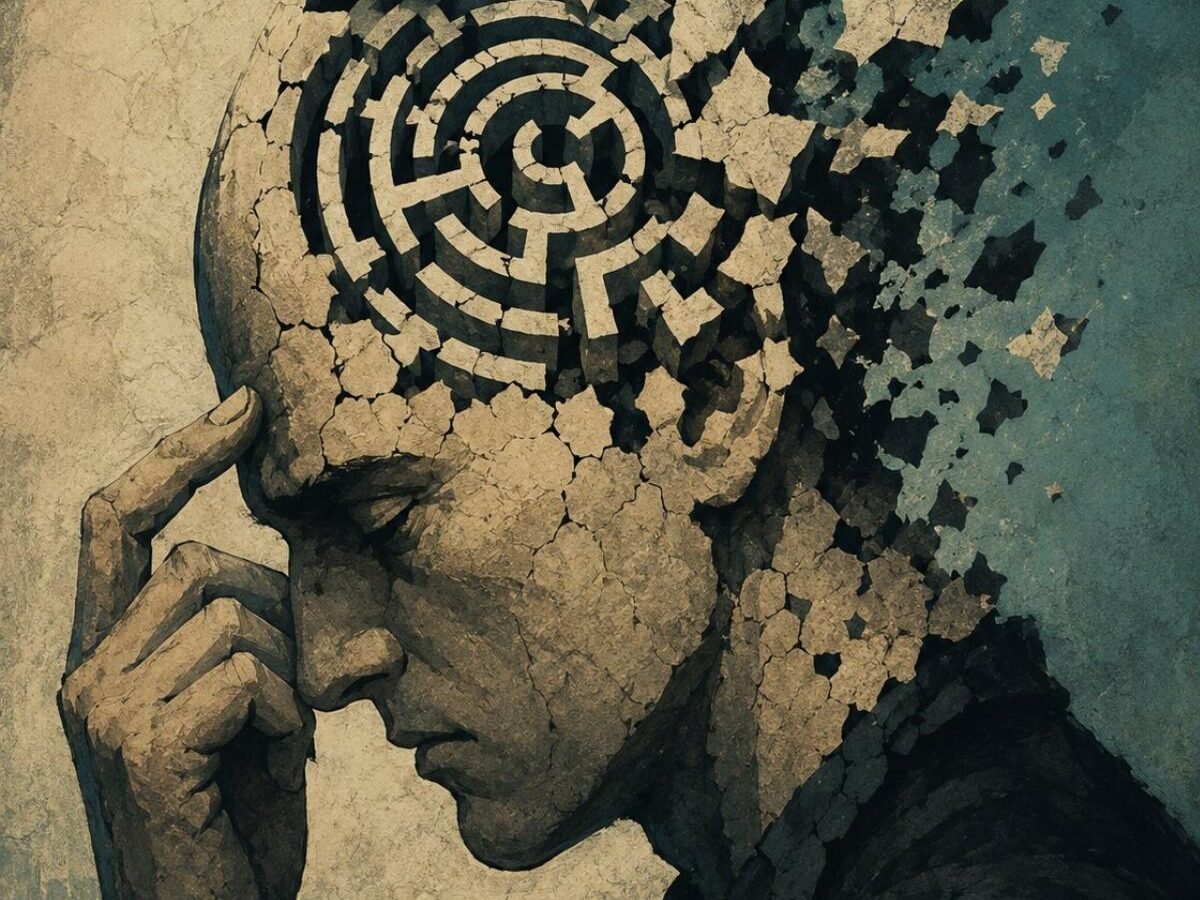
In a pointed essay published August 16, 2026, on American Thinker, veteran and lifelong defender of Western Culture Anthony J. DeBlasi issues a sharp warning: America, the cradle of freedom, is quietly surrendering its most precious liberty—the freedom of the mind.
DeBlasi’s critique targets what he calls “La-La Land,” a metaphorical space where liberal intellectuals, analysts, journalists, and artists frequently retreat when they should be engaging with reality. He argues that too often, those who could illuminate the world instead bury their insights under layers of abstraction, symbolism, and subjective interpretation—a tendency he compares to the topsy-turvy atmosphere of Lewis Carroll’s Alice in Wonderland.
When Symbolism Obscures Truth
The heart of DeBlasi’s complaint is that communication meant to be clear and accurate is frequently muddled by a dependence on symbol and “interpretation.” He points to disciplines like sociology and to canonical works such as Freud’s The Interpretation of Dreams as prime examples of “digging for what isn’t there to find something serious to deliver.” For DeBlasi, this angling for hidden meanings amounts to a brazen poke at the real world, recalling Hughes Mearns’ poem “Antigonish”—which, regardless of its original intent, famously flirts with the absurd.
He contends that such exercises in abstraction often produce “curious substitutions for reality” that obscure rather than enlighten. While acknowledging that with skill and humor, such nonsense can fill a void with engaging diversion, DeBlasi insists that creators of visual and audio communications who have no interest in clarity—let alone truth—are building “erections” that impress through hot air alone.
Abstractions Aren’t Reality
Importantly, DeBlasi does not exempt the hard sciences from his critique. He reminds readers that even the symbolic constructs of mathematics and physics—disciplines designed to explain the world—are not the actual reality they stand for. He advocates a periodic loosening of the grip of such abstractions on the mind, arguing that a return to deep, uncluttered cognition invites original thought.
This, he clarifies, is not the same as “thinking outside of the box,” which too often merely moves a person into another box while remaining outside of reality. A troubling example, he notes, is the “total substitution of the digitized world for the actual world,” a phenomenon flagged by conservative thinkers.
The Philosophical Divide
DeBlasi draws a distinction between the majority of people—who unconsciously call a spade a spade and live capably within reality’s domain—and the philosophically inclined, who often begin by calling it a club before realizing that the simpler designation is more sensible. The real danger, he argues, lies with professionals who must impress or get paid for their opinions. These individuals face the risk of entangling themselves and others in “artful webs of nonsense” as they reach for impressive-sounding abstractions.
His broader question is stark: How often do we actually use our own eyes and ears to check what is out there, and how many of us truly think for ourselves? He laments that many Americans are either too busy, too disinclined, or too entrenched in demanding ideological activity to exercise the very faculty that distinguishes them.
Education as the Root Problem
DeBlasi traces much of the blame to a century-old revolution in American public education. He cites the influence of John Dewey and his allied “progressives,” who, he argues, were never interested in teaching kids to reach their best potential but rather in grooming them for life in a collective society run by the state, under the guise of “democracy.”
He recounts a stunning personal anecdote: a young man who, after reading something DeBlasi had written, confessed, “I don’t like to think.” For DeBlasi, that admission signaled an AWOL mind—a direct consequence of an educational method that has turned many youngsters into “virtual zombies,” ready to join the “woke” instead of the awake.
A Call to Reclaim Mental Freedom
The essay’s closing is urgent and sobering. DeBlasi argues that the liberty to think and amble through concrete reality, seeking what is truly best for society, is as essential as breathing. He remembers not-long-past times when artists, writers, and professionals explored the world beyond its labels, symbols, and digitized distractions, offering hints of the amazing world we inhabit.
Now, he warns, that spirit is endangered. Drawing on themes that resonate with conservative critics of modern culture, DeBlasi frames the struggle not merely as a political one but as an existential battle for the very essence of human freedom. If we lose the ability—and the will—to engage with reality directly, he suggests, we risk surrendering the one freedom that underpins all others.
As he puts it, now more than ever, the ability to speak our minds is crucial to the republic we cherish. Whether readers agree with his diagnosis or bristle at his characterizations, DeBlasi’s essay forces a confrontation with an uncomfortable question: Are we still willing to look at the world as it is, or have we collectively chosen the comfortable exit of La-La Land?
Source: www.americanthinker.com — https://www.americanthinker.com/articles/2026/08/the-exit-from-reality-known-as-la-la-land/