
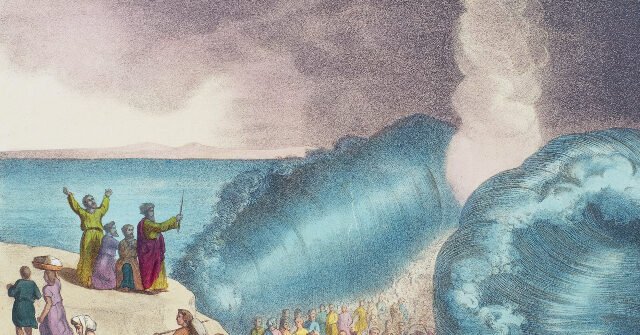
Archeologists have announced a discovery in northeastern Egypt that could shed new light on the biblical Exodus and a long-lost ancient city. The findings, made during an excavation at Tell Abu Seifi, may identify the site as the ancient Egyptian city of Mesen, according to reports from Fox News and Arab News.
The Egyptian Ministry of Tourism and Antiquities revealed the discovery this week, detailing a trove of artifacts that includes a stone lintel inscribed with the name of Ramses II—a pharaoh often linked to Moses in popular and scholarly narratives. The site sits along the Horus Military Road, a strategic route connecting Egypt with Sinai and Canaan. Some scholars have associated this road with the “way of the land of the Philistines” mentioned in the Book of Exodus, where the Israelites, fleeing Egypt under Moses, were deliberately led away from this shorter path toward Canaan.
Ramses II, also known as Ramesses the Great, ruled during the New Kingdom and is one of Egypt’s most celebrated pharaohs. His reign was the second longest in Egyptian history, and he is renowned for his military campaigns against the Hittites and Libyans, as well as his ambitious building projects and colossal statues scattered across Egypt, according to Britannica.
The inscription on the lintel references the restoration of a statue of Horus, the falcon-headed god, described as “Lord of the City of Mesen.” Horus was a significant deity in Egyptian mythology, with falcon cults widespread from late predynastic times, as noted by Britannica. The excavation also uncovered the remains of a fortified temple complex, two stone roads, fragments of falcon statues, and additional sculptures.
Mahmoud Galal, head of the archaeological mission, told Arab News that the latest finds, combined with previous excavations, bolster the hypothesis that Tell Abu Seifi corresponds to Mesen, a city referenced in Egyptian sources dating to the New Kingdom. The collection of administrative and military artifacts suggests the site held strategic importance, likely serving as a frontier stronghold.
This is not the first discovery linked to Ramses II in the region. In 2024, archeologists found an ancient sword that may have belonged to his army, as reported by Breitbart News. More recently, a statue believed to depict Ramses II, weighing between five and six tons, was uncovered, according to Fox.
While the connection to the Exodus remains a matter of scholarly debate—with no direct evidence tying the site to the biblical narrative—the discovery at Tell Abu Seifi offers a tangible glimpse into the world of ancient Egypt and its possible intersections with biblical history. The identification of Mesen could help historians better understand the region’s role in military and religious life during the New Kingdom.
The Egyptian Ministry of Tourism and Antiquities has not yet issued a full report on the findings, but the preliminary announcements have sparked interest among archeologists and biblical historians alike. As excavations continue, the site may yield further artifacts that clarify its historical significance.
For now, the stone lintel bearing Ramses II’s name stands as a reminder of the pharaoh’s enduring legacy—and the ongoing quest to uncover the realities behind ancient texts.
Source: www.breitbart.com — https://www.breitbart.com/middle-east/2026/08/20/photos-archeologists-may-have-found-lost-egyptian-city-ties-biblical-exodus/