
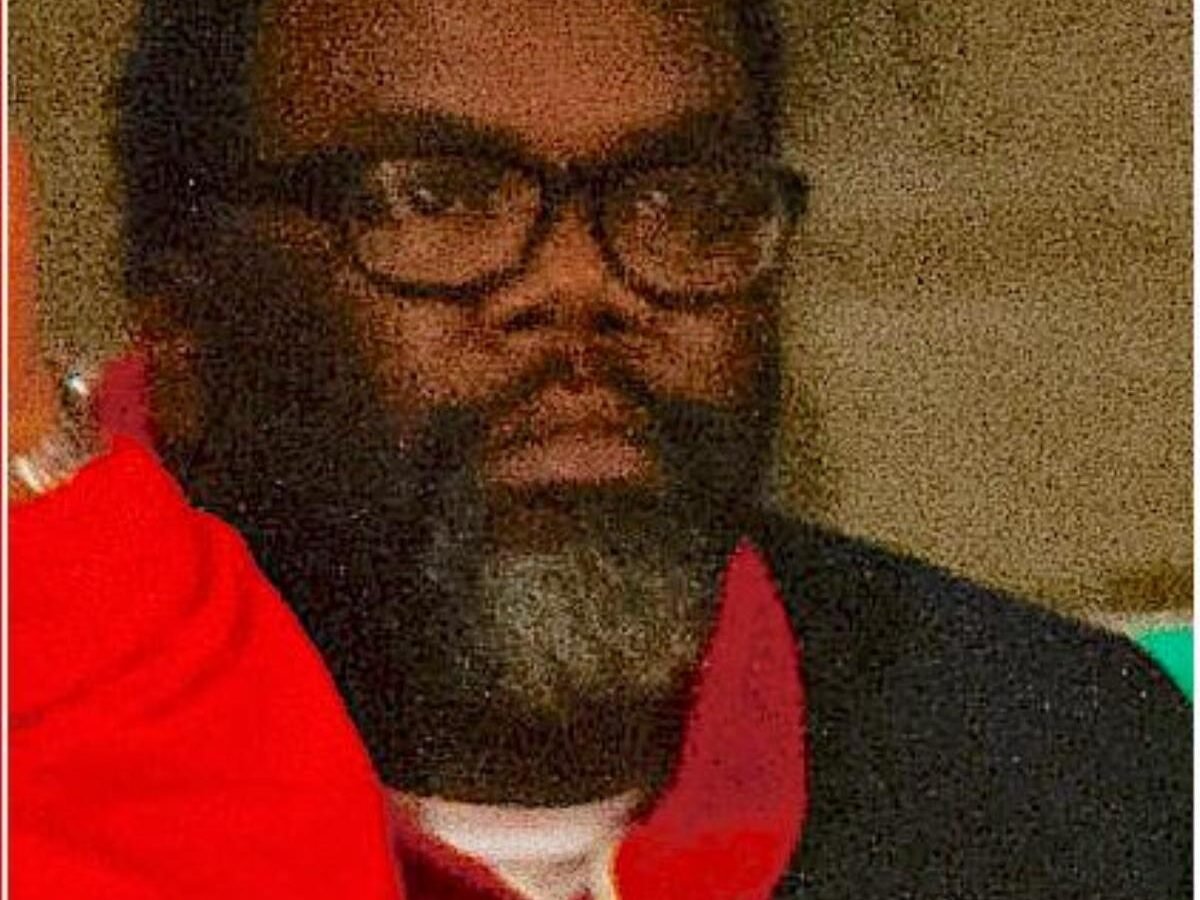
Chicago Mayor Brandon Johnson announced his reelection bid this week, telling supporters at the DuSable Black History Museum and Education Center that the city is in better shape than the one he inherited.
“Progress has been made, because this city is better, stronger, safer than what I inherited,” Johnson said, according to American Thinker.
With Election Day roughly five months away, that claim is now the central question of the campaign. And in a sharp opinion piece for American Thinker, writer Samantha Fillmore argues that the mayor’s own list of accomplishments does not survive close inspection.
A murder statistic, reconsidered
Among the achievements Johnson and city leadership tout is that 2025 saw the fewest murders recorded in Chicago since 1965. The figure rests on preliminary Chicago police data, and Fillmore does not dispute the raw number. Her objection is to how it is framed.
In 1965, according to the piece, Chicago’s population stood at about 3.45 million and the city recorded 395 murders — roughly 0.011 percent of residents. In 2025, the population had fallen to about 2.73 million, and 416 murders were recorded, or about 0.015 percent of the population. Put in population context, Fillmore writes, crime remains worse under Johnson than it was six decades ago.
It is a familiar argument in debates over urban crime statistics: raw counts can fall while per-capita rates rise, particularly in cities that have lost significant population. Whether voters accept that framing is another matter — but it complicates a talking point the mayor has used as a centerpiece of his case for a second term.
Debt, bonds, and a long spending list
Fillmore, a senior state government relations manager for Heartland Impact, the advocacy arm of The Heartland Institute, describes Johnson as a big-government Democrat whose spending has outpaced the city’s ability to pay for it.
When Johnson took office in May 2023, she notes, Chicago carried roughly $29.2 billion in total net debt outstanding, alongside $37.2 billion in unfunded pension liabilities. Rather than shrinking the city’s bureaucracy, the piece says, Johnson has since approved a $1.25 billion Housing and Economic Development Bond, an $830 million Infrastructure Improvement Bond, a $300 million affordable housing allocation, a $42.5 million grant support package, a $33 million civic and business development grant package, and other spending items.
The mayor’s ties to the Chicago Teachers Union come in for particular attention. Johnson taught social studies in Chicago Public Schools, worked as a union organizer, and eventually became a paid CTU staffer before winning the mayor’s office. Fillmore argues that relationship has visibly shaped his decisions.
For the 2026-2027 academic year, Johnson approved a CPS budget of nearly $10 billion to fund a new teachers’ contract, the piece says, leaning on a record $1 billion tax increment financing surplus and $150 million in increased education funding from the Illinois General Assembly that has not yet been approved. The contract itself is estimated to cost $1.5 billion in teacher raises.
Fillmore’s characterization is blunt: Johnson is counting his eggs before they hatch, writing checks the city might not be able to cash.
Student outcomes and an unanswered 911 call
If spending is the measure, she asks, why aren’t students thriving? Citing the Illinois Policy Institute, the piece says that under updated state benchmarks, 43 percent of CPS students in grades three through eight met grade-level reading standards, while 27 percent met math standards.
Fillmore also raises a more personal grievance. On the evening of September 5, 2026, she writes, an infant family member suffered a medical emergency. The child’s mother called 911 and, instead of an operator, got minutes of dial tone. Fillmore says she called too, with the same result. Everyone ultimately came through healthy, she writes, but she asks readers to consider what would have happened had the situation been one where every moment counted.
She also notes that Johnson, before becoming mayor, carried a $4,000 debt to the city from unpaid bills, fines, and parking tickets dating back to 2014 — a detail she frames as a character question about who should be trusted with the city’s finances.
An argument, not a forecast
The piece closes on a note of uncertainty rather than optimism. Chicago has always been a beautiful and vibrant city, Fillmore writes, but decades of overspending, bloated budgets, and dishonest politicians have created enormous problems that will only become more apparent to residents and visitors.
Whether Chicago can recover its old self, she says she doesn’t know. What she is sure of is that another term for Brandon Johnson is not the answer.
It is worth being clear about what this is: an argument from a critic with an explicit ideological home at a free-market think tank, published in an opinion outlet, not an audit of the mayor’s record. Johnson’s campaign, for its part, is running on the claim that the city is better, stronger, and safer than it was — a claim voters will now get to test against their own experience of crime, taxes, schools, and whether anyone picks up when they call for help.
Source: www.americanthinker.com — https://www.americanthinker.com/blog/2026/09/brandon-johnson-does-not-deserve-another-term/