
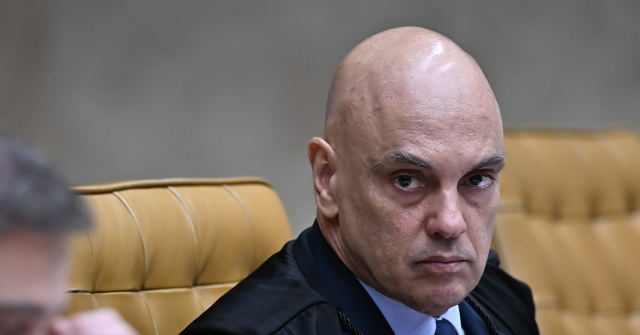
Brazil’s top electoral authority issued a new round of content-removal orders on Wednesday, just days before the country’s 2026 general election, according to reporting by Breitbart News. The rulings from the Superior Electoral Tribunal (TSE) target social media posts tied to a discredited smear campaign against conservative Sen. Flávio Bolsonaro and a video published by a sitting congressman responding to recent comments by President Luiz Inácio Lula da Silva.
The timing places the court at the center of an already heated campaign. Brazilians are scheduled to vote Sunday, October 4, with polls pointing toward an October 25 runoff between Lula, the incumbent socialist president, and Bolsonaro, who is running after his father, former President Jair Bolsonaro, was barred from office and imprisoned on charges of crimes against democracy.
A Retracted Story and a Tangle of Court Orders
At issue in the first set of rulings was a viral claim that Sen. Bolsonaro, an Evangelical Christian, planned to strip Nossa Senhora Aparecida — Our Lady of Aparecida — of her title as Brazil’s patron saint. The designation carries roughly three centuries of devotion for Brazilian Catholics, and the accusation against Bolsonaro drew immediate backlash.
Bolsonaro denounced the story as fake news and accused the outlet Globonews of serving as a “central hub” for spreading it. Globonews subsequently issued a public retraction and apology after the claim was shown to be false, per Breitbart’s account.
On Wednesday, a three-of-five majority of the TSE’s justices ordered the complete removal of any and all social media content involving the fake news campaign, upholding an earlier ruling by Supreme Court Justice and TSE member André Mendoça. That ruling had come in response to a request from the Bolsonaro campaign team.
But the path to Wednesday’s decision ran through a series of reversals. According to the state-owned news agency Agência Brasil, Mendoça first ordered the posts censored, only for Supreme Court Justice Flávio Dino to overturn the orders on the grounds that they infringed the free speech rights of a local comedian who had lodged a complaint. Supreme Court Justice Luiz Fux then overturned Dino. With the matter deadlocked, Supreme Court head Edson Fachin brought it to a vote of the full bench.
Mendoça had initially argued that removing posts about the fake news campaign did not amount to censorship, reasoning that the content had already been proven to be misinformation. As reported by Metrópoles, the justice said the measure “does not constitute prior censorship, as it does not establish prior state control over future expressions, does not require judicial authorization for new publications, and does not suspend users’ profiles, accounts, or channels.”
Lula’s Remarks Spark a Second Front
The second censorship action stemmed from a separate controversy involving Lula himself. The president claimed this week that Brazilian girls learn to “get touched” from a young age, remarks his Workers’ Party (PT) said were actually a reference to cervical cancer screenings.
Congressman Nikolas Ferreira, a 30-year-old lawmaker from Minas Gerais, published a video expressing outrage over the remarks and questioning the party’s explanation. In the video — which remained publicly available at press time — Ferreira said a pedophile “might be listening” to Lula’s words and stressed that “girls aren’t to be touched from an early age.”
TSE Justice Estela Aranha reportedly gave Ferreira 24 hours to take the video down, arguing that he had “took the president’s statement about medical exams out of context and attributed a sexual connotation to his words.” Aranha ordered Ferreira to refrain from republishing the video and from producing any content “substantially identical” to it, under penalty of a fine that has yet to be determined.
In her ruling, Aranha wrote that the contested publication “is not limited to political criticism or disagreement regarding the appropriateness of the language used.” She added that Ferreira “introduces a connotation entirely different from that present in the original statement, shifting the discussion from the realm of public health to that of various criminal acts.”
Ferreira fired back on social media, writing, “Lula knows so much about what he lost that he only requested the removal of the video from my network, but not a right of reply, because he knows he would have to explain the inexplicable.” In a separate post, the congressman noted that Lula appointed Aranha to the TSE in 2025.
Insults Fly as Election Nears
The video appears to have drawn a sharp response from the president. During a Tuesday night campaign rally, Lula called Ferreira a “bastard,” while First Lady Rosângela “Janja” Lula da Silva referred to the lawmaker as a “little shit.” Hours later, in a Wednesday interview with Terra Brasil, Lula again insulted Ferreira, calling him a “complete idiot” for allegedly spreading “misinformation” against him.
Wednesday’s orders are not the first time the TSE has intervened in the middle of a Brazilian election. During the 2022 race between then-incumbent Jair Bolsonaro and Lula, the court banned the Bolsonaro campaign and the media from publicly calling Lula a “thief” or “criminal” — even though Lula had been convicted and sentenced on multiple corruption charges before the convictions were later annulled and he was allowed to run again. The TSE did not censor the Lula campaign at that time, which repeatedly accused the conservative president of being a “pedophile” and a “cannibal.”
With the first round of voting now only days away, the rulings have added another flashpoint to a race already defined by legal conflict and rising rhetoric on both sides. The TSE’s decisions will govern what remains visible online as voters head to the polls — a question that has itself become one of the campaign’s central disputes.
Source: www.breitbart.com — https://www.breitbart.com/latin-america/2026/10/01/brazil-court-goes-on-censorship-spree-days-before-presidential-election/