
For decades, the Islamic Republic’s survival has been credited to its security apparatus, its ideological grip, and its willingness to export chaos abroad. But a new analysis from American Thinker poses a more uncomfortable question for Tehran’s rulers: Can a mullah dictatorship govern a country while losing the war?
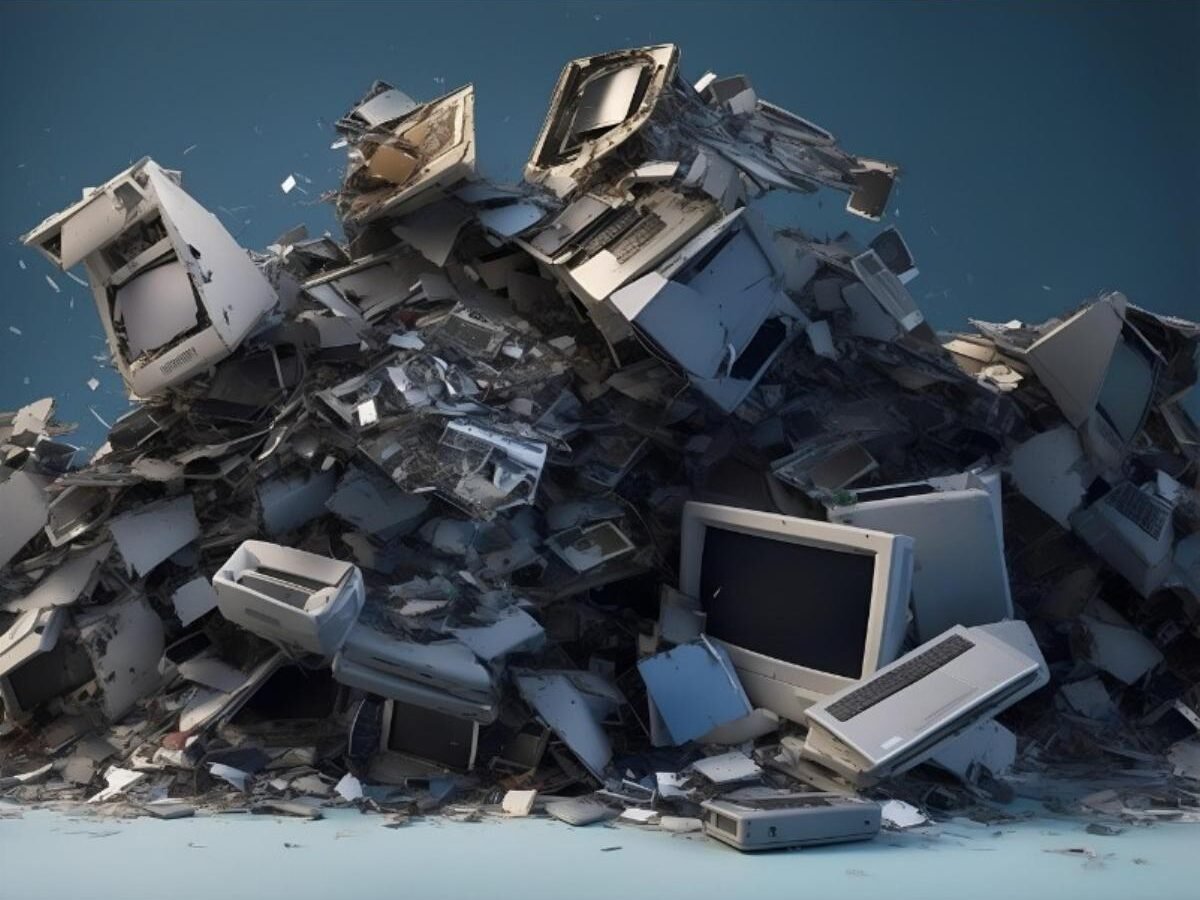
The piece, written by Monty Donohew and published this week, argues that Iran’s most pressing existential threat is not an external military coalition, not an Israeli strike, and not even the specter of a popular uprising. Instead, the author contends, the regime’s most dangerous enemy is administrative collapse — the slow, grinding failure of the state to deliver basic services, manage its economy, and maintain the loyalty of its own bureaucracy.
War and Governance: A Fatal Trade-Off
The central tension Donohew identifies is familiar to students of authoritarian regimes: when a state prioritizes military adventurism over domestic administration, the very machinery of government begins to rot. Iran has spent years, and billions in resources, projecting power across the region — through proxies in Lebanon, Syria, Iraq, and Yemen, and through its own missile and drone programs. But that investment has come at a direct cost to the quotidian functions of statehood.
The article suggests that as the war effort consumes more of Iran’s finite resources, the clerical establishment finds itself unable to balance the ledger. Sanctions have choked off revenue streams. Inflation has eroded the purchasing power of ordinary Iranians. And the state’s capacity to manage its own affairs — to collect taxes, to pay salaries, to keep the lights on — has deteriorated to a critical point.
In this reading, the regime is caught in a paradox: it cannot abandon its regional ambitions without losing face, but it cannot sustain those ambitions without sacrificing the administrative competence that keeps the state functional. The result is a death spiral, one in which each failed campaign further erodes the government’s ability to govern, and each administrative failure further undermines its capacity to fight.
The Invisible Crisis of Bureaucracy
The analysis draws attention to a dimension of state power that is often overlooked in Western commentary on Iran. While much ink has been spilled on the IRGC’s military capabilities, the nuclear program, and the succession question, the day-to-day functioning of the Iranian state receives far less scrutiny. Yet it is precisely that day-to-day functioning — or lack thereof — that may determine the regime’s longevity.
Donohew’s argument implies that the true test of the Islamic Republic is not whether it can launch a drone strike or enrich uranium, but whether it can ensure that a civil servant in Shiraz gets paid on time, that a hospital in Tabriz has medicine, that a farmer in Kermanshah can buy seed. When a government fails those basic tests, the article suggests, its authority erodes in ways that no amount of coercion can restore.
This is not a new phenomenon in Iranian history. The Pahlavi regime collapsed in 1979 not because it lacked military might — it had one of the most powerful armies in the region — but because its administrative capacity had decayed to the point of paralysis. The monarchy simply could not respond to the crises of its final months. If Donohew’s analysis is correct, the current regime may be replaying that script, albeit with different costumes and a different ideological soundtrack.
Losing the War, What War?
The phrase “losing the war” carries a specific weight here. The article does not specify a single battlefield, but the context of 2026 suggests a multi-front conflict: the ongoing exchanges with Israel, the simmering tensions in the Gulf, the grinding proxy campaigns across the Middle East. The author’s point is that Iran may be losing on several of these fronts simultaneously — and that the regime’s inability to accept that reality is itself a form of administrative failure.
There is a strategic myopia at play, the article implies. The clerical leadership has invested so heavily in the idea of resistance and regional dominance that it cannot pivot to a strategy of consolidation and internal repair. To do so would be to admit that the grand project has failed. And so the state continues to overextend, spending its final reserves of legitimacy on a war it cannot win, while the administrative state quietly collapses behind the lines.
In this telling, the IRGC and the security services remain formidable on paper, but they are increasingly islands of functionality in a sea of dysfunction. The bureaucratic apparatus that supports them — the customs officers, the energy regulators, the central bank technocrats — is overwhelmed, underfunded, and demoralized.
Implications for the Region
If Donohew’s thesis holds, the implications extend well beyond Iran’s borders. A state in administrative collapse is unpredictable. It may lash out. It may disintegrate. It may become a failed state with nuclear ambitions — perhaps the most dangerous combination imaginable. The article does not predict a specific outcome, but it frames the coming period as one of acute risk, driven not by external pressure but by internal decay.
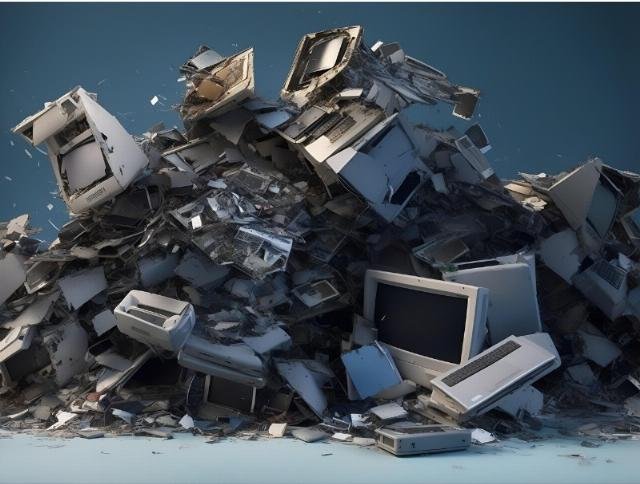
The United States and its allies, the piece suggests, would do well to understand this dynamic. The current policy debates — about strikes, sanctions, and diplomacy — tend to treat Iran as a coherent actor with a unified strategy. But a regime that is losing its grip on the administrative machinery of the state is not a coherent actor; it is a collection of factions and institutions in various states of decay, each acting to preserve its own narrow interests.
In that environment, hard power alone may be insufficient to shape outcomes. The more useful tools may be economic pressure targeting the regime’s ability to buy loyalty, and diplomatic efforts to create off-ramps for factions that want to survive the collapse.
A Warning, Not a Prediction
American Thinker’s article is best read not as a prediction of imminent regime change, but as a warning about the nature of the threat. Iran’s leaders have repeatedly demonstrated resilience — they weathered the unrest of 2022, the assassination of key commanders, the tightening of sanctions. But resilience is not the same as competence.
What the article identifies is a slow-moving structural crisis, one that will not resolve itself quickly and may not be visible to observers focused on missile launches and enrichment levels. The regime may survive for years, but it will do so as a hollow shell, governing in name only, unable to manage the basic functions that once defined the state.
The most frightening scenario is not a sudden collapse, but a long, grinding decline — a state that continues to exist on paper, that retains the weapons and the will to harm its neighbors, but that has lost the administrative capacity to control even its own territory. The Islamic Republic would become, in effect, a sovereign entity in name only, a gargantuan apparatus of dysfunction with atomic ambitions.
For now, the question posed by the piece remains open. Can a mullah dictatorship govern while losing a war? The evidence, the article suggests, is increasingly pointing to no. And for the region, the answer to that question will shape the strategic landscape for years to come.
Source: www.americanthinker.com — https://www.americanthinker.com/articles/2026/08/iran-s-most-dangerous-enemy-administrative-collapse/