
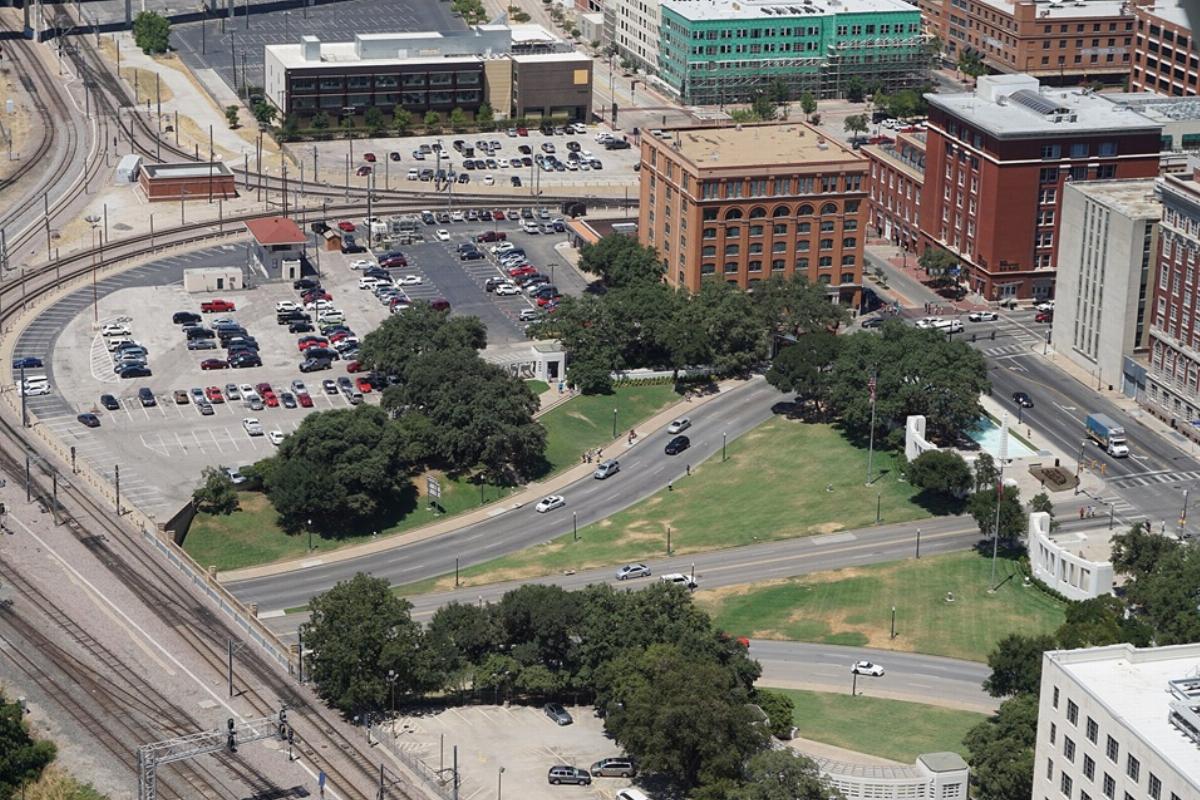
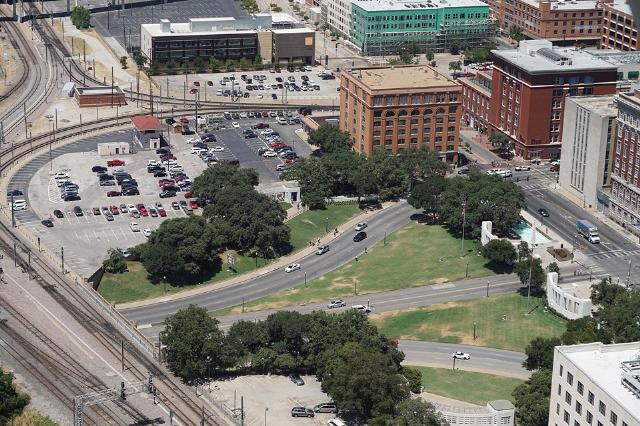
Dealey Plaza was never supposed to be famous. Built in the 1930s as a celebration of Dallas’s commercial roots, this unassuming downtown square was designed as a gateway to the city’s business district. Today, it’s ground zero for one of America’s most enduring historical mysteries — the assassination of President John F. Kennedy.
From Commerce to Conspiracy
What makes Dealey Plaza unique isn’t just what happened there on November 22, 1963, but how the site has become a Rorschach test for American memory. The plaza’s original purpose — commemorating Dallas as a hub of trade and opportunity — has been utterly eclipsed by those six seconds of gunfire that killed a president and altered the course of Cold War America.
Visitors in 2026 still pause at the white X’s painted on Elm Street, marking where bullets struck Kennedy’s limousine. They peer up at the sixth-floor window of the former Texas School Book Depository, now home to the meticulously curated JFK Sixth Floor Museum. And inevitably, they debate the unresolved questions that have turned this plaza into a pilgrimage site for historians, conspiracy theorists, and ordinary citizens alike.
A Nation’s Fractured Memory
The vandalism tells its own story. Someone took a blade to the building’s historical marker, deeply scoring an oval around the word “allegedly” in the phrase describing Lee Harvey Oswald as the accused shooter. This single act of defiance captures the plaza’s modern paradox — it’s both a carefully preserved crime scene and a canvas for national unresolved trauma.
For those who lived through that day, like the author’s brother, Dealey Plaza represents a before-and-after moment in American life. The early 1960s optimism of Kennedy’s New Frontier gave way to years of civil unrest, Vietnam protests, and a growing distrust of institutions. The shots fired here didn’t just kill a president; they shattered the fragile consensus of postwar America.
‘The Grassy Knoll’ as Cultural Touchstone
What’s remarkable six decades later is who still comes. Young couples pushing strollers alongside elderly veterans. International tourists and Texas schoolchildren. Liberals and conservatives, all momentarily united by the gravity of the space. Unlike many historical sites, no one arrives at Dealey Plaza by accident — every visitor makes a conscious choice to confront this difficult piece of national memory.
The debates continue as they have since 1963, just with fewer shouting matches and more smartphone research. Groups cluster near the infamous grassy knoll, comparing notes about ballistic trajectories and the Zapruder film. The museum’s careful documentation of established facts hasn’t stopped the whispers about second shooters, CIA plots, or mafia connections — if anything, the digital age has given conspiracy theories longer legs.
Why This Place Still Matters
Perhaps Dealey Plaza’s most enduring legacy isn’t the conspiracy theories, but its role as a generational conversation starter. Grandparents who remember exactly where they were when Kennedy died explain the event to grandchildren who know it only from history books. Foreign visitors parse the nuances of American politics through the prism of this single violent act. Strangers become temporary allies in piecing together fragments of evidence.
In a polarized era, the plaza remains stubbornly nonpartisan — a place where what unites us (the shared recognition of tragedy) still outweighs what divides us (the endless arguments over who, exactly, was responsible). The vandalized plaque may testify to lingering anger, but the quiet crowds testify to something more hopeful — that even our most painful history deserves to be remembered, debated, and most of all, discussed face-to-face in the Texas sun.
Source: www.americanthinker.com — https://www.americanthinker.com/articles/2026/11/dealey-plaza-an-unintended-memorial/
Source: www.americanthinker.com
Related coverage
- Why Hiroshima and Nagasaki may have saved more lives than they took
- Kash Patel Drops Bestiality as FBI Hiring Disqualifier, Cites Trafficking Victims
- Ohio Man Fights Five-Year Battle Over Prayer Group After City Demands Permit for Religious Assembly
- The Floyd Overdose Myth: Why Drug Tolerance Undermines a Key Chauvin Defense