
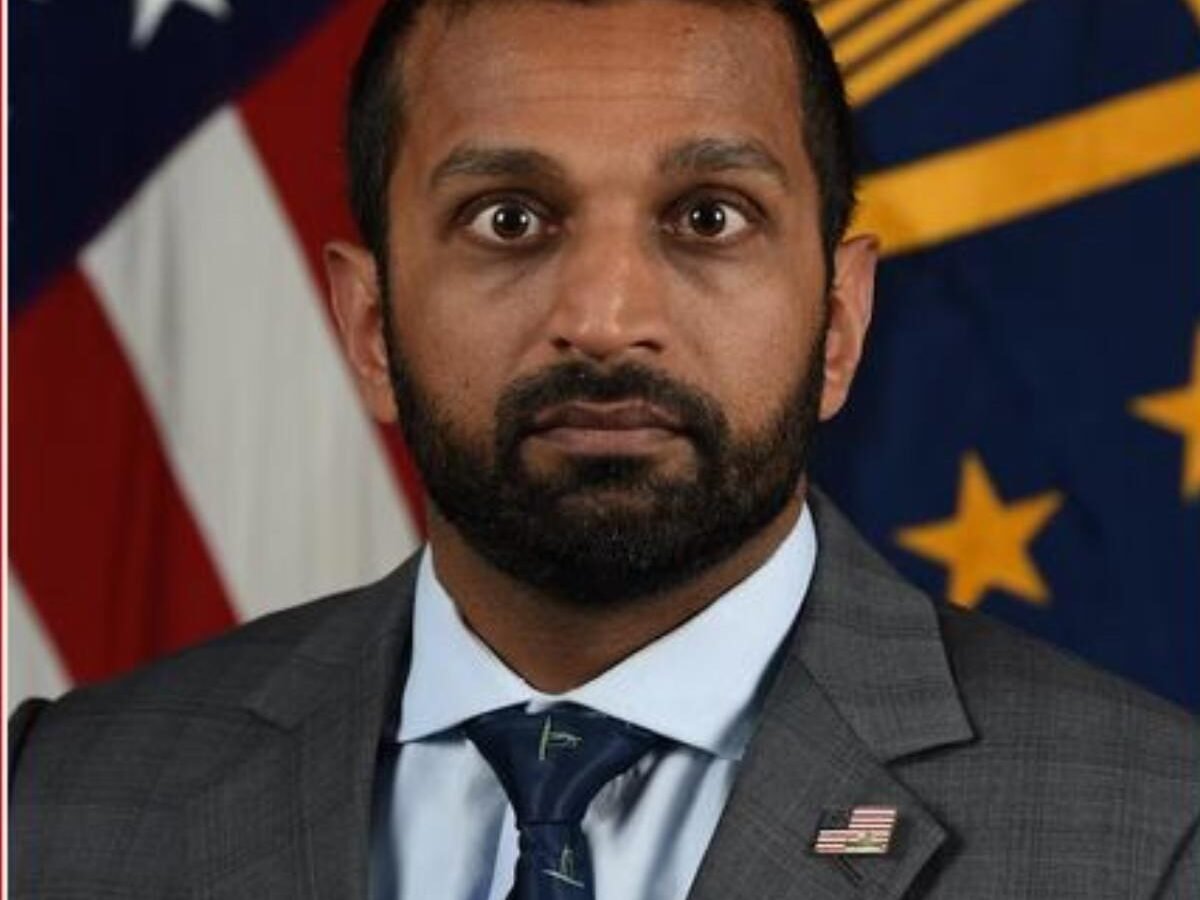
FBI Director Kash Patel has revised the bureau’s hiring standards, eliminating “acts of bestiality” from the list of automatic disqualifiers for job applicants. The change surfaced publicly when Patel was called before the Senate Judiciary Committee to explain it — and his stated rationale has touched off a fresh round of criticism over how the bureau screens its workforce.
What Patel Told the Committee
Appearing before senators, Patel defended the change by framing it as a victim-protection measure. In comments reported by American Thinker, he told Senator John Kennedy that the policy revision was designed so that people who had been trafficked and forced to commit such acts would not be automatically shut out of consideration as a consequence of their own victimization.
According to reporting from American Thinker, Patel’s explanation was that the bureau did not want to punish victims of bestiality — specifically those who had been trafficked into such acts.
That answer did not satisfy lawmakers on the panel, who pressed the director on why a category of conduct so far outside the norm would need to be struck from the disqualification list at all. The exchange quickly became the centerpiece of the hearing for observers watching the bureau’s personnel policy.
The Case Against the Change
Writing for American Thinker, Olivia Murray argues that the sympathy owed to trafficking victims does not settle the policy question. Her position, laid out at length, is that being the victim of a terrible circumstance can still be grounds for a job not being a fit — and that jobs in federal law enforcement demand a serious level of both mental and physical capability.
Murray’s central objection is that removing the disqualifier conflates two separate things: moral judgment about a person’s past and a practical assessment of whether someone is suited to carry a badge, a firearm, and the authorities that come with a bureau post. In her framing, declining to hire someone is not the same as punishing them — it is simply an acknowledgment that not every candidate is right for every role.
She extends that argument by analogy, asking whether the same logic would require the bureau to consider paraplegics as agents, or candidates with very low IQs, on the theory that they should not be penalized for circumstances beyond their control. Her point is not that any of those examples are equivalent in nature, but that the “victim” rationale, followed consistently, would collapse the entire concept of minimum qualifications.
Murray also takes aim at the senators who questioned Patel, dismissing their objections as political theater. In her telling, the lawmakers applying pressure will not take any concrete action against the bureau or the director — they will keep passing spending bills, keep paying Patel his salary, and keep allowing him the use of taxpayer-funded travel. She concedes only that they are correct on the substance of the criticism.
A Second Change, and a Cultural Argument
The bestiality provision was not the only hiring standard altered. According to American Thinker’s report, Patel also changed the treatment of employee theft: stealing from an employer is no longer an automatic disqualifier provided the theft occurred more than three years in the past.
Murray treats that revision as a separate and arguably more consequential problem, asking what it means for individuals with a record of taking from their own workplace to be given access to federal credit cards and sensitive government information. Her argument is that a demonstrated history of theft from an employer is precisely the kind of signal a background check exists to catch, and that waiving it invites predictable problems.
She then pivots to a broader cultural claim, tying the shift in FBI standards to a legal change overseas. According to her commentary on the source material, a legal development in India in recent years effectively downgraded bestiality: the offense was previously a felony but was quietly omitted from penal code updates, leaving it treated as a misdemeanor at most. She offers this as context for what she describes as a cultural direction behind the hiring change, rather than as a direct explanation of Patel’s motivations.
Why This Is Landing the Way It Is
The political salience here is not really about bestiality as a stand-alone topic. It is about what the episode signals to critics of the bureau — that the FBI’s standards are being rewritten with an eye toward ideological goals rather than operational fitness, at a moment when the agency’s credibility is already contested.
Murray makes that case directly, arguing that government jobs should go to competent people and that the office should not be shaped to fit an ideological agenda. Whether or not one accepts that framing, the hearing provided an unusually concrete example for critics to point to. A disqualifier that existed to screen out a specific category of conduct was removed, and the director’s justification was that the people the rule might have caught could be victims.
Patel’s defenders would presumably argue that the change is narrow, that it concerns victims rather than perpetrators, and that routine vetting still gives the bureau discretion to reject applicants on a case-by-case basis. That is a defensible position in the abstract. The difficulty is that the hearing did not produce a clear account of how the bureau distinguishes a coerced victim from someone who engaged in the conduct voluntarily — and the disqualifier that previously handled that question automatically is now gone.
What remains is a policy decision that is easy to defend in the hypothetical and awkward to explain in a hearing room, paired with a second change — the employee-theft carve-out — that is harder still to justify on victim-protection grounds. Together they give the bureau’s critics a durable talking point, and give senators another area to press the director on the next time he appears.
For now, the practical effect is straightforward: two categories of conduct that once barred someone from FBI employment automatically no longer do. What the bureau’s actual vetting looks like in those cases, and whether it produces meaningfully different outcomes, is a question Patel has not yet answered in detail in public.
Source: www.americanthinker.com — https://www.americanthinker.com/blog/2026/09/kash-patel-removes-bestiality-as-a-disqualifier-during-the-fbi-s-hiring-process-then-has-the-most-asinine-explanation-as-to-why/