
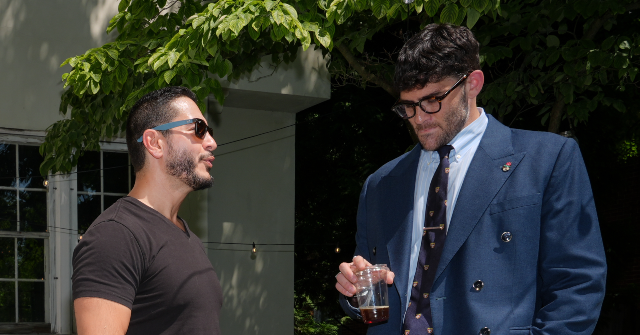
Democratic U.S. Senate nominee Abdul El-Sayed dismissed his Republican opponent’s criticism over his campaign appearances with streamer Hasan Piker as misplaced, telling CNN that what actually troubles him is the normalization of violent rhetoric in American politics.
Appearing Thursday on CNN’s “The Source,” El-Sayed was asked about Mike Rogers, his GOP rival in the Michigan Senate race, who has criticized him for campaigning alongside Piker given Piker’s past remarks suggesting America deserved the 9/11 attacks. According to Breitbart News, which flagged the exchange, El-Sayed called Rogers’ focus “sad” and suggested his opponent was avoiding the issues voters care about.
“It’s sad. He doesn’t really want to talk about any of the issues people are really facing,” El-Sayed said. “If he thinks that the issue is a streamer in California, then he’s got another thing coming.”
The exchange shifted when host Kaitlan Collins brought up a separate incident: a person in the crowd at the Republican National Convention who was heard saying “He should be shot” after Sen. Ted Cruz (R-TX) mentioned El-Sayed during a speech.
The Broader Argument on Political Violence
El-Sayed used that moment to make a broader argument about the state of American political discourse. He said such calls to violence have become disturbingly routine and that politicians across the spectrum have failed to condemn them forcefully enough.
“This is what has become normal in our politics, literally calls to violence, and the inability for anybody to actually call it out,” he said.
He went on to say that democracy is meant to be a peaceful mechanism for resolving disagreements. “We can learn to disagree agreeably,” he said, adding that hearing calls to violence “should be shuddering to all of us.”
El-Sayed framed the responsibility as collective, saying political leaders need to lower the temperature rather than treat politics as a “bloodsport” aimed at attacking opponents. He described his own motivations for entering politics as rooted in a desire to fix a healthcare system he said is “more interested in billing than healing.”
“I got into politics because I wanted to heal people,” he said. “And I realized that our healthcare system was failing to do that.”
He urged anyone who heard the call to violence to condemn it, calling it “a call to violence that ought to be condemned across the board,” and said he hoped politics could return to a conversation about what really matters — the ability to live a dignified life and access the things people need.
“Our democracy, so long as we’re willing to dignify it and uphold it, is the best means we have to solving the challenges that we face together,” El-Sayed said.
Rogers’ Line of Attack
Rogers has sought to make El-Sayed’s associations with Piker a central line of attack, arguing that campaigning with someone who made inflammatory comments about 9/11 should disqualify him in the eyes of Michigan voters. The criticism comes as the two compete for a Senate seat in a state that has become a key battleground.
El-Sayed’s response on CNN amounted to a two-part argument: that Rogers is elevating a distraction over kitchen-table concerns, and that the real problem in American politics is a willingness to tolerate violent rhetoric from one’s own side while condemning it from the other.
The appearance reflects the broader tension running through the 2026 campaign cycle, where candidates in both parties are navigating questions about political violence, online influencers, and the boundaries of acceptable political association. For El-Sayed, the challenge is answering Rogers’ attacks without ceding ground on the issues he wants to center — healthcare, economic dignity, and what he describes as a broken system that prioritizes billing over people.
Whether the exchange moves voters in Michigan remains to be seen, but it offered a snapshot of how the debate over rhetoric and responsibility is playing out in one of the country’s most closely watched Senate races.
Source: www.breitbart.com — https://www.breitbart.com/clips/2026/09/10/el-sayed-says-its-sad-rogers-thinks-pikers-9-11-comments-an-issue-then-says-people-dont-denounce-violent-rhetoric/