
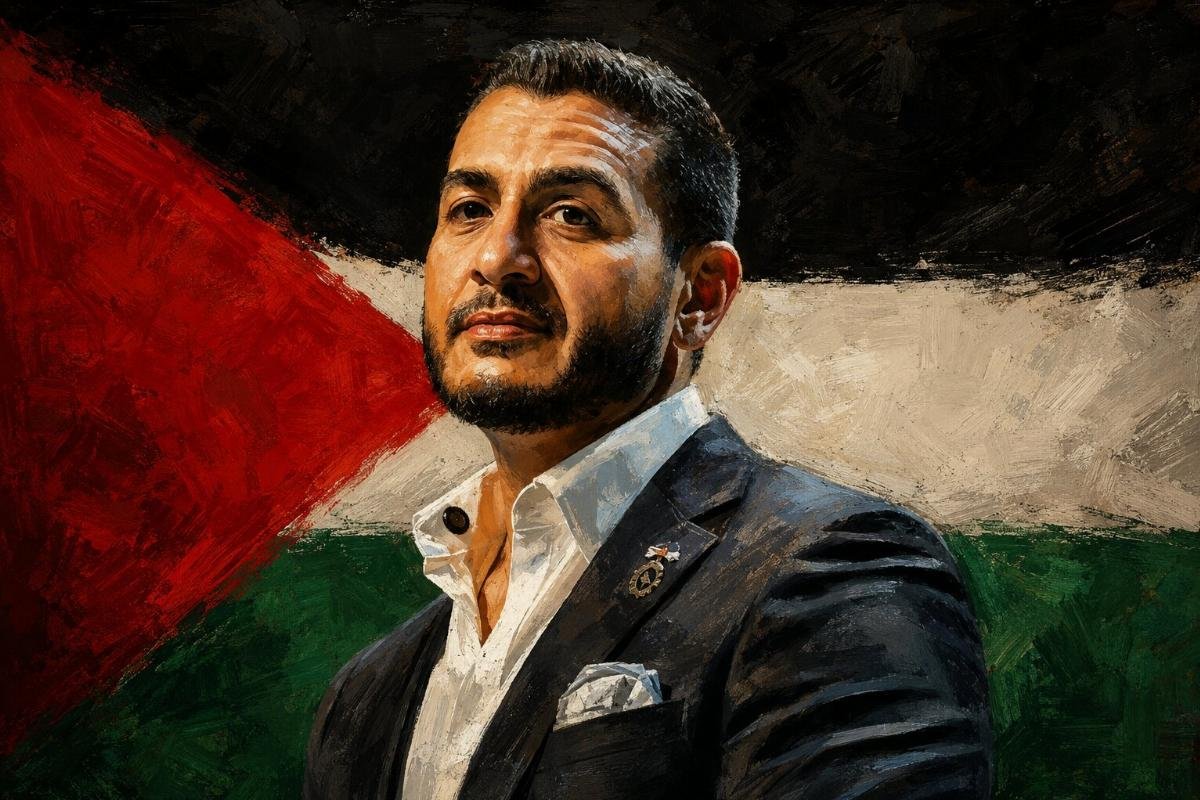
The political spotlight in Michigan turned intense last week after remarks made in 2009 by Democratic U.S. Senate nominee Abdulrahman Mohamed El-Sayed resurfaced, raising questions about the intersection of his faith and his potential role in government, according to a report from American Thinker.
El-Sayed, an avowed Muslim, reportedly said during his medical school years that he chose a loan compliant with Islamic law—Sharia—and proclaimed that, as a Muslim, he would always follow Sharia in “everything” he ever sought to do. While some observers may dismiss those words as the youthful devotion of a deeply religious man, critics argue they carry significant weight in the context of the upcoming November election.
The concern, as laid out by American Thinker, is not about religious belief per se but about the compatibility of a total commitment to Sharia with the constitutional principle of separation of church and state. The argument is that Islam, unlike many other faiths, does not allow its adherents to compartmentalize their religious obligations from their public duties. If El-Sayed were to take the oath of office and then, as a legislator, set aside his religious convictions to represent a diverse constituency, he would, by his own 2009 declaration, be acting contrary to his faith.
The Muslim Brotherhood Connection
The article also points to El-Sayed’s alleged links to the Muslim Brotherhood, a political organization founded in 1928 that has been described by counterterrorism analyst Kyle Shideler as a breeding ground for Islamist groups. According to the report, the Brotherhood, unafraid of potential voter backlash, recently endorsed El-Sayed’s candidacy.
The timing of these revelations, coming just months before the election, is likely to intensify scrutiny of El-Sayed’s political positions and his personal religious commitments. Voters will have to weigh whether his statements from 17 years ago are indicative of his current worldview or merely a reflection of a different time in his life.
A Convert’s Warning
The report also highlights the story of Marziyeh Amirizadeh, an Iranian woman who converted to Christianity and faced the death penalty for apostasy under Islamic law. Amirizadeh was arrested in 1999 and sentenced to death, spending time on death row in Tehran’s Evin Prison before escaping and eventually reaching the United States. She became a U.S. citizen in 2016, and her firsthand experience with strict Islamic governance has led her to voice concern about candidates who openly prioritize Sharia.
Amirizadeh’s story serves as a stark reminder of the human rights implications often associated with Islamic law, particularly in countries where it is the foundation of the legal system. The report contrasts these realities with the broader international human rights framework established by the United Nations.
Human Rights and the KISS Principle
The article revisits the 1948 Universal Declaration of Human Rights (UDHR), which was crafted following the horrors of World War II to define fundamental freedoms for all people. The UDHR followed what is often called the KISS (Keep It Simple Stupid) principle, asserting that basic rights belong to every human being simply by virtue of being human.
Notably, Saudi Arabia abstained from signing the UDHR, citing the need to comply with Sharia and the Quran. The report also mentions the 1990 Cairo Declaration of Human Rights in Islam (CDHRI), adopted by the 57 member states of the Organization of Islamic Cooperation, which effectively limited the UDHR’s universal human rights in favor of Sharia-based interpretations. While the CDHRI was modified in 2020 to align more closely with the UDHR, gaps remain, particularly concerning the rights of women and LGBTQ individuals.
Allegations of ‘Muslim Privilege’
Drawing a parallel to a recent incident in a WNBA game, the report suggests that while accusations of “white privilege” can be used to deflect accountability, a similar phenomenon exists with respect to Islamic law. The author argues that “Muslim privilege” allows for the erosion of UDHR-defined human rights without adequate criticism. If El-Sayed were elected, the article contends, democracy could open the door to putting such privilege into practice.
Questions for El-Sayed
The report poses direct questions that it says El-Sayed should answer: What fate should a Muslim suffer for converting to Christianity? Does he personally consider all women equal to all men? Does he intend to leave his religion at the door, even if that conflicts with Islam’s demands?
There’s also a note of caution about potential deception. The article claims that under Islam, lying is permissible in certain situations, including to resolve disputes, to please a spouse, and during warfare. Given that the report frames the struggle as a war between Islam and other religions, it suggests El-Sayed’s responses may not be completely trustworthy.
Amirizadeh’s warning is quoted directly: “America, please do not be fooled, and please do not vote for any of these Islamists or their enablers. Heaven help us all.”
As Michigan voters head to the polls in November, the resurfacing of these 2009 remarks is likely to be a defining issue in the Senate race. The KISS principle, applied to this election, might indeed evoke the classic “Lost in Space” warning: “Danger, Will Robinson!”
Source: www.americanthinker.com — https://www.americanthinker.com/articles/2026/08/el-sayed-kiss-and-tell/