
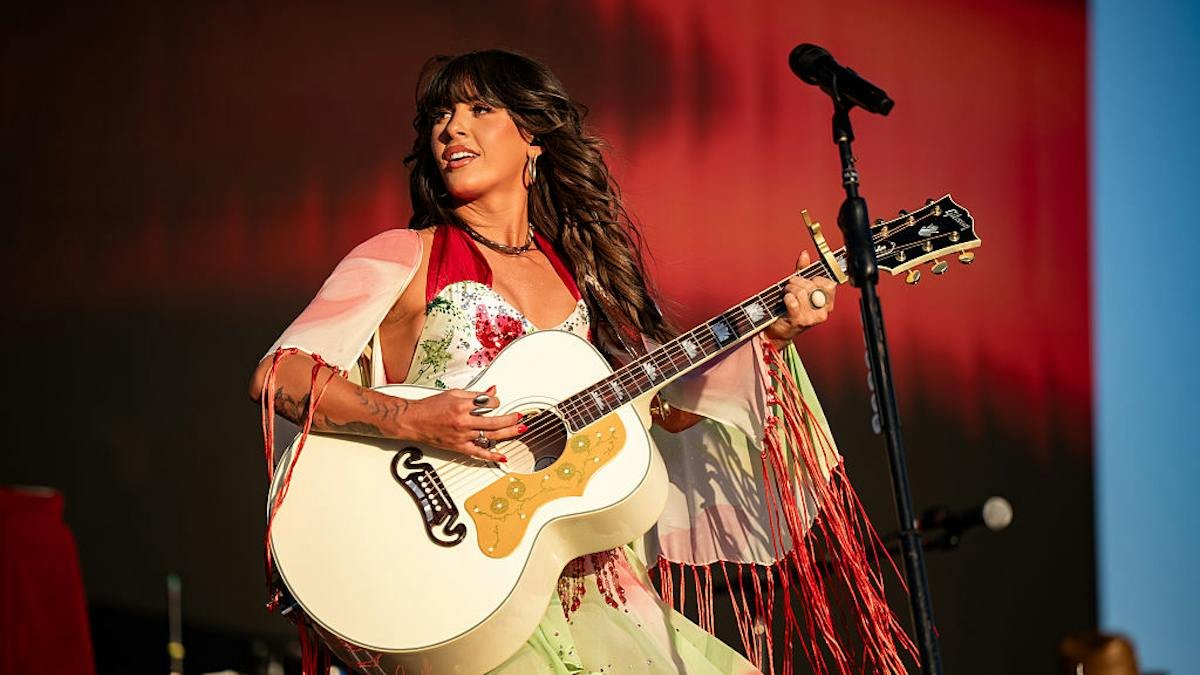
Ella Langley’s “Choosin’ Texas” has spent 24 weeks at No. 1 on the Billboard Hot 100, making it the longest-running chart-topper in the survey’s history, according to reporting by The Daily Wire. It has pulled in more than 1.6 billion global streams and outlasted record-holders like Mariah Carey’s “All I Want For Christmas Is You” and Whitney Houston’s “I Will Always Love You.”
And yet, a year after its release, a vocal contingent of Americans says they have never encountered it. Not once.
In one widely shared Reddit post, a user asked, “I’ve never heard of the song. I assume it’s one of those TikTok things?” Another commenter from Louisiana, describing the state as a “deeeep red state,” wrote that they had never heard the track — but that their husband immediately groaned when it came up, complaining he was sick of hearing it at the gym. The commenter wondered aloud what that split said about society.
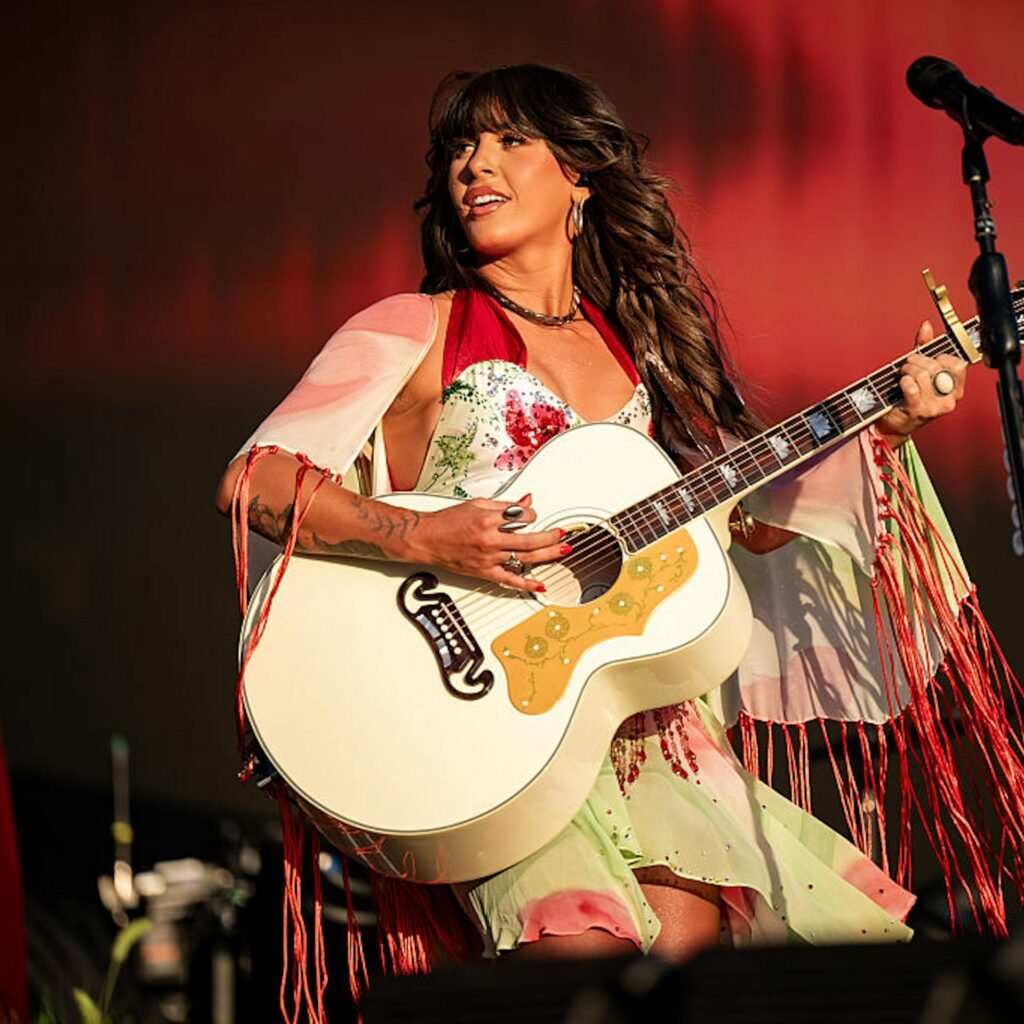
A chart record most people can’t hum
The gap between those numbers is the story. “Choosin’ Texas” is, by Billboard’s own measure, the most successful song in Hot 100 history. It is also a song that a meaningful share of the public could not identify if asked, a fact its more devoted listeners find almost impossible to process.
Some of the confusion is practical. The track has been inescapable on TikTok and Instagram feeds, and retail campaigns for American Eagle, Chase Sapphire and Boot Barn amplified its reach beyond country radio. That combination — short-form video plus brand tie-ins — can produce saturation that feels total to anyone inside those ecosystems and nearly invisible to anyone outside them.
The Daily Wire recounts one scene that captures the mismatch: a band in downtown Nashville, asked by a young woman in new cowboy boots to play the song, admitting they didn’t know it and stumbling through the opening bars. That was in spring 2026, six months after “Choosin’ Texas” debuted at No. 39.

Country pop’s moment, and a monoculture that keeps flickering
The song arrived during a broader country-pop surge, building on the soft-rock groove and unhurried vocal style that made Stevie Nicks’ “Dreams” a durable favorite. A Reddit commenter called it a “very fun song to sing at karaoke” with a “sing this in your car” quality reserved for the most beloved pop-country hits. Nate Sloan, a musicologist at the University of Southern California, described its lyrical phrasing to The Daily Wire as “almost like a trance,” adding that the sound is “a little more rock or even kind of soul-inflected.”
That assessment sits alongside a larger argument about whether shared culture is reviving or simply simulating itself. The Wall Street Journal, as cited in the Daily Wire piece, pointed to a summer of common experiences — theater runs for “The Odyssey,” “Project Hail Mary” and “Spider-Man,” the Swift-Kelce wedding, a Knicks NBA title, and a World Cup that drew international visitors to North America during the country’s 250th anniversary year.
Against that backdrop, a country crossover about a two-stepping, whiskey-drinking cowboy and the Smoky Mountains fits neatly into the programming. What it cannot do, on its own, is guarantee that everyone was listening.

Algorithms, taste tribes, and the cost of not knowing
The old shared reference points are gone. Knowing the words to a Michael Jackson or Beatles song once bound generations together; today, listeners retreat into niche genres that algorithms dutifully feed. The Daily Wire notes that prior record-holders — “Macarena,” “Despacito,” Lil Nas X and Billy Ray Cyrus’s “Old Town Road” — are more recognizable to many people than Langley’s current No. 1.
There is also a social incentive at work. Admitting familiarity with a twangy country hit can read as a confession of basic taste, and some listeners wear their ignorance as a kind of tastemaker credential. “God forbid we all sing along to a song about Americana and get outed as liking pickup trucks,” the piece observes.
But the value of a shared song may lie precisely in its ordinariness. Psychologists quoted in the Daily Wire article describe shared reality as a basic social need: “As social creatures, we often seek connection with others, and sharing our internal states brings us closer to others. Thus, creating a shared reality is fundamentally about establishing commonalities to reduce uncertainty regarding the world and foster connections between individuals.”
That is the case for cranking up the country, even for listeners who couldn’t pick Ella Langley out of a lineup. A group chat about fantasy football or a new season of “Real Housewives” does the same work on a smaller scale. The specific artifact matters less than the fact that two people are holding the same thing in their heads at once.
AI and recommendation engines can manufacture the appearance of consensus, smoothing entertainment into something uniformly palatable — and, in the process, uniformly flat. That is not the same as a room full of people who all know the chorus.
“Choosin’ Texas” may or may not be that chorus for most of the country. Twenty-four weeks at No. 1 says a great deal about how the charts work now, and the number of people who have never heard it says just as much.
Source: www.dailywire.com — https://www.dailywire.com/news/choosin-texas-is-the-most-popular-song-in-america-do-you-know-it