
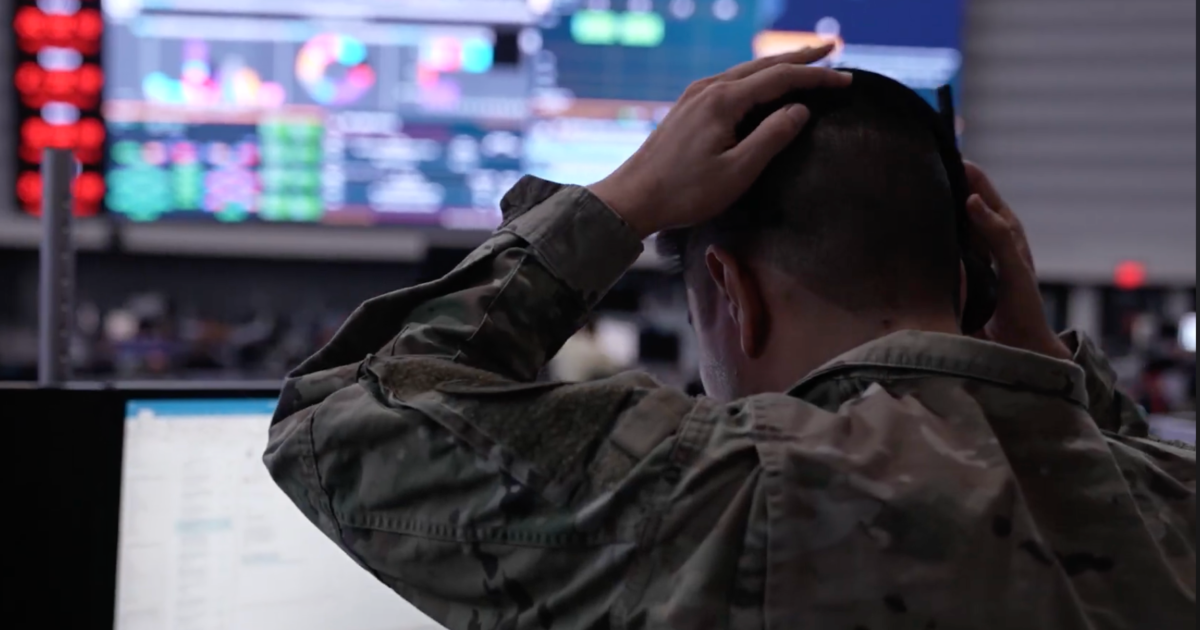
Five people whose work supported missions at U.S. Cyber Command and the National Security Agency at Fort George G. Meade died by suicide within roughly a month of each other this summer, according to reporting by The Baltimore Banner. The deaths occurred across a five-week span stretching from June into July, an unusually tight cluster at the Maryland installation that houses the country’s most sensitive cyberwarfare operations.
The losses have drawn formal responses from Maryland’s congressional delegation. Rep. Sarah Elfreth (D-MD), whose district borders Fort Meade, told reporters she was not entirely surprised by the news. “This is something that, unfortunately, I think a lot of people wouldn’t say saw coming but knew was going to be a possibility based on the work that goes on at Fort Meade,” Elfreth said.
Both of Maryland’s U.S. senators have joined Elfreth in pressing for answers and calling for preventive measures, according to the Banner. The installation is home to roughly 18,000 service members and 41,000 civilian employees, and the agencies there had already launched mental health initiatives before this summer’s deaths.
The Human Cost of Windowless Rooms
The day-to-day reality of the job offers some context for the strain. Cyber warriors at Fort Meade routinely work long shifts inside secure, windowless facilities known as SCIFs — sensitive compartmented information facilities — monitoring and repelling cyberattacks against U.S. networks. The work has intensified amid the war with Iran and an accelerating global race to develop new artificial intelligence models. The nature of the assignments frequently isolates personnel from friends and family, cutting them off from the ordinary social support that might otherwise buffer job stress.
One of the five who died has been publicly identified with his family’s consent. Tech. Sgt. Kevin Stallings was an Air Force digital network intelligence analyst stationed at U.S. Cyber Command’s headquarters at Fort Meade, Bloomberg reported. His family told the outlet they wanted his name released to draw greater attention to the suicides and the conditions that may have contributed to them.
Naming a service member in connection with suicide runs against long-standing military practice, which typically withholds such details to protect grieving families. The Stallings family’s decision reflects a growing frustration among some relatives that quiet handling of these deaths has allowed the problem to persist without sufficient scrutiny.
Funding Fight Moves to Capitol Hill
Lawmakers are now weighing a legislative response. The House Appropriations Committee has proposed $11 million for a program called “High Performance Team Training” as part of its fiscal 2027 defense spending bill, a measure described as an effort to boost morale at U.S. Cyber Command.
The Record reported that the training would provide “cognitive, psychological, physiological, and spiritual sustainment for high-tempo cyber operations,” and warned that without funding, “burnout and force degradation will continue.”
That language frames the issue in both human and readiness terms. The military’s cyber mission depends on a comparatively small pool of highly trained specialists whose skills are in demand in the private sector, where pay is often higher and hours more predictable. Burnout that pushes experienced personnel out of the force — or worse — carries implications for national security that extend well beyond any single command.
The proposal remains subject to the broader appropriations process, where defense spending bills frequently change as they move between the House and Senate. Whether the $11 million survives in its current form is not yet settled.
Questions Without Easy Answers
The cluster comes after previous efforts by the agencies and the Anne Arundel County installation to address mental health among the workforce. Those programs, whatever their scope, did not prevent five deaths in five weeks, a fact that has fueled congressional demands for a fuller accounting.
What exactly prompted the spate of deaths this summer has not been publicly established. Military and intelligence officials have not released a comprehensive explanation, and the Banner’s reporting does not attribute the suicides to any single cause. The convergence of high operational tempo, isolated working conditions, and the psychological weight of defending against constant cyber threats are among the factors that observers and lawmakers have raised, but no official finding has tied them directly to the deaths.
For Elfreth and the state’s senators, the immediate priority appears to be preventing a sixth. That means pressing the command and the Pentagon for details on what support systems exist, whether they are being used, and what changes might make a difference for the people who spend their careers in rooms without windows, watching for attacks that never fully stop.
The families of those lost, including Stallings’ relatives, have made clear they do not want the deaths to pass without a response. Whether the proposed training funds, congressional oversight, or internal reforms at Fort Meade will prove adequate is a question that will likely be answered over the coming months — and measured, ultimately, in whether the cluster remains an aberration or becomes a pattern.
Source: www.thegatewaypundit.com — https://www.thegatewaypundit.com/2026/09/whats-happening-5-suicides-reported-5-weeks-u/