
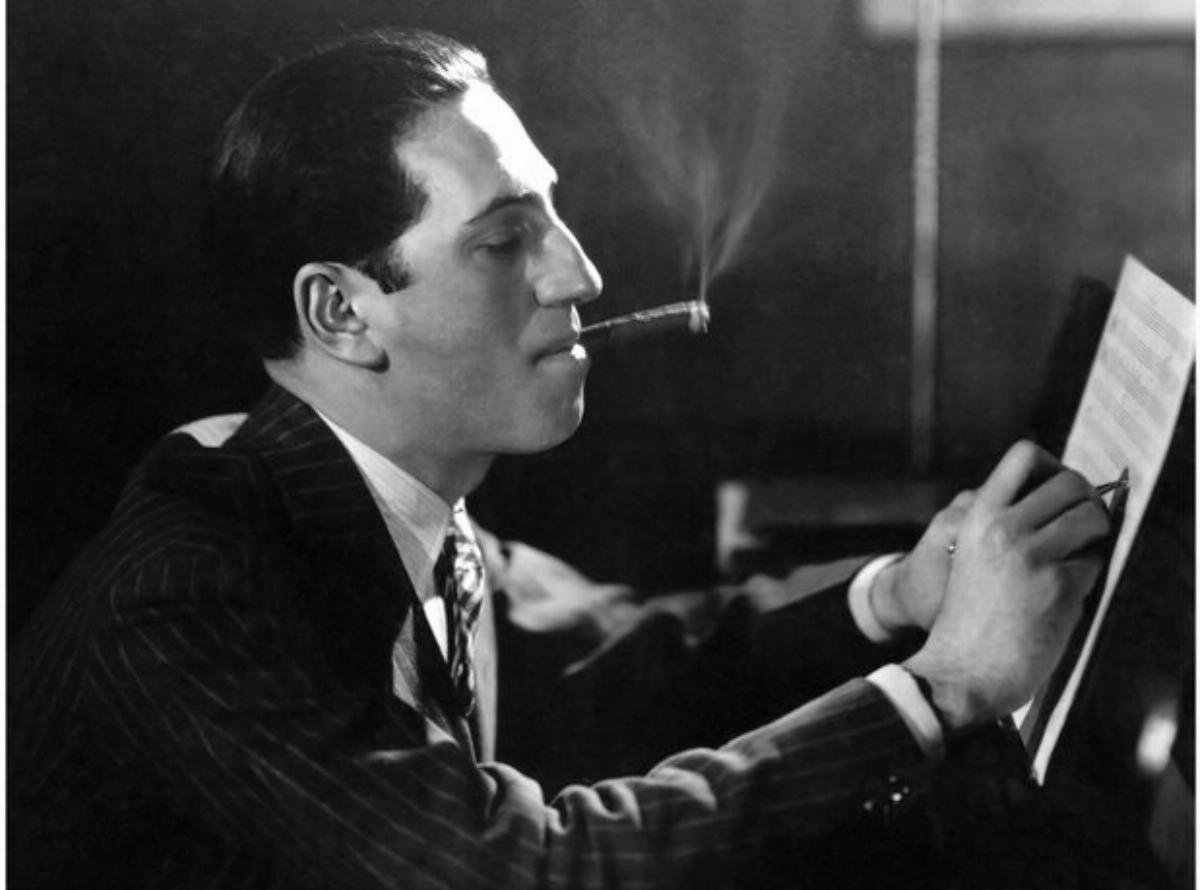
On September 26, George Gershwin would have turned 128. He didn’t make it to 40 — he died at 38, three years older than Mozart ever got to be, and in the same Los Angeles hospital where the writer Mark C. Ross would later be born. In a piece for American Thinker marking the occasion, Ross uses the composer’s brief, brilliant career as a lens for a larger argument about American creativity — and whether the conditions that produced Gershwin still exist.
A Brooklyn Kid Who Captured the South
Ross notes that Gershwin’s most enduring work, the opera Porgy and Bess, was a box office flop when it premiered in 1935. He suggests Jim Crow America wasn’t ready for a cross-cultural presentation of that kind, and cites Thaddeus Russell’s A Renegade History of the United States, which recounts how Louis Prima was initially banned from New York nightclubs because he was assumed to be Black — a jazz trumpeter from New Orleans, after all — even though he was Italian.
What makes Porgy and Bess remarkable, in Ross’s telling, is that two Jewish brothers from Brooklyn managed to capture Southern Black culture in a form that endures. Jazz musicians still cover songs from the show regularly. George and Ira had help: DuBose Heyward published the novel Porgy in 1925, and George read it the following year and decided to set the story to music.
Tennis, Schoenberg, and a Score Full of Cartoons
After the Gershwins moved to Los Angeles, George befriended Arnold Schoenberg, the composer for whom UCLA’s music building is named, and the two played tennis together regularly. The Gershwins also wrote the UCLA Bruins fight song, which was later adapted into the pop standard “Strike Up the Band.”
Ross adds a detail he says is rarely mentioned: George and Ira gave Schoenberg a copy of the Porgy and Bess score, hand-illustrated with Ira’s cartoons. Schoenberg eventually passed it to George Tremblay, a less prominent local musician. In his early twenties, Ross happened to live across the street from Tremblay, who kept a refrigerator full of Rainier Ale, loved to chat, and showed off that score with considerable pride.
Ross also points to Rhapsody in Blue as another product of Gershwin’s talent, noting that Leonard Bernstein and the New York Philharmonic recorded a version he calls beautifully schmaltzy.
Immigrant Sons and the American Stage
The significance of the Gershwin story, for Ross, is what it says about American culture: the sons of Russian immigrants fleeing pogroms ended up entertaining the world. Broadway and Hollywood provided the environment, collaborators happened to be available, and audiences were ready to receive the work. That combination, he argues, is not accidental.
Which brings him to the question he frames as today’s quandary: is America losing its fizz when it comes to stimulating creative works — from art in all its forms to AI and other high-tech innovations? His answer is another question: compared to what? It’s a rhetorical move rather than a settled argument, but the implication is that American creative capacity has always been judged against a nostalgic standard that may never have existed in the first place.
Ross closes with a line that reads less like music criticism than a mission statement for the outlet itself: now more than ever, the ability to speak our minds is crucial to the republic we cherish. Read that way, the Gershwin anniversary is doing double duty — honoring a composer and making a case about the cultural conditions that let someone like him emerge at all.
Source: www.americanthinker.com — https://www.americanthinker.com/blog/2026/09/remembering-george-gershwin/