
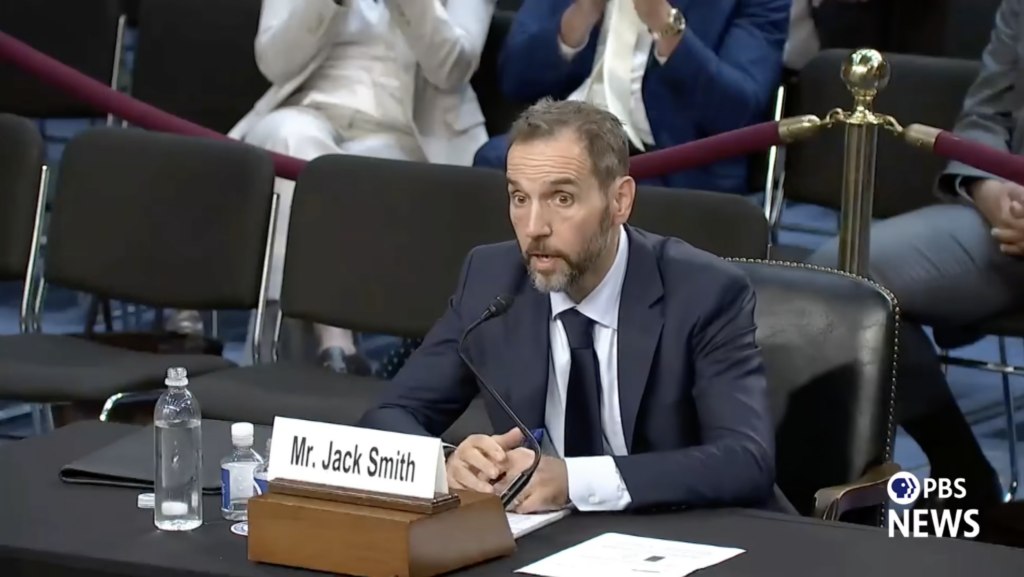
A single $10 donation to Donald Trump’s 2020 campaign has become the centerpiece of a new fight over whether federal prosecutors went too far in gathering information about the former president’s supporters.
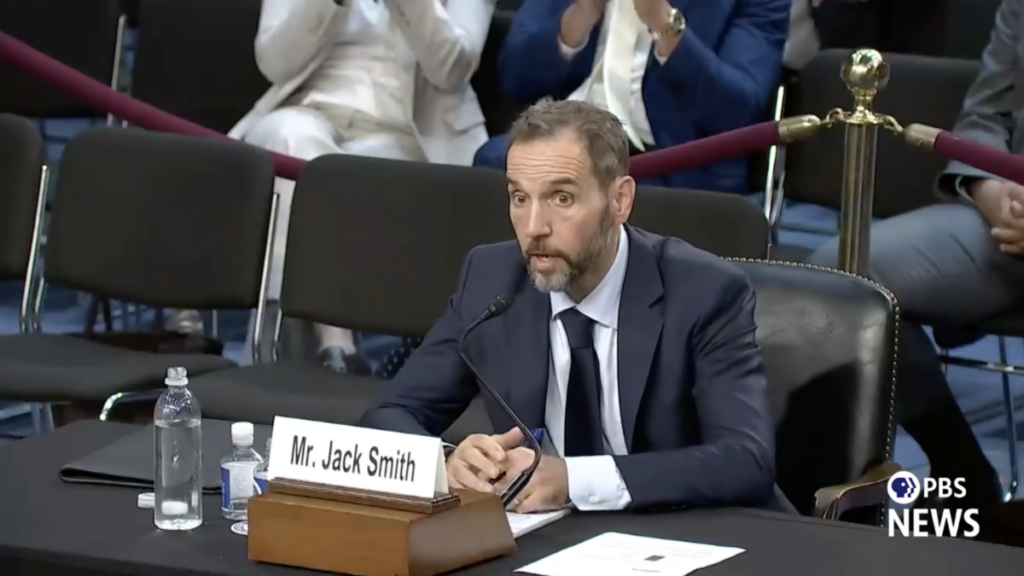
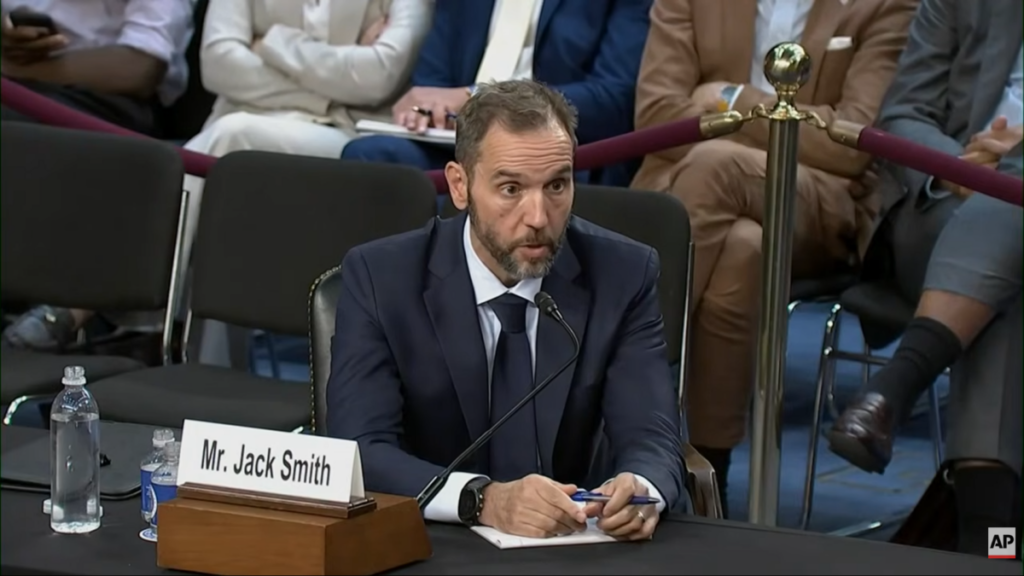
Senate Judiciary Committee Chairman Chuck Grassley said in a post on X that an Iowa resident from Osage who gave $10 to Trump before the 2020 election had his home address, banking information and other personal data obtained by then-Special Counsel Jack Smith’s team and passed along to the Biden administration’s FBI and Justice Department. The donor was among roughly 5,000 Americans whose personal checks and information were swept up in the probe, according to Grassley.
Grassley, a Republican, described the episode as the work of a “runaway Democrat gov[ernmen]t,” and The Federalist framed it as part of a broader pattern in which Democratic-led institutions use the machinery of government to discourage ordinary people from participating in politics. Grassley released whistleblower disclosures Tuesday claiming Smith’s team “acquired at least 4,782 checks from Americans who made mainly small-dollar donations to President Trump between September 2019 to August 2023.” The checks, obtained through a subpoena, reportedly included bank account and routing numbers, signatures and home addresses.
The Tea Party Parallel
For critics of the investigation, the comparison to the Obama-era IRS controversy came quickly. During that episode, Lois Lerner, then director of Exempt Organizations at the IRS, oversaw staff who screened applications using terms like “Tea Party” and “Patriot.” The agency later admitted to targeting conservative groups based on their political views. Lerner was never prosecuted.
The Federalist’s argument is that the IRS scandal should have been a turning point that led to stricter limits on government overreach — and that it wasn’t. Whether or not one accepts that framing, the pattern of donor-focused investigations has continued in blue states in subsequent years.
New Jersey and the Pregnancy Center Subpoena
As The Federalist reported, New Jersey’s Democrat-run government targeted First Choice Women’s Resource Centers in 2023 over what the outlet characterized as baseless concerns that it was misleading donors and misrepresenting its services. Then-Attorney General Matthew Platkin issued a subpoena that critics said amounted to an attempt to strong-arm the nonprofit into revealing its donor list to a state with a strong abortion-rights agenda.

In April, the Supreme Court ruled that the New Jersey Division of Consumer Affairs and the Attorney General’s Office could not produce evidence of complaints against First Choice alleging fraud, deception or misleading donors. Platkin’s subpoena nonetheless demanded that the center “disclose documents reflecting the names, phone numbers, addresses, and places of employment of all individuals” who had donated outside First Choice’s webpage.
Arizona’s Proposition 211
Arizona has offered a more recent test case. Proposition 211, backed by left-leaning groups, requires nonprofits that spend more than $50,000 on statewide media campaigns to disclose the sources of donations greater than $5,000. In June 2026, the Arizona Supreme Court rejected a challenge to the law but allowed part of a separate challenge brought by the Center for Arizona Policy, the Arizona Free Enterprise Club and anonymous donors who say disclosure would expose them to harassment.
Ryan Mills of the Goldwater Institute said, “Everyone has the right to support causes they believe in without fear of harassment, retaliation, or being canceled.” Mills added that the case will let the plaintiffs “prove that compelled disclosure chills speech in violation of the Arizona Constitution.”
Scott Freeman, senior attorney at the Goldwater Institute, which represents the plaintiffs, called the ruling “an important victory for every Arizonan who believes people should be free to support the causes they care about without fear of government-compelled disclosure,” saying the state’s high court recognized that Arizona’s constitution independently protects free speech and that citizens are entitled to prove compelled donor disclosure violates those protections.
What Comes Next
In practical terms, the fight is about whether giving $10 to a candidate should be able to set off a chain of subpoenas, bank-record requests and referrals to federal investigators. Smith’s team has not commented publicly on the specific disclosures. Grassley’s release, first reported through his X account and detailed by The Federalist, intensifies congressional scrutiny of the special counsel’s investigative tactics as Republicans continue to press the Justice Department for answers.
The Federalist’s broader point — that each instance of donor targeting makes ordinary citizens more likely to stay out of politics altogether — is one that has traction beyond party lines. Katie Pavlich noted on X that the tactic has a chilling effect on speech and recalled earlier fights including the IRS’s Tea Party targeting, New Jersey’s pursuit of pregnancy center donor records and Arizona’s current disclosure regime. The message, the outlet argued, is consistent: supporting the wrong political cause may cost more than a voter expects.
For now, the $10 Iowan from Osage is unlikely to become a household name. But the whistleblower disclosures Senate Judiciary Republicans have released could shape the next round of hearings — and, depending on how courts rule in Arizona and elsewhere, determine whether donor lists remain a tool of investigation or become a protected sphere of political privacy.
Source: thefederalist.com — https://thefederalist.com/2026/09/29/jack-smith-spying-on-trump-donors-is-latest-dem-ploy-to-chill-americans-political-speech/