
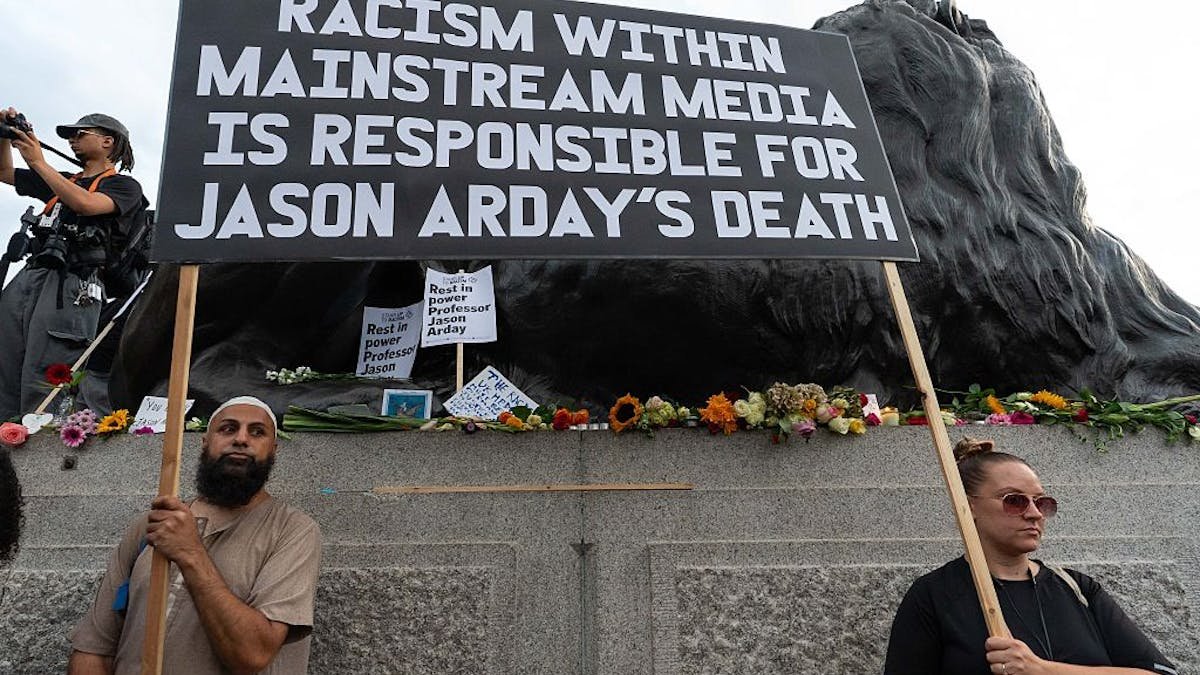
LONDON — The death of a disgraced Cambridge professor has ignited a fierce political battle in Britain over press freedom, with activists and politicians seizing on the tragedy to push for sweeping new restrictions on news coverage.
Jason Arday, whose academic achievements unraveled under scrutiny last year, was found dead at his London home on Friday. The 40-year-old leaves behind two children. But the mourning quickly gave way to a coordinated campaign blaming the media for his death and demanding state intervention in journalism.
A Career That Collapsed
Arday resigned from his post at Cambridge in the fall after a three-week investigation by journalists exposed serious problems in his résumé. Multiple institutions, including three universities, denied on the record that he held visiting professorships they were said to have granted him. The scrutiny also raised questions about his claimed 30 marathons in 35 days, an invented book, and inconsistencies in his accounts of surviving testicular cancer that later became brain cancer in the pitch for his memoir.
Arday routinely pushed back against critics, reporting at least one academic to the police and a journalist to Scotland Yard. His legal team, known as one of Britain’s most feared libel firms, contacted several editors.
Conservative commentators and press freedom advocates argue Arday’s case is a warning about the cost of abandoning scrutiny. “True, newsworthy stories must not be published in case their subject harms himself,” is the new principle being advocated by his supporters, according to critics of the campaign.
Vigil, Blame, and Calls for Action
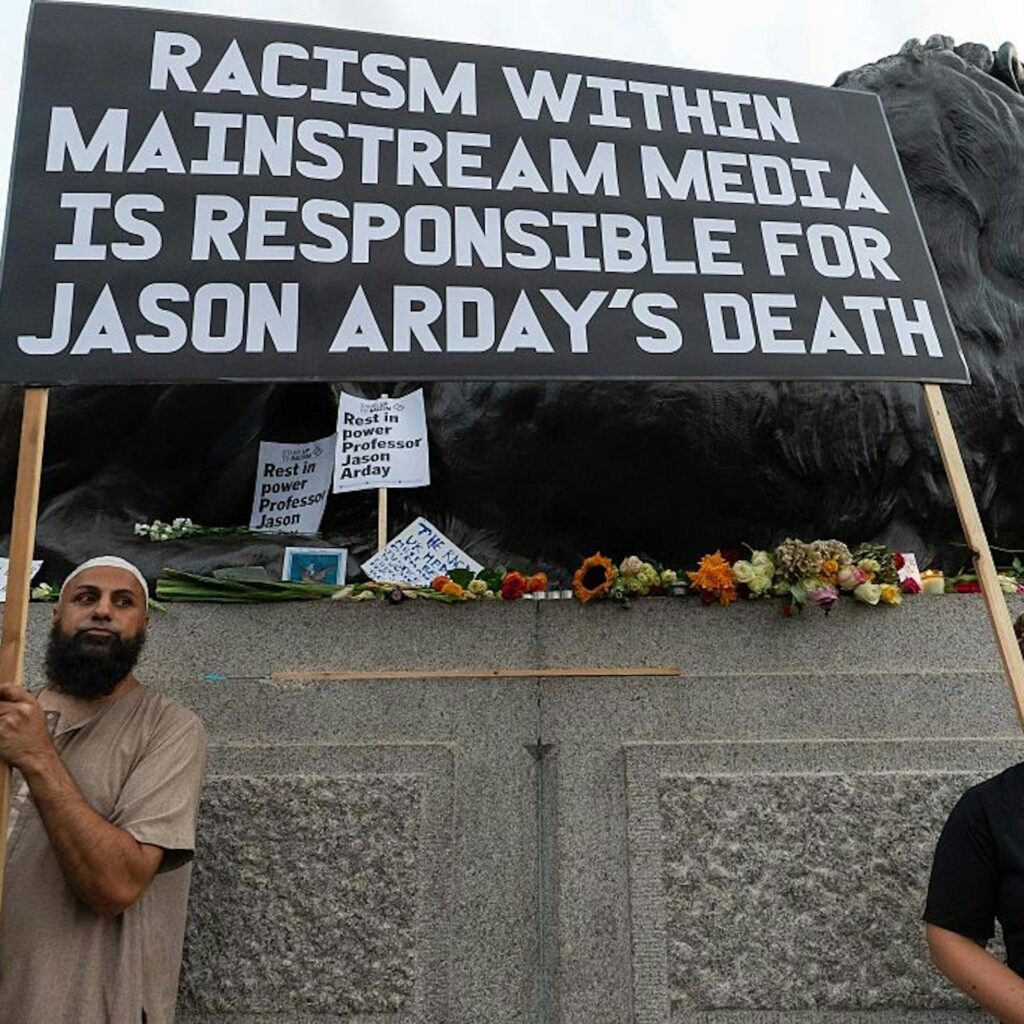
On Monday night, a crowd gathered in Trafalgar Square for what was billed as a vigil. Placards read “unalived by a witch-hunt.” Several prominent figures went further.
Labour MP Bell Ribeiro-Addy told the crowd it was the media that killed Arday. Veteran MP Diane Abbott blamed “vicious media.” Simon Woolley, principal of a Cambridge college, called the coverage a “lynching” and “public assassination.”
Activist Patrick Vernon put Arday in a martyrs’ pantheon alongside George Floyd, raising fears that Britain is headed for its own George Floyd moment — except this time, critics say, the officer in the dock is the free press.

London Mayor Sadiq Khan condemned the press for “pernicious public shaming.” Bestselling author Matt Haig demanded that Prime Minister Andy Burnham end a world where journalists “face zero consequences” for their reporting. Hacked Off, the press-reform group founded by actor Hugh Grant, called for “genuine press accountability.”
Campaigners are now demanding a public inquiry into the coverage and a law to “cap news coverage of any individual within a set time frame.” They’re already calling it “Arday’s Law.”
Meanwhile, the progressive Good Law Project launched a petition insisting the allegations against Arday were “entirely false.” Notably, three universities denied Arday’s claimed professorships on the record.
Hypocrisy on Politicizing Deaths
The push to make Arday a martyr has drawn criticism for being selective. Just five weeks ago, when retired conservative politician Ann Widdecombe was brutally murdered in her own home, the same voices sternly told the public to avoid making political conclusions from the killing and to wait for facts. That commandment, critics note, has now been suspended.

“Politicizing the murder of a conservative is not allowed, but doing so for the suicide of a progressive icon is now totally fine,” wrote James Price, a former chief of staff to the Chancellor of the Exchequer and senior fellow at the Adam Smith Institute, in a piece published Tuesday on The Daily Wire.
Pressure Mounting on Journalists
Journalists who criticized Arday are now facing pressure to recant. Aaron Bastani, co-founder of left-wing outlet Novara Media, who initially questioned Arday, has publicly apologized on camera, saying, “Professionally I erred, but ethically I really screwed up.”
Diane Abbott used the vigil stage to smear the academics who first raised questions about Arday’s work. Universities are circulating messages offering support to students “frightened by the coverage,” a move that critics say treats reading a newspaper as a form of trauma.
Price warned that the current campaign could effectively give any fraudster, embezzler, or lying politician a veto over their own exposure. “The more theatrically fragile the wrongdoer, the stronger his protection becomes,” he wrote.
The Good Law Project’s petition group has ignored the fact that the accusations were verified, said Price. “It will come as news to the three universities that denied Arday’s claimed professorships on the record.”
Americans might remember similar dynamics after the death of George Floyd in 2020, when institutions knelt, cities burned, and dissenters learned to whisper. Today, British journalists worry that even whispering the truth could become a literal crime.
“We must not allow this to happen to a free press,” Price concluded.
Source: www.dailywire.com — https://www.dailywire.com/news/the-canonization-of-jason-arday-and-the-death-of-the-free-press