
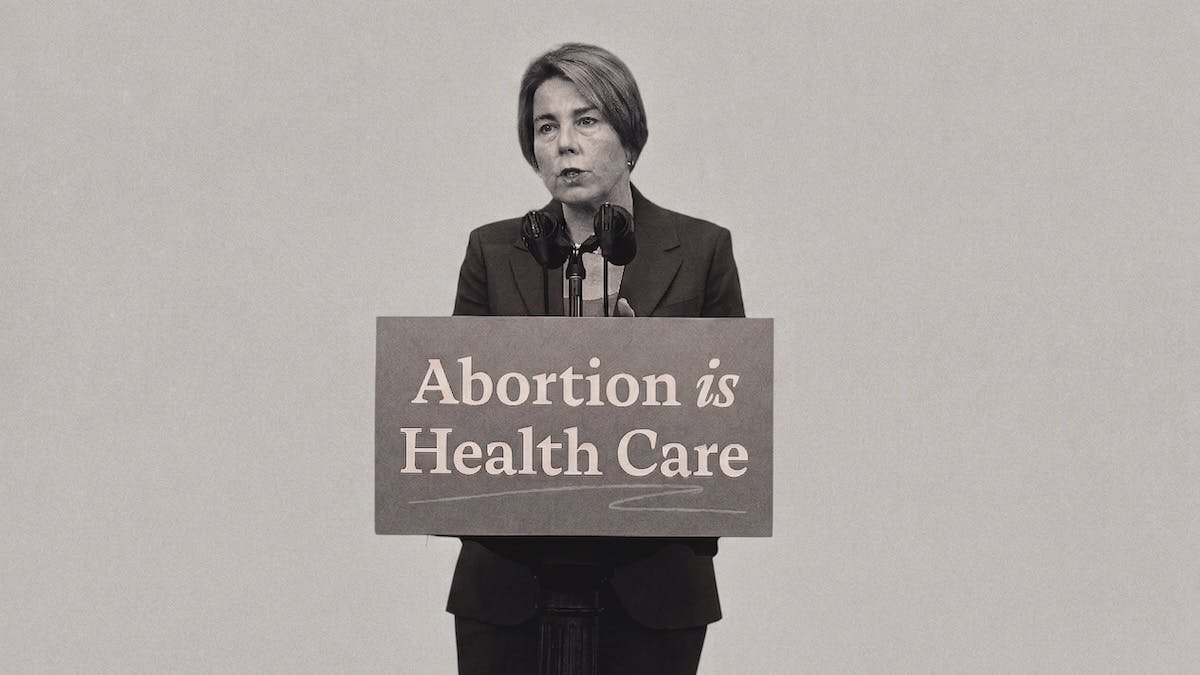
Massachusetts Gov. Maura Healey this week signed legislation removing all gestational limits on abortion, making the state one of just ten with no restrictions on the procedure — a position that puts it far outside the international mainstream, according to critics of the measure.
The new law, signed surrounded by young women, eliminates the previous 24-week cap, which already allowed abortions later than most countries. According to the Daily Wire, over 10,000 babies are born and survive each year in the U.S. after 24 weeks of gestation.
Extreme by Global Standards
Only 15 countries worldwide permit elective abortion past 15 weeks, and 65% of nations that allow it cap it at 12 weeks or less. Massachusetts now allows abortion at any point in pregnancy, joining states like New Jersey — where then-Governor Phil Murphy confirmed the law was meant to allow abortion “at any point in a woman’s pregnancy: all nine months,” answering “Correct” when asked directly.
The move is widely seen as a response to the 2021 Supreme Court decision overturning Roe v. Wade, with pro-choice lawmakers pushing to expand access in states that support abortion rights.
What Supporters Say
Supporters of no-limit abortion laws argue they are necessary to protect women facing medical emergencies. Massachusetts Lt. Gov. Kim Driscoll framed the law as being about “compassion, support and the ability to receive care,” ensuring “medically appropriate care close to home.”
Pro-abortion groups like Reproductive Equity Now insist that lawmakers should never decide when abortion is permissible, “at no point in pregnancy.”
But some physicians who manage high-risk pregnancies dispute the medical necessity argument. The American Association of Pro-Life OBGYNs (AAPLOG) states that late-term abortions are never necessary — in true third-trimester emergencies like severe preeclampsia, placental abruption, or maternal sepsis, the standard is to deliver the baby, not abort it.
What Critics Say
Critics argue that the shift toward “no limits” is about more than rare, tragic cases. They point to data showing that women who seek abortions after 20 weeks often cite reasons like delayed recognition of pregnancy, financial struggles, difficulty finding a provider, or relationship issues — not medical emergencies.

“You cannot respect or dignify an unborn child’s life through poison and dismemberment when an equally valid option — delivery — is on the table,” the Daily Wire piece argues.
The American College of Obstetricians and Gynecologists (ACOG) often cited by abortion rights supporters, actively advocates for “increased access to abortion” and has called for repealing gestational limits, according to the report. Critics say this creates a conflation of miscarriage care, premature delivery, and induced abortion under the umbrella of “reproductive healthcare.”
Virginia Could Be Next
Virginia voters will decide in November on a constitutional amendment that would prohibit the state from ever banning third-trimester abortions deemed necessary to protect a woman’s physical or mental health — a standard critics say could be interpreted so broadly as to allow abortion for virtually any reason.
The Debate Over Disability Diagnoses
A particularly contentious issue is abortion following a prenatal diagnosis of conditions like spina bifida or Trisomy 21 — diagnoses that are not terminal and allow for full, meaningful lives. Yet the vast majority of pregnancies with these diagnoses end in abortion, a pattern critics label as edging toward eugenics.

“That’s no longer a decision about survival; it’s a judgment about whose life is worth living,” the author writes.
Advocates for abortion rights often argue that late-term abortions are rare, so they deserve little moral concern. But as Emma Camp wrote in The Atlantic, these same advocates base their case for all-access abortion on rare circumstances like rape and incest, which occur in less than 1% of pregnancies — a contradiction, critics say.
Personal Choices, Lasting Consequences
The article also discusses the psychological impact of late-term abortion, suggesting that some women may be steered toward ending a pregnancy without full understanding of the consequences. Studies cited show that many mothers who see and hold their stillborn children report satisfaction with that decision, suggesting that facing the loss directly can be more healing than avoiding it.
Massachusetts’ new law takes effect immediately, and advocates on both sides of the issue are watching closely to see whether other states will follow.
Source: www.dailywire.com — https://www.dailywire.com/news/what-no-limits-abortion-actually-looks-like