
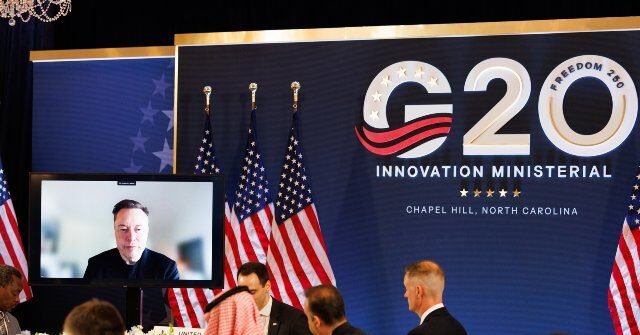
Elon Musk took his futuristic predictions to the global stage this week, telling a virtual G20 session that within ten years, a fleet of one billion humanoid robots will collectively outproduce all of humanity. The tech billionaire, who has a track record of bold forecasts, framed the rise of physical AI as the next major economic shift, according to CNBC’s coverage of the event.
Speaking remotely to world leaders and policymakers, Musk touched on four big themes: the looming power crunch for artificial intelligence, the technology’s economic potential, the mechanics of humanoid robotics, and how governments should approach regulation. His remarks, delivered on the heels of a controversial suggestion that Americans need not save for retirement, underscored his conviction that AI and robotics are not incremental advances but transformative forces.
Robotics as a Multiplying Force
Musk delved into what makes humanoid robots useful, describing their effectiveness as the product of three rapidly improving components: AI software, the onboard AI chip, and electromechanical dexterity—especially in the hands. He argued that as these factors improve exponentially, a tipping point will come when robots begin manufacturing other robots. At that stage, growth becomes recursive, starting slow but then becoming explosive.
His ten-year projection of over one billion humanoid robots, each roughly five times as productive as a human worker, would mean that combined, they exceed the output of every person alive. Musk called that forecast conservative. This physical layer of automation, he suggested, is where the real economic expansion will happen—predicting overall output could grow by a factor of ten or more, far surpassing what the digital economy alone can deliver.
Power: The Real Bottleneck
On energy, Musk pointed to a stark imbalance. Citing a consensus estimate, he said AI chips will face a shortfall of at least 15 gigawatts by 2027. While AI chip production is climbing at 40–50 percent annually, power generation outside China is expanding only 10–20 percent per year—a gap that Musk believes will be the true limiting factor, not chip supply.
In a notable anecdote, he revealed that Google, Anthropic, and other companies are now leasing computing capacity from SpaceX, which has built its own power plants to accelerate deployment. China, he noted, has abundant electricity but is restricted from importing the latest chips due to GPU export bans—a constraint that could shape the global AI race.
Musk’s advice to nations: invest heavily in power generation, host AI data centers, and then monetize that infrastructure through taxes or fees. He framed this as a pragmatic path for countries to benefit from the AI boom, rather than being left behind.
Economic Upside and AI’s Near-Term Capabilities
The Tesla and SpaceX CEO attached a massive number to AI’s digital-only impact: a 20–30 percent boost to global GDP, translating to roughly $20 trillion to $30 trillion a year. He predicted that by the end of next year, AI would be able to handle any digital task that doesn’t require physically shaping atoms by hand—a threshold that would upend white-collar work across industries.
On software development, Musk forecast that AI will reach ‘Stockfish-level’ within 12 to 18 months, invoking the renowned chess engine as a benchmark and mentioning Magnus Carlsen, the five-time World Chess Champion, in the same breath. That same timeline, he said, applies to AI becoming extremely capable across engineering and other digital domains. He also took a moment to plug X, his social media platform, as the primary venue for serious AI discourse.
Regulation: A Lean Toward Startups
Musk’s regulatory philosophy was clear: new technologies should be treated as legal by default, not illegal by default. He criticized the European Union’s heavy-handed approach, arguing it slows progress without actually stopping it. Using a vivid metaphor—young saplings struggling beside established trees in a forest—he compared startups to the saplings and incumbents to the trees. Most governments, he said, over-support the big trees while starving the young ones, a pattern that stifles innovation.
Large companies, Musk noted, have access to political leaders that startups rarely enjoy. He suggested policy should be deliberately tilted toward young companies to correct that imbalance, a stance that aligns with his frequent criticism of regulatory capture.
Context: A Wider AI Vision
Musk’s G20 remarks follow other recent pronouncements that have raised eyebrows. Last week, on the ‘Moonshots with Peter Diamandis’ podcast, he advised Americans not to worry about saving for retirement, saying, ‘Don’t worry about squirreling money away for retirement in 10 or 20 years. It won’t matter.’ That comment echoes his broader vision of an AI utopia where work becomes optional and is treated like a hobby.
Critics might dismiss such predictions as grand pronouncements akin to his Mars colonization goals, but the direction is unmistakable—the AI revolution is accelerating, and Musk is positioning himself as a leading voice on its trajectory. Whether his billion-robot forecast comes true remains to be seen, but with power constraints already emerging and AI capabilities jumping monthly, his warnings about infrastructure and policy are likely to resonate well beyond the G20 virtual room.
Source: www.breitbart.com — https://www.breitbart.com/tech/2026/09/02/elon-musk-predicts-1-billion-humanoid-robots-will-outproduce-all-of-humanity-in-10-years/