
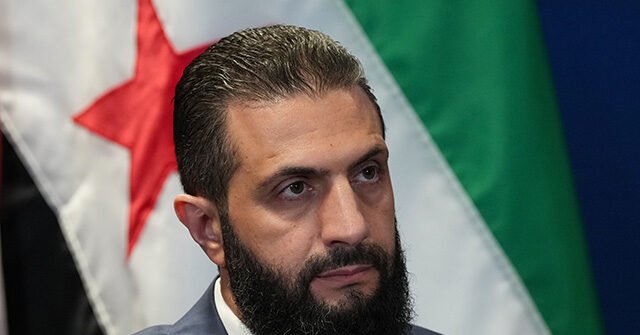
Israeli Prime Minister Benjamin Netanyahu told a crowd of Druze voters on Thursday that he personally spoke by phone with Syrian President Ahmed al-Sharaa in the summer of 2025, describing a blunt exchange he said halted the killing of Druze civilians in southern Syria. According to Breitbart News, the remarks amount to the first known confirmation of direct contact between the two heads of state, whose countries have remained in a technical state of war for decades.
Netanyahu recounted the episode at an election-season event aimed at Israel’s Druze community, saying he placed the call after the Israel Defense Forces struck the Syrian military headquarters in Damascus in July 2025. That strike followed appeals from Druze leaders in the region for Israeli intervention as clashes escalated between Druze residents and Sunni Muslim Bedouins in the Sweida area.
“We took down the Defense Ministry in Damascus — just like that, gone — we took down a target inside the Palace compound, and I called Sharaa,” Netanyahu said, per the Breitbart account. “It was a very short and sharp conversation, and the massacre stopped.”
A call, and a claim about what it achieved
The prime minister framed the conversation as a direct ultimatum delivered to the Syrian leader, telling the audience he warned Sharaa not to permit the slaughter of Druze citizens. “It was a very short, very sharp conversation, and the massacre was stopped,” he said. “There is still work to be done; I cannot reveal everything.”
Netanyahu also cast his outreach to Syria’s Druze as a personal commitment rooted in a broader obligation to protect the community, pledging to take their security concerns seriously. “I will do whatever it takes to protect our brothers, your brothers, and our brothers; we will not allow a massacre to be committed, and they must also be returned to their homes,” he said. “This commitment comes from the depths of my soul.”
The timing of the disclosure — days before Israel’s election — places the Syria relationship squarely in front of an electorate that includes a Druze population with close familial and communal ties across the border. The Times of Israel noted that both governments have previously acknowledged lower-level contacts aimed at stabilizing the relationship, including talks mediated by the United Arab Emirates confirmed in May, before the Druze clashes.
Damascus stays quiet, then pushes back
Sharaa’s government had neither confirmed nor denied Netanyahu’s account at the time of the Breitbart report. But the Kurdish outlet Rudaw cited an unnamed Syrian government source on Thursday who declined to verify the call while insisting that the Damascus government “categorically rejects any attempt to politicize” the situation.
The same source offered a sharply different version of events surrounding the Sweida fighting, claiming that Syrian authorities were prevented from restoring order because of Israeli bombardment. The source alleged that Israel obstructed government intervention and accused it of “targeting civil peace in Suwayda Governorate … by arming an outlaw militia to provoke widespread chaos and fabricate a pretext to drag the country into a full-scale war.”
That allegation is unverified and disputed; it was relayed through a single unnamed official to a Kurdish news outlet and has not been corroborated by independent reporting.
How the Sweida clashes unfolded
The violence in Sweida erupted in July after the abduction of a Druze vegetable merchant by a Muslim gang, according to the Breitbart account. While the Damascus government maintained that it moved as quickly as possible to protect civilians, Druze leaders argued that negligence — or outright backing for Islamic radicals — meant the capital offered only minimal protection.
A group of Druze leaders issued a statement at the time holding the Sharaa government “primarily responsible” for the killings, with some accusing government-linked actors of helping arm and encourage the attacks on Druze communities.
The broader Israeli-Syrian relationship remains frozen around the Golan Heights, territory Israel captured during the Six-Day War in 1967 and continues to administer, and which Syria claims. Sharaa has said any full normalization would require addressing that territorial dispute.
A relationship built on contacts without trust
Sharaa took power in December 2024, when his al-Qaeda offshoot Hayat Tahrir al-Sham seized Damascus and won the Syrian civil war, ending more than half a century of Assad dynasty rule. Dictator Bashar Assad fled to Moscow, where he is believed to remain.
Under the previous government, Damascus kept close ties with Iran and routinely antagonized Israel. The transition to Sharaa’s leadership has produced cautious, indirect diplomacy rather than a breakthrough. In August, Syria’s state-run Syrian Arab News Agency reported that Foreign Minister Asaad al-Shaibani had engaged in peace talks with Israel mediated by Jordan.
Shaibani has been explicit about the limits of that process, telling Reuters that his government has no confidence in its counterpart even as it pursues diplomatic engagement. “We do not trust Israel at present. We deal with it through our interactions, but there is currently no trust,” he said, adding that Israel “has repeatedly tried to preserve its security through hard power, and it has not succeeded.”
Still, Shaibani left the door open, saying, “The door is open, and I believe negotiations will resume soon.”
Whether Netanyahu’s account of a leader-to-leader call becomes a turning point or another disputed chapter depends largely on a confirmation Damascus has so far declined to give. For now, the prime minister’s version rests on his own telling before an audience of voters, while Syrian officials neither affirm nor deny that the conversation ever took place.
Source: www.breitbart.com — https://www.breitbart.com/middle-east/2026/10/16/netanyahu-reveals-direct-contact-with-syrias-jihadi-president-sharaa-in-2025-phone-call/