
It’s a story about muckraking, misplaced intentions, and the strange alchemy of progressive journalism. In a piece published by American Thinker, writer Monica Showalter argues that Nikole Hannah-Jones—the journalist behind The New York Times Magazine’s 1619 Project—may have inadvertently done more to expose the failures of New York City’s public schools than any conservative reformer could have.
That’s the central irony of the situation as Showalter frames it: a writer known for her activism around racial equity has produced what amounts to a damning indictment of the very school system she chose for her own child.
The irony of unintended consequences
Showalter points to commentary from writer Peachy Keenan, who highlighted what she calls an important takeaway from Hannah-Jones’s piece—her account of sending her daughter to what are described as bottom-of-the-barrel public schools in New York City, presumably to make a point about American racism. Instead, according to Showalter’s reading, what emerged was a portrait of a mother who denied her daughter a decent education, leaving the girl unprepared for college and angry at her parents.
Showalter questions why Hannah-Jones sat on the story for so long. She notes that the details the journalist shared—schools that don’t assign homework, don’t grade tests, don’t respond to parents’ phone calls or emails, don’t supervise students at lunch, and don’t seem to care whether their pupils can read at grade level—were the kind of material any news outlet would have paid handsomely for. And Hannah-Jones had, by Showalter’s account, eight years of firsthand notes.
The writer’s suggestion is that Hannah-Jones may have hesitated to publish because of how it would reflect on the teachers’ unions, particularly the American Federation of Teachers, which she says were out promoting the 1619 Project. The implication is that Hannah-Jones was caught between her ideological commitments and the evidence of her own experience.
What the Manhattan Institute found
Showalter’s piece doesn’t rely solely on Hannah-Jones’s account. It also cites work from the Manhattan Institute, which recently visited PS 307—the same school Hannah-Jones sent her daughter to. According to the institute’s findings as quoted in the piece, teachers at the school earn an average of over $100,000 a year, the school spends $52,000 per student annually, and the student-to-teacher ratio is 9 to 1. The institute compared that school unfavorably to nearby charter schools.
Showalter presents these figures as evidence of a system that is lavishly funded but failing its students. The combination of high spending, small class sizes, and poor outcomes, in this telling, points to something deeper than a lack of resources.
She writes that word is getting around and people are paying attention—that the public’s interest has been piqued.
The Sinclair comparison
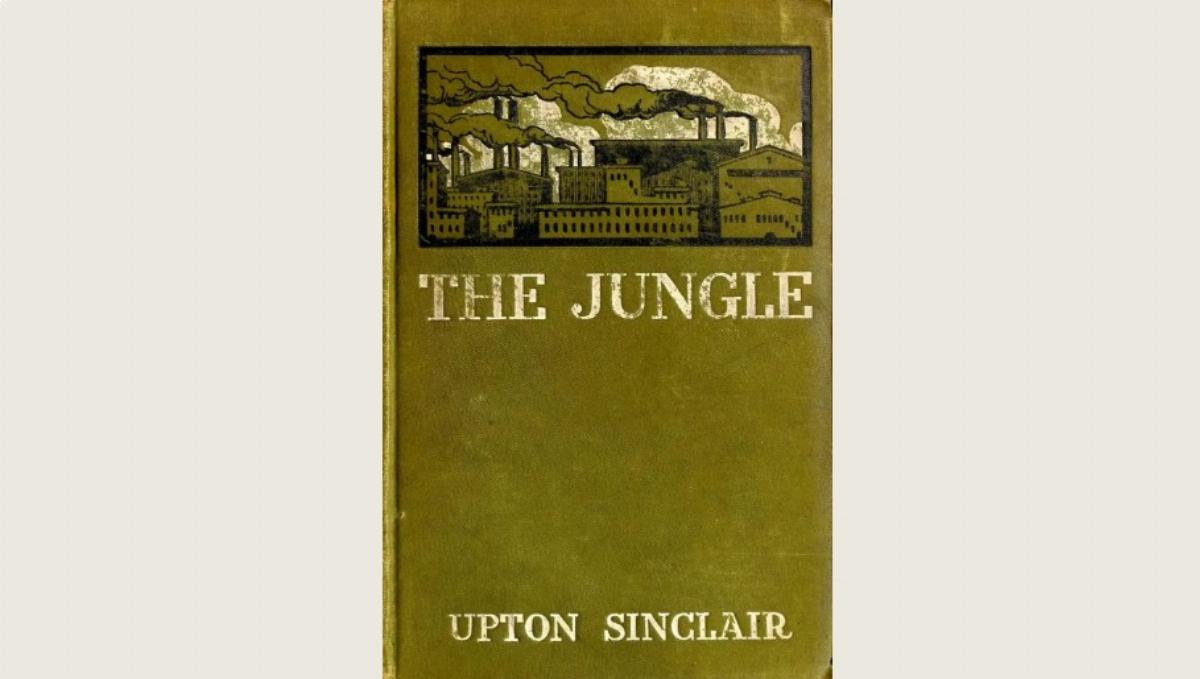
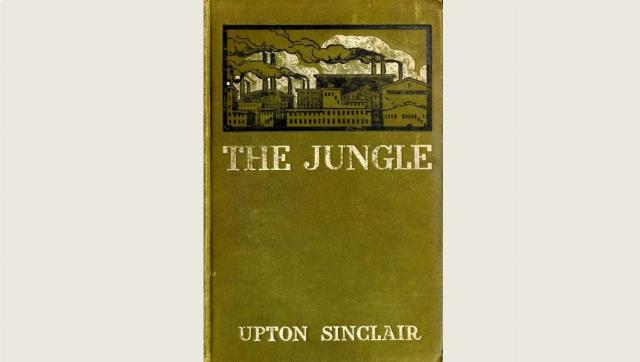
The heart of Showalter’s argument is the comparison she draws between Hannah-Jones and Upton Sinclair. Sinclair was a progressive-era muckraker whose 1906 novel The Jungle set out to convert America to socialism. What he actually did was describe the filthy conditions of Chicago’s meatpacking plants so vividly that readers recoiled—not at capitalism, but at the thought of eating contaminated meat. The result was major legislation, including the Meat Inspection Act and the Pure Food and Drug Act.
Sinclair famously said, “I aimed at the public’s heart, and by accident I hit it in the stomach.”
Showalter argues that Hannah-Jones has done something similar. She aimed at America’s heart with her ideology, but accidentally hit it in the brains. By shining a spotlight on what Showalter calls the rotten meat of New York City’s educational product, Hannah-Jones has drawn huge attention to a problem that reformers have struggled to make salient for years.
Showalter notes the added irony that Hannah-Jones uses the handle “Ida Bae Wells” on social media—a reference to Ida B. Wells, the famous muckraker and contemporary of Sinclair. In Showalter’s view, Hannah-Jones has earned the muckraker label with this piece, regardless of her intentions.
What reform might look like
Showalter predicts that reform comparable to Sinclair’s will come of this. She hopes for more charter schools, more school choice, less fraud, more actual work required for those six-figure salaries, and defunded boondoggles. She writes that the disgusting specter has been exposed and everyone is paying attention, and that this is likely to draw bipartisan support to end what she calls the lunacy in public school education.
The irony, in Showalter’s telling, is that this comes from someone who, in her view, wanted only to preach DEI.
The broader argument
One can disagree with Showalter’s assessment of Hannah-Jones’s motives or her characterization of the journalist’s work while still recognizing the point she’s making about unintended consequences. Muckraking has a long history of producing results the muckraker didn’t intend. Sinclair wanted socialism and got food safety. Hannah-Jones, in Showalter’s reading, wanted to indict America and instead exposed a school system that fails the very children it claims to serve.
Whether that exposure leads to the kind of sweeping reform Showalter envisions is an open question. Education policy is notoriously resistant to change, and the interests arrayed against charter expansion and school choice are formidable. But Showalter’s argument is that the genie is out of the bottle—that the details Hannah-Jones provided have made it harder to ignore what’s happening in New York City’s public schools.
The piece is a reminder that sometimes the most effective advocates for reform are the ones who never meant to be. Sinclair wanted to change hearts and changed stomachs instead. If Showalter is right, Hannah-Jones may have changed minds about a system she thought she was defending.
That’s the argument American Thinker is making. Whether readers accept it depends in part on whether they see Hannah-Jones’s piece as an act of candor or an act of inadvertent sabotage—and whether they believe the reform Showalter predicts will actually materialize.
Source: www.americanthinker.com — https://www.americanthinker.com/blog/2026/09/has-nikole-hannah-jones-just-written-a-new-version-of-the-jungle/
Source: www.americanthinker.com
Related coverage
- Randi Weingarten’s AFT Escalates Economic Pressure on Target, Demanding Anti-ICE Stance
- COVID ‘Crimes Against Humanity’: New Emails Renew Calls for Accountability
- Summer of ’98: When Sosa and McGwire’s Home Runs Masked a Horrible Year
- Think you’ve been ‘Flocked’? Here’s how to check if surveillance cameras captured you