
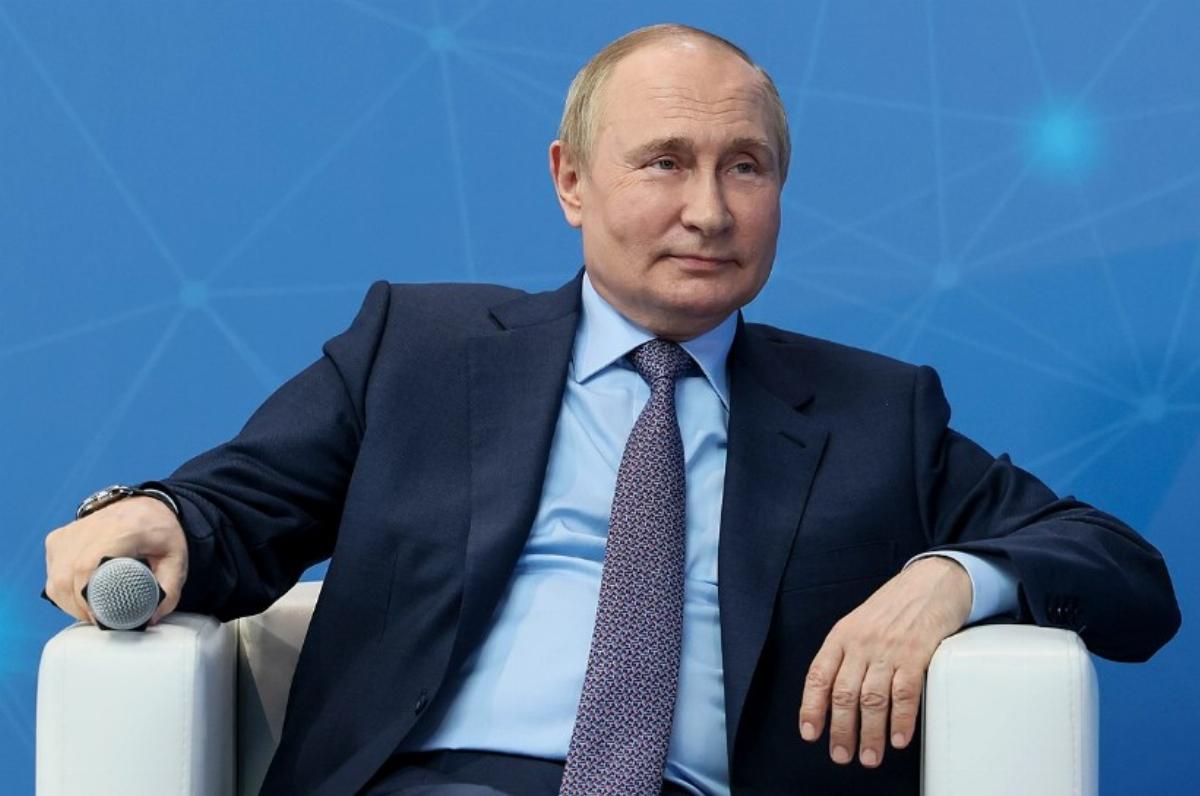
When Vladimir Putin told an audience at the St. Petersburg International Economic Forum in June 2025 that “I have many times said I consider Russians and Ukrainians to be one people. In this sense all of Ukraine is ours,” he was not speaking off the cuff. According to an analysis published in American Thinker, that single sentence encapsulates the imperial logic driving Russia’s war — a logic that the outlet argues is far more expansive than the security rationales often cited in Western debates.
The American Thinker piece, written by Mario Alexis Portella and dated September 22, 2026, makes the case that Putin’s stated view of Ukraine is not simply that of a neighboring state whose military alignment poses a problem for Moscow. Instead, it argues, Putin has repeatedly invoked the concept of “historically Russian lands” and the idea that Russians and Ukrainians constitute one people, using that historical framing to assert a claim on Ukrainian sovereignty in the present.
Portella points to a specific rule Putin cited during the same St. Petersburg appearance: wherever a Russian soldier sets foot, it “is ours.” That formulation, the analysis contends, is imperialism at its most explicit — both historical and territorial. The argument is not merely that Moscow laments the loss of territories once held by the Russian Empire or the Soviet Union. Rather, it is that Putin uses that history as the foundation for a contemporary claim of sovereignty over them.
From Historical Narrative to Political Claim
The crux of the American Thinker argument is what Portella describes as the move “from interpretation of history to political sovereignty.” In Putin’s account, the analysis says, Ukraine is not simply a country that happens to share historical and cultural ties with Russia. Instead, the emergence of an independent Ukrainian state is explained as the product of a historical rupture — a political decision that separated what was supposedly one historical community.
Under that framing, Ukrainian independence following the collapse of the Soviet Union in December 1991 is not treated as a settled fact of international politics. It becomes, in Portella’s words, “a historical process whose legitimacy Moscow contests.” That distinction matters because it shifts the terms of the conflict. A conventional security argument would hold that Russia needs a strategically neutral neighbor because of military geography or the existence of an opposing alliance. Putin’s historical argument, by the analysis’s reckoning, goes considerably further: it concerns Ukraine’s political identity and sovereignty itself.
The American Thinker piece does not rest its case on Putin’s rhetoric alone. It cites Sean Nottoli, an analyst who argued in an August 2025 interview with World Geostrategic Insights that Russia is the aggressor in the war and that support for Ukraine remains necessary while negotiations continue. Nottoli also held that Putin’s demands and his approach to negotiations could not be understood as a conventional dispute over security arrangements. According to Portella, Putin’s subsequent rhetoric has only made that historical dimension more prominent.
The question, then, is not simply whether Putin fears NATO enlargement. As the analysis frames it, the deeper issue is whether Russian security, as articulated by Putin, is bound up with an imperial conception of territory — one in which Ukraine’s sovereignty is constrained by Moscow’s understanding of Russia’s historical inheritance. In this reading, history functions as a language through which sovereignty is claimed: the past becomes an argument about who has the right to determine the political future of the present.
The Duma Election as Domestic Counterpoint
Portella’s analysis arrives in the wake of Russia’s parliamentary elections, in which Putin’s United Russia Party easily retained its overwhelming majority in the state Duma. It was the first Russian parliamentary election since the full-scale invasion of Ukraine began in February 2022. According to the piece, most explicitly antiwar candidates were excluded, and the only openly antiwar party, Yabloko, was removed from the ballot after initially being allowed to participate. Voting also took place in Ukrainian territory that Russia claims to have annexed — a development Ukraine and its international supporters condemned.
The Kremlin presented the election as evidence of national unity and support for the war, though American Thinker cautions that the results should not be taken as an unambiguous expression of Russian public opinion given the restrictions on political competition. Putin said participation would show that “millions of people stand behind our soldiers” and described Russians as a “united people” bound by shared values and historical memory.
The analysis treats the election as a domestic counterpoint to Putin’s imperial conception of Ukraine. In this context, it argues, the vote reinforces the political narrative that Russia is a historically continuous entity whose territorial and political inheritance extends beyond the borders of the Russian Federation today. Domestic political control and imperial historical consciousness converge in the Kremlin’s presentation of the war — not merely as a conventional geopolitical conflict, but as part of a struggle over Russia’s historical identity, territorial inheritance, and claimed prerogatives in determining Ukraine’s political future.
Putin’s invocation of shared values and historical memory during the election period, the piece notes, dovetails with his broader narrative: that Ukraine always was and still is part of Russia.
For readers accustomed to framing the war primarily through the lens of NATO expansion or great-power competition, the American Thinker analysis offers a pointed reframing. If Putin’s own words are taken at face value, the conflict is not fundamentally about buffer zones or alliance politics. It is about whether Ukraine has the right to exist as a sovereign state independent of Moscow’s historical claims — and that, the analysis suggests, is a question with no conventional security answer.
Source: www.americanthinker.com — https://www.americanthinker.com/blog/2026/09/all-of-ukraine-is-ours-the-imperial-logic-of-putin-s-war/
Source: www.americanthinker.com
Related coverage
- LA Firefighters Battled 12,241 Homeless-Related Fires in Just Nine Months
- A Kenyan Essay-Writer Lost His Job to AI — and He’s Not the Only One Paying the Price for Cheating
- Conservative Writer Argues Democratic Socialists and Communists Are ‘Two Shades of the Same Evil Ideology’
- American Thinker Essay Argues the Left Functions as a Cult, Warns Conservatives Against Reasoned Debate