
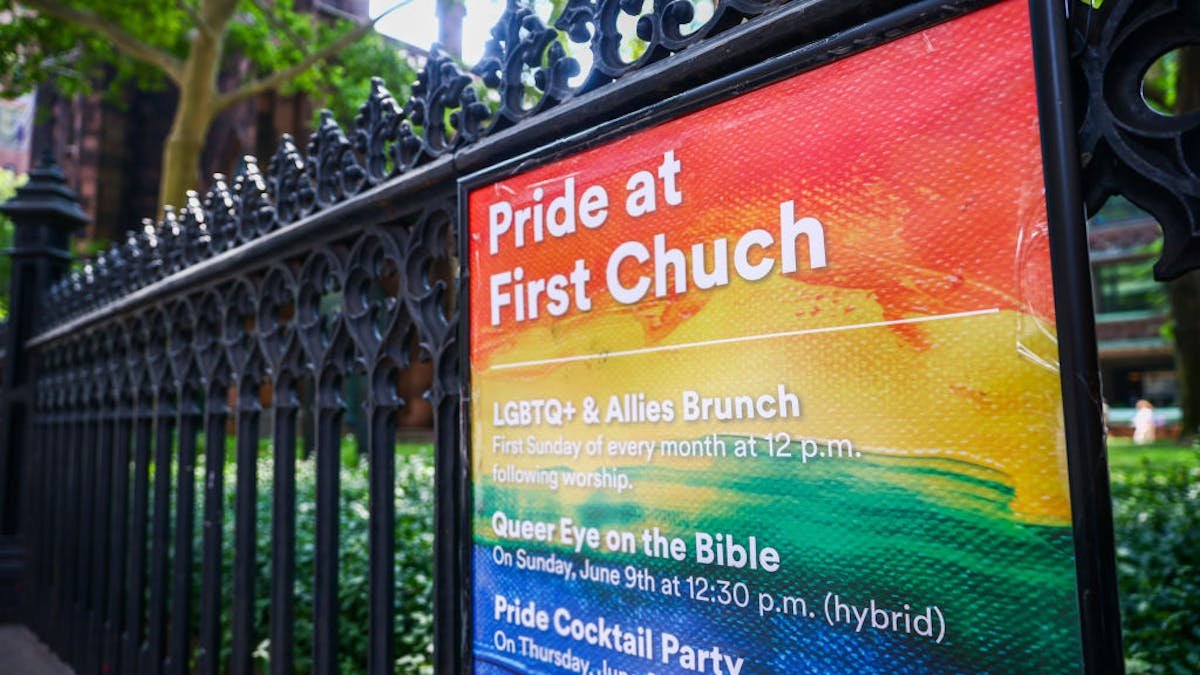
The 2026 midterms are shaping up to feature a renewed push by Democrats to reclaim the religious vote, with two candidates — Texas Senate hopeful James Talarico and Kansas pastor Rev. Adam Hamilton — openly centering their campaigns on Christian faith. But a new essay argues that the version of Christianity they represent is less a return to traditional faith and more a progressive political agenda dressed in religious language.
Writing for The New Yorker, liberal Methodist author Bill McKibben praised Talarico and Hamilton for “taking Christianity back” from the religious right, describing their approach as more tolerant and social justice-oriented than what he calls “MAGA Christianity.” The essay highlights how both candidates embrace a Christianity that denies the exclusivity of Jesus Christ, rejects biblical infallibility, and affirms lifestyles and identities at odds with historical Christian teaching.
In a response published by The Daily Wire, Andrew T. Walker — Dean of the School of Theology at The Southern Baptist Theological Seminary — argues that this progressive Christianity is hollow at its core. “What’s left is not a redemptive message of eternal salvation, but a social program with Bible verses attached to it,” Walker writes.

A Faith That Bends to Politics
Walker contends that progressive Christianity operates the same way as progressive jurisprudence: it decides the desired outcome first, then works backward to find support in the text. “Progressives support abortion, so Christianity must support abortion,” he writes. “Progressives want to embrace homosexuality and the whole gamut of the sexual revolution, so the Bible must bend to support that conclusion, too.”
He also accuses progressives of stretching Scripture’s teachings on mercy and healing to justify expansive government programs like nationalized healthcare, which he says the biblical text does not license.
Walker traces this approach back nearly a century to theologian J. Gresham Machen, whose 1923 book “Christianity and Liberalism” argued that liberal Christianity is a departure from the faith itself. The central divide, Walker says, remains whether Christianity is a repository of fixed, unalterable doctrine or a malleable tradition subject to the whims of contemporary society.

Why the Religious Left Struggles to Sustain Itself
Despite more than a century of progressive religious influence in American politics, Walker argues the Religious Left has never reproduced itself with lasting force. His explanation: when Christianity is treated as “playdough — moldable and flexible fit to the needs of its users,” it ultimately becomes unnecessary.
“Who needs a faith that you’re the judge over?” Walker asks. “What value is there to a God or a Bible that bends to the will of culture?” He suggests that adherents eventually realize they don’t need a faith that never challenges their politics — it simply baptizes them.
Walker also points out the irony that Democrats, who often decry “Christian nationalism,” are now embracing a politically convenient form of Christianity. “In a day when howls of ‘Christian nationalism’ come from every organ of progressive media, what results is left-wing Christian nationalism,” he writes.

A Political Strategy or Genuine Faith?
With America still overwhelmingly Christian in self-identification, Walker says Democrats face a strategic challenge: how to appeal to a massive voting bloc while holding progressive positions that often conflict with traditional Christian theology. The emergence of Talarico and Hamilton, he suggests, is an attempt to solve that problem.
Both candidates radiate politeness and civility, Walker acknowledges — a welcome change from typical political acrimony. But he questions whether their Christianity is authentic or a “bait-and-switch program for generic progressivism.”
“If your Christianity never produces political inconveniences,” Walker concludes, “it’s worth considering whether you’re dealing with a Christianity of divine revelation or a Christianity stripped down and used for its parts.”
Source: www.dailywire.com — https://www.dailywire.com/news/why-the-religious-lefts-new-christianity-is-as-hollow-as-their-beliefs