
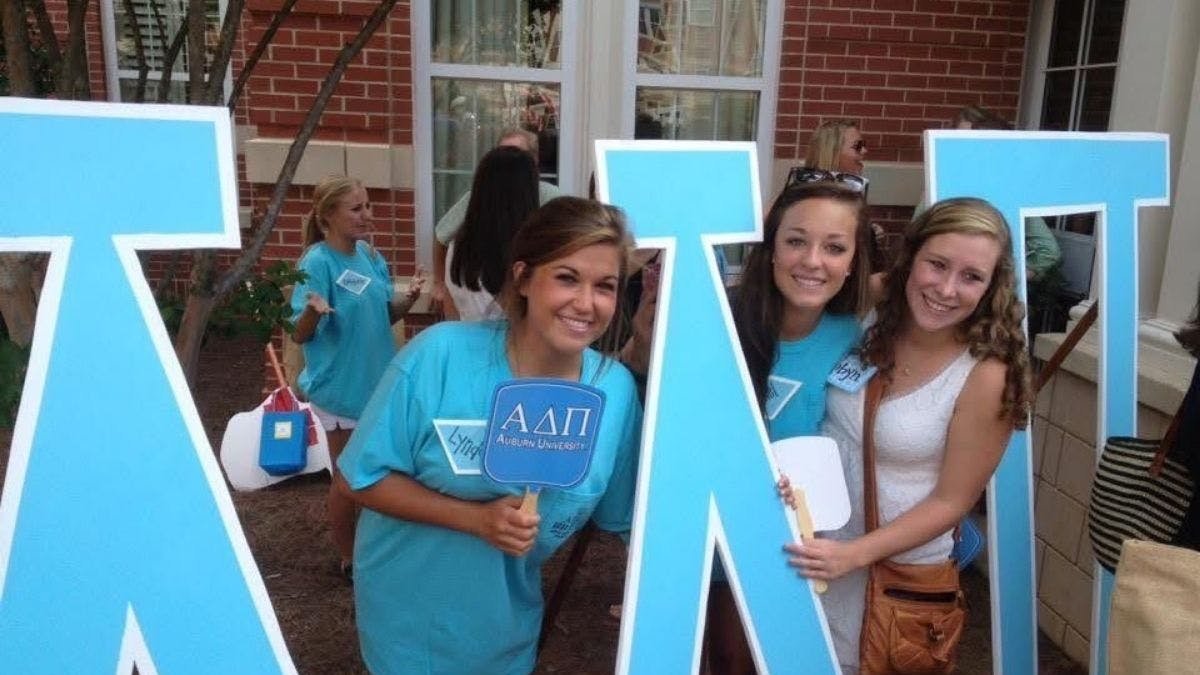
It’s a ritual as Southern as sweet tea and football Saturdays: sorority recruitment at schools like the University of Alabama, Auburn, and Ole Miss. But what was once a regional rite of passage has morphed into a high-stakes, big-money industry, with out-of-state families now paying up to $12,000 for professional “rush coaches” to give their daughters an edge, according to The Daily Wire.
The price tag sounds absurd to the uninitiated. But for parents eyeing the SEC’s most exclusive social circles, it’s increasingly seen as a necessary investment — especially for those who didn’t grow up navigating the unspoken rules of Southern Greek life.
The Northern Disadvantage
Trisha Addicks, author of “The Rush Bible” and founder of the coaching business It’s All Greek To Me, has watched the demand explode. Her company charges $6,500 for a one-year coaching program. Starting this fall, she’s rolling out a two-year Legacy Mentorship package priced at $12,000 — and families are signing up.
“The response has been overwhelmingly positive,” Addicks told The Daily Wire. “Clients tell us again and again how relieved they are to have found ‘The Rush Bible’ and/or our team at It’s All Greek to Me, especially our clients from the North.”
Addicks started her business in 2017, long before “RushTok” — the TikTok phenomenon that beams sorority recruitment into the feeds of millions — turned Southern rush into national entertainment. But the social media frenzy has supercharged her industry.
“RushTok and social media completely changed the landscape of sorority recruitment,” she said. “Girls are seeing the hype online and they want in, and our business has grown exponentially because Northern families know what they don’t know.”

That growth tracks a broader migration pattern. The Wall Street Journal has reported a 30% increase over five years in Northern students heading South for college, a trend accelerated by the pandemic. And with that influx has come a surge in families who are entirely unfamiliar with the arcane customs of Southern rush.
“Rush is hard everywhere, especially in the South,” Addicks said. “Most Northern families haven’t navigated it before, and even families who think they know rush from their own experience find the Southern process is a different world.”
The cultural gap is real. Lindsay Lookingbill, a Maryland teacher, initially thought her daughter was silly for asking for a rush coach. But she later told Bloomberg the investment was necessary.
“You’re not going into another world. You’re not going to Mars,” she said. “But you are going into a different culture.”
Lookingbill framed the coaching as more than just sorority prep. “At the end of the day, I didn’t pay Mindy to help my daughter through rush,” she said. “I paid Mindy for life skills development that will help her throughout life.”
Inside the Machine
To understand why parents are opening their wallets, it helps to know what rushees are up against. The Daily Wire’s piece, written by an Auburn alumna who survived rush herself, paints a picture of a process that is equal parts charm offensive and strategic warfare.

Sororities know exactly who’s coming through the door during recruitment week — especially if you’re from Birmingham, Atlanta, Montgomery, or Mobile. Before rush even starts, current members have been “locked up” for a week, memorizing slideshows about the top prospects: their faces, their hobbies, their connections. But only girls who are already known to members or come highly recommended by alumnae make it into those coveted slideshows.
From a small town? You might get lumped in with other small-town girls and, at Auburn at least, affectionately branded “small town trash.” The author notes the quip with a shrug: “Look, not everyone can hold it down in Birmingham or Atlanta; someone has to hold it down in Alex City.”
For out-of-state girls, the deck is stacked from the start. They’re “already down by a touchdown,” as the author puts it — a football metaphor for a deep deficit. The only way to climb back is to make such a splash during rush that you get labeled a “discovery,” triggering a sorority member to fight for you from the inside. But that’s the exception, not the rule.
The cutthroat dynamics extend to the conversations themselves. Members have a covert distress signal — essentially a “come rescue me” gesture — for when they’re stuck talking to a rushee they want to escape. It’s the kind of calculated social choreography that makes hiring a professional seem almost rational.
As one friend of the author put it: “I would pay $5,000 just so my daughter doesn’t have to be the girl no one wants to talk to.”
What Coaches Actually Do
A rush coach like Addicks offers a full-service overhaul: scrubbing social media, polishing wardrobes, smoothing accents, refining manners, and beefing up résumés. Because when no one knows who you are, the first impression is everything.

“Rush is a high-stakes goal like any other, and you cannot show up and wing it,” Addicks said. “You prepare for it the way you would for any major interview or competition.”
Southern sororities genuinely care about what you wear, how you talk, and what your résumé says. The author, who grew up in Alabama, recalls the local preparation culture: mock “ice water tea” parties (the old name for early rounds of rush) held after church on Sundays, résumé classes, and a handbook covering everything from sorority histories to how to secure alumni recommendations. In Birmingham, she notes, even high schools have their own sororities.
For those attempting to go it alone, the author offers some inside-baseball tips. During the early rounds, when a girl asks about your summer, sound busy: volunteer work, a summer job, sports, pageants. Anything but a couch potato.
Manners matter. Look girls in the eye, ask questions back, say thank you. A PNM (potential new member, in sorority parlance) with an attitude is an easy cut.
And dress respectfully. “This is not a nightclub; it’s a sisterhood with standards,” the author writes. Cover up, look nice, look modest.
Addicks’ advice for rushees: position yourself as “a girls’ girl, a genuine friend, and someone who wants to be involved and active.” She recommends intentional social media posts — photos with friends and family, shots of you doing activities you love. Avoid too many solo photos or photos with a significant other. And archive the solo bathing suit shots.
For all the hand-wringing about the cost, the author offers a defense of sororities themselves: they provide structure, accountability, community, and connections during formative college years. Members are held to grades and comportment standards — no making out with everyone at the bar, no posting underage drinking on social media. (Put that drink in a red cup, in other words.)
Still, the spectacle of parents dropping five figures on rush prep is a testament to how high the stakes have become — and how far some families will go to buy their daughter a seat at the sorority house table.
Source: www.dailywire.com — https://www.dailywire.com/news/i-survived-southern-sorority-rush-heres-why-parents-are-paying-12000-for-help