
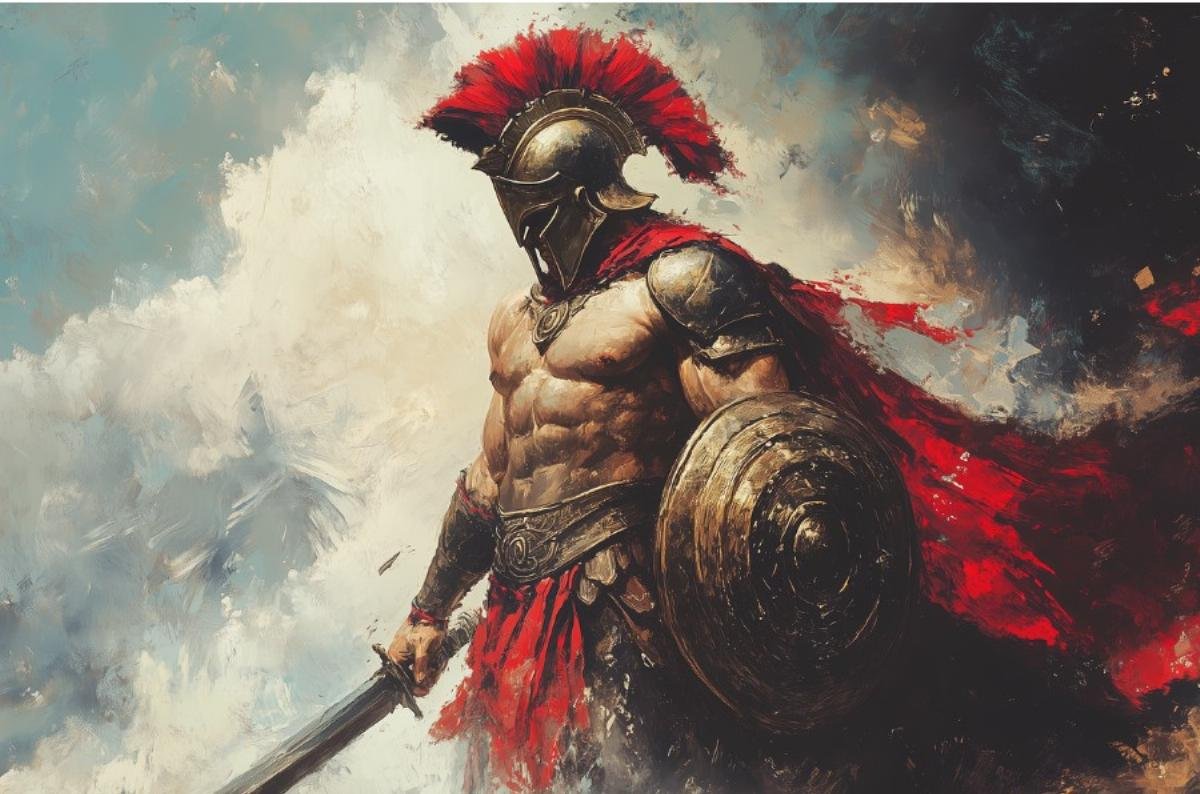
In the annals of military history, few phrases carry the weight of “maximum effort.” Born in the crucible of World War II, the term described the all-hands-on-deck mobilization of the U.S. Army 8th Air Force for bombing raids over Germany — every airworthy aircraft in the sky, every functional crew member deployed, ground support and logistics staff working round-the-clock shifts, and squadrons sent out far beyond their normal capacity. It was, in essence, the doctrine of pushing men and machines to their limits — and then beyond.
That ethos, according to a new column by Matthew G. Andersson in American Thinker, has largely vanished from contemporary American life, and its absence spells trouble for the country’s future fighting force. Andersson, a former aerospace CEO and management consultant, draws a direct line from the warrior culture of ancient Sparta to the grim determination of the greatest generation, arguing that the current generation of Americans — particularly its youth — has lost the stomach for the physical and mental endurance that war demands.
The film that defined a doctrine
Andersson points to the 1949 film Twelve O’Clock High, which centered its entire narrative on the concept of maximum effort within the 8th Air Force operating out of England. The film’s Gen. Pritchard articulated the philosophy bluntly: “we’ve got to find out what a man can take, and get it all.” The film, which drew on several military commanding officers as consultants, was notable for its experimental sound design — no music score, except for brief opening and closing credits. The director, himself a pilot, wanted the roar of aircraft and the sounds of maximum effort combat to serve as the film’s “score.”
That cinematic choice reflected a deeper truth about the era. Looking back at World War II and large-scale wars stretching to ancient times, soldiers were routinely pushed to the absolute edge of human endurance. In the Revolutionary and Civil Wars, troops endured extraordinary physical hardship — making camp, hunting and foraging for food, treating wounds with minimal or no medicine, and sleeping in crude, exposed arrangements amid extreme temperatures, torrential rain, disease, and mosquitoes. Men soldiered on with missing fingers and teeth, worn-out shoes, wounds, burns, hunger, and chronic sleep deprivation.
A media narrative of softness
Andersson’s central complaint, however, is directed at the current left-leaning media, which he accuses of conducting something resembling wartime psychological operations — but aimed at America’s own military and public confidence in it. According to media reports, the food isn’t good enough, the beds are too uncomfortable, and soldiers have been deployed too long. Recent coverage of the U.S.S. Abraham Lincoln serves as one example, as do reports of depleted U.S. weapons stockpiles.
Even if some of these are legitimate concerns, Andersson argues, the framing bears the hallmarks of opportunistic war propaganda crafted by U.S. enemies — except that these enemies are domestic. The liberal media, he writes, has revealed its own personal threshold for mutiny and retreat: the hardship of living without Starbucks, iPhones, and down pillows.
This reveals, in his view, two critical things. First, the left has little understanding of what warfare truly entails — perceiving it primarily as “lawfare” and paperwork — and lacks the stomach for the physical endurance and killing that U.S. and allied soldiers routinely endure. They underestimate America’s fighting men and women, he argues, and possess a weak, defeatist psychology.
The warrior culture question
The second issue Andersson raises is more fundamental: the nature of warrior culture itself. Some nations possess it; some don’t. Over three thousand years of history, some societies were ruthless and victorious, built on physically superior forces, weapons, training, leadership, and intellect — while others, lacking a fighting culture, were conquered or slaughtered. He acknowledges the dividing line in social history isn’t perfectly neat, and that some nations prospered by avoiding war, citing Sun Tzu’s advice in The Art of War to “win without fighting” — a strategy of conserving resources and letting the enemy defeat themselves.
But with two theaters of war poised to merge into one and escalate — Russia battling Ukraine, Israel and the U.S. fighting Iran, and other nations assembling into competitive alliances — Andersson argues the notion of maximum effort will become relevant again.
The drone problem
Yet he also raises a complication: the advent of widespread drone technology. The drone, by nature an unmanned fighting weapon, makes war and killing abstract, remote, and effortless. It alters the risk-reward trade-offs, and not favorably. It’s too easy, Andersson writes, too removed from the demands of physical endurance and the pure physical and mental stress that must go beyond normal limitations to achieve victory.
Andersson suggests the drone may be the product of larger human physical and mental standards today. With a majority of adults physically out of shape, and young college students claiming “mental health issues,” he questions what this portends for future fighting culture. He cites Secretary of War Hegseth’s description of “fat generals” within the command structure, and points to a passive youth culture fixated on phones, social media, and spending.
Lessons from Vietnam and the dons
The column draws a parallel to the Vietnam era’s “McNamara’s folly” — a recently chronicled government recruitment strategy that relied on substandard applicants lacking the right psychological and physical makeup, with disastrous combat results. With so much media attention on college students “dumbed down” by progressive ideology, Andersson worries about the future military recruitment pool — how willing and able it will be to fight, and whether it can mount a maximum effort outside of complaining and protesting.
He contrasts today’s university culture with the “old dons” of interwar England who ran Oxford and Cambridge — many of whom served in and contributed to war planning. They represented standards and expectations that make most faculty and students today seem unready for life’s battles. Andersson quotes author Noel Annan’s book The Dons: “A university is dead if the dons cannot communicate to the students the struggle to produce out of chaos some order won.” That, he says, is a fighting philosophy — whereas today’s youth, and the future recruitment pool, operate on a philosophy of entitlement.
Pride and the path forward
In Twelve O’Clock High, still used as a leadership training film, the commanding general played by Gregory Peck demonstrated what a maximum effort looks like — combined with the equally vital principle of pride. From pride flows confidence. Andersson concludes that today’s U.S. fighting soldiers possess those qualities in abundance, despite being undermined by a liberal, if not traitorous, media and a misled youth culture that may not be as willing or able to fight when duty calls.
The column, published amid escalating global tensions, serves as a stark call for a return to the values that won history’s great conflicts — and a warning that the comforts of modern life may be eroding the very qualities required to defend it.
Matthew G. Andersson is a former aerospace CEO, management consultant, and author. He has testified before the U.S. Senate and is a graduate of the University of Texas at Austin, where he worked with White House national security advisor W.W. Rostow at the LBJ School of Public Affairs.
Source: www.americanthinker.com — https://www.americanthinker.com/blog/2026/08/maximum-effort/