
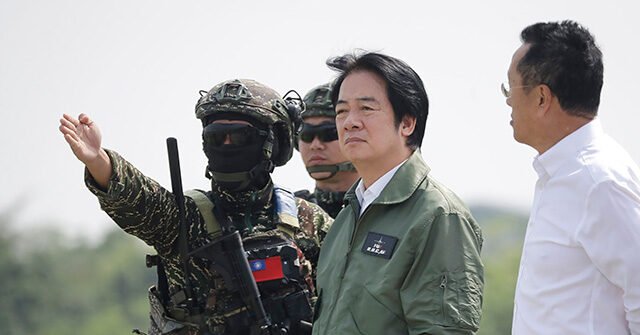
Taiwan’s cabinet approved a supplementary defense budget on Thursday, pushing the island’s total defense spending above NT$1 trillion (US$31.6 billion) for the first time ever. The move comes after opposition lawmakers stripped roughly a third of the government’s originally requested NT$1.25 trillion eight-year defense package, according to Breitbart News.
The supplemental budget of NT$145.7 billion is designed to fill shortfalls in military procurement programs that were targeted by cuts, including domestically produced weapons systems that are considered critical to Taiwan’s defense against potential Chinese aggression.
With the new funds, Taiwan’s defense spending for the year now amounts to 3.83 percent of its gross domestic product (GDP) — a significant increase from previous years and a clear signal of the island’s growing military commitment.
No Gap in National Defense
In a statement released Thursday, Taiwan’s cabinet stressed the urgency of maintaining a robust defense posture.
“There can be no gap in national defense,” the statement said. “National security cannot wait, the defence budget cannot wait, and defence self-reliance cannot wait either.”
The supplementary budget restores funding for several key systems that had been stripped from the original defense budget by opposition lawmakers. Among them is the Strong Bow medium-altitude anti-ballistic missile system, which is designed to intercept incoming enemy missiles at higher altitudes and longer ranges than Taiwan’s current short-range interceptors.
According to the system’s designers, the Strong Bow’s radar can detect and track inbound enemy missiles at greater distances than the U.S.-made Patriot missile system, providing Taiwan with a multi-layered missile defense network that can engage threats at various stages of flight.
Drones and Classified Projects
Beyond missile defense, the new funding also supports expanded spending on drones and anti-drone defenses — a reflection of the evolving nature of modern warfare, where unmanned systems have played an increasingly prominent role in recent conflicts.
The defense bill also includes several classified projects that cannot be disclosed to the public, according to Taiwanese officials. These undisclosed initiatives are likely to involve advanced technologies or sensitive operational capabilities that Taiwan prefers to keep under wraps.
Taiwanese President William Lai Ching-te earlier this week framed the increased defense spending as an investment in peace and stability.
“Investing in defence is investing in peace; we will continue to build a more solid defence force to maintain peace and stability in the Taiwan Strait and the region,” Lai said, according to Breitbart.
Lai also said the spending increase “demonstrates to the international community Taiwan’s determination to strengthen its self-defense capabilities.”
China’s Reaction
Beijing, as expected, reacted sharply to Taiwan’s increased military spending. Communist China’s Taiwan Affairs Office accused Taiwan of seeking to “recklessly incite cross-strait confrontation and antagonism while lavishly squandering the people’s hard-earned money.”
Chinese officials further alleged that Lai is attempting to “resist reunification through force” and warned that Taiwanese leaders “overestimating their own strength” would “bring profound disaster to the people of Taiwan.” These statements echo Beijing’s long-standing position that it will not tolerate any moves toward formal independence and reserves the right to use force if necessary.
The Chinese rhetoric underscores the deep tensions that continue to define cross-strait relations, even as Taiwan seeks to bolster its defensive capabilities.
US Pressure for Even Higher Spending
While Taiwan has now crossed the trillion-NT-dollar threshold, the Trump administration reportedly wants the island to spend even more. President Donald Trump and Undersecretary of War for Policy Elbridge Colby have suggested targets as high as ten percent of GDP — a level that would represent a dramatic increase over Taiwan’s current spending.
The American Institute in Taiwan (AIT), the de facto U.S. consulate in Taipei, said at the beginning of 2026 that it would like to see Taiwan allocate at least five percent of GDP to defense. That would require Taiwan to nearly double its current defense budget in real terms.
The U.S. push for higher Taiwanese defense spending comes amid growing concerns in Washington about China’s military buildup and its ambitions in the region. U.S. officials have repeatedly stressed the need for Taiwan to invest more in its own defense as part of a broader strategy of deterrence.
Taiwan’s new spending milestone represents a significant step toward meeting those expectations, though it remains far short of the five percent figure preferred by the United States.
With the supplementary budget now approved, Taiwan’s defense establishment will move forward with procurement and development programs aimed at strengthening the island’s ability to deter or repel any potential Chinese attack.
The coming months will likely see intensified debate both in Taiwan and abroad about the appropriate level of defense spending and the best ways to allocate those resources in the face of an increasingly assertive China.
Source: www.breitbart.com — https://www.breitbart.com/asia/2026/09/04/taiwan-defense-spending-breaks-trillion-dollar-milestone-for-first-time/