
The Federal Motor Carrier Safety Administration has officially ended the pandemic-era practice of conducting trucking company safety audits remotely, according to an internal agency memo obtained by The Daily Wire. The policy change, implemented in March, restores the pre-2020 requirement that investigators conduct a physical presence at a carrier’s principal place of business.
The shift comes after a series of deadly crashes — including a February 2021 incident in Topeka, Kansas, where a truck driver hauling metal pipes made a right-hand turn, causing the equipment to slide off the semi-trailer and slam into five vehicles and another truck, killing one person. That driver, it was later discovered, had an expired medical certificate and lacked a required record of duty status. The truck also had no up-to-date annual inspection and multiple load-securement violations.
Just a month before the crash, federal inspectors had conducted a remote audit of the trucking company — never visiting the business in person — and closed the probe after a single phone call. During that audit, the company noted the driver later involved in the fatal crash was not an employee but was kept on the books because he worked occasionally.
Such virtual inspections became standard practice after the COVID-19 pandemic began in 2020, when the Biden administration directed inspectors to stop in-person visits and instead review documents online. The policy remained in place well after the public health emergency ended.
‘Substantive Engagement’ Required
In the memo announcing the reversal, Philip W. Thomas, deputy associate administrator for safety at FMCSA, wrote that remote audits “inhibit the ability to fully assess the motor carrier’s compliance and safety measures” and “reduce the overall effectiveness of the onsite investigation process.”
“Now that the public health emergency has ended, FMCSA is reinstating its pre-pandemic standard of conducting investigations with a meaningful physical presence at the motor carrier’s PPOB [Principal Place of Business] per PPOB policy,” Thomas wrote.

The memo stresses that onsite investigations “must involve substantive engagement” — not merely quick visits to a company’s address or drive-bys of business sites. When an auditor arrives at a carrier’s location, FMCSA now instructs them to conduct a “collaborative in person questioning cycle” with the trucking company.
According to Thomas, this approach supports the primary goals of investigations: identifying and confirming violations of the Federal Motor Carrier Safety Regulations, diagnosing underlying breakdowns in the Safety Management Cycle, and determining corrective actions that restore safety management processes and promote sustained compliance.
Before closing an audit, the investigator must submit a completed report to supervisors. That report must then be “thoroughly reviewed for quality and legal sufficiency by the division office, and any other required reviewers.” Only in certain “extenuating circumstances” — such as difficult travel considerations or time constraints — may investigators close investigations virtually, the memo added.

Broader Crackdown on Unqualified Drivers
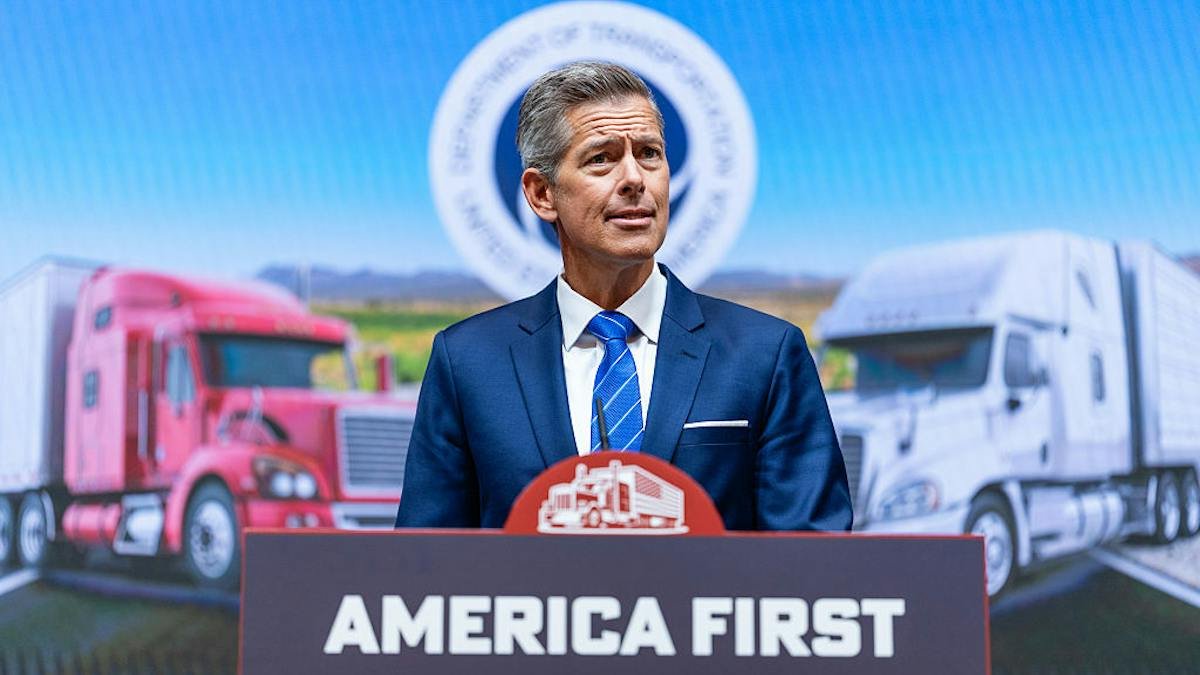
The policy change is part of a broader Trump administration push to tighten oversight of the trucking industry following high-profile collisions involving illegal immigrant truckers and unqualified drivers.
The Department of Transportation has shut down hundreds of trucking schools that placed non-English-speaking drivers on the road. Some of the schools lacked adequate space for driving tests, employed unlicensed instructors, and often had no classrooms, Transportation Secretary Sean Duffy said at a press conference last month.
Over the past year and a half, the department has taken more than 28,000 drivers out of service for failing to meet English-proficiency requirements and has forced states to cancel more than 30,000 foreign drivers’ licenses.
The FMCSA memo does not specifically mention the Topeka crash or any other incident, but the timing of the policy reversal — coming after years of remote audits that allowed companies to avoid in-person scrutiny — underscores the administration’s focus on restoring what it calls a more rigorous safety inspection regime.
Industry groups have generally supported the return to in-person audits, though some smaller carriers have raised concerns about the logistical burden of hosting inspectors onsite. FMCSA has not publicly announced the change, which was communicated internally.
Source: www.dailywire.com — https://www.dailywire.com/news/exclusive-trump-admin-scraps-bidens-covid-era-remote-trucking-inspections