
The United States has formally complained to the Russian government about its refusal to share details surrounding the suspected death of a laboratory worker at a Siberian research facility that has been linked to plague studies, according to reporting from ABC News.
State Department officials confirmed Wednesday that Washington had submitted what is known as a démarche — a formal diplomatic protest — asking Moscow to be more forthcoming about the incident. “We have officially requested additional information from the Russian government,” a State Department spokesperson told ABC News. “We are also in official communication with other countries around the world to share information.”
The complaint carries a pointed legal subtext: it warns the Kremlin that withholding information about the death runs afoul of its commitments under international health law. The 2005 International Health Regulations obligate signatory countries to notify the World Health Organization within 24 hours of assessing an event that could escalate into a cross-border public health emergency. Pneumonic plague appears on the list of conditions the regulations treat as a “potential notifiable event.”
A Death Near a Soviet-Era Facility
At the center of the dispute is the death of a woman who worked at or near the Irkutsk Anti-Plague Institute, a facility established by the Soviet Union in 1934 to study and control plague. Russian authorities have not confirmed that a laboratory leak occurred, nor have they stated that the woman died of plague.

Irkutsk regional Governor Igor Kobzev has said the worker died from pneumonia of unknown origin, offering no further public explanation. The geographic proximity of the death to the institute is what has fueled international concern, given the facility’s historical mandate and the lethality associated with pneumonic plague, which can spread person-to-person through respiratory droplets and is fatal without prompt treatment.
The episode has revived a long-running friction point between Washington and Moscow over Russia’s biological research activities. The United States has for years accused Russia of maintaining an offensive biological weapons program, allegations Moscow rejects. Russian officials describe the Irkutsk institute as a civilian facility dedicated to plague prevention and public health research.
In a 2025 report, the State Department asserted that Russia continued to pursue biological warfare work in violation of its obligations under the Biological Weapons Convention — a treaty that prohibits the development, production, and stockpiling of biological agents for hostile purposes.
Trump Says Call With Putin Is Imminent
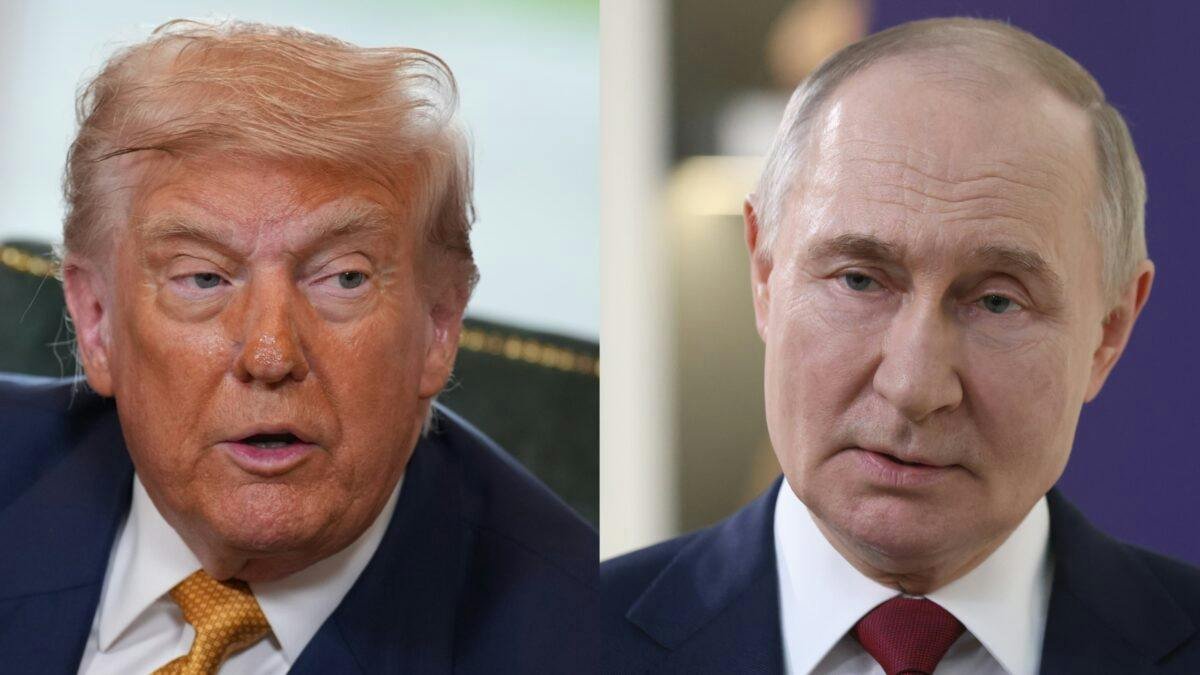
The diplomatic complaint landed as President Donald Trump prepares to speak directly with Russian President Vladimir Putin. “I have a call scheduled,” Trump told reporters early Tuesday evening, adding that the conversation would take place “very soon.”

The president indicated he would be positioned to share additional details from U.S. intelligence agencies about the suspected plague case on Wednesday. He also has an announcement scheduled for 1:00 p.m. Wednesday at the White House, though it remains unclear whether that event is connected to his planned discussion with Putin.
Secretary of State Marco Rubio struck a cautious note Tuesday, saying the administration is monitoring the situation closely while urging the public to avoid jumping to conclusions. “We’re watching it very closely, hour by hour,” Rubio said. He added: “Maybe, you know, there’s nothing there. Maybe it’s bigger than we thought. We don’t know. But I think it would be reckless at this moment, given the limited information we still have, to speculate about what this might or might not be or what this is or what this isn’t.”
The démarche represents a formal escalation in Washington’s posture, signaling that the administration is treating the lack of Russian disclosure as a matter serious enough to warrant a state-to-state protest rather than routine diplomatic inquiry. A démarche is typically reserved for cases in which one government wants to register displeasure or demand action in unmistakable terms.
What Remains Unknown
Despite the formal complaint and the high-level calls, fundamental questions about the incident remain unanswered. Russian officials have neither confirmed nor denied that the worker contracted plague. They have not disclosed whether other employees or contacts have been monitored, tested, or quarantined. They have not provided a timeline of when the woman fell ill or died. And they have not said whether samples from the case were sent for confirmation to any international reference laboratory.

Those gaps are precisely what the U.S. complaint seeks to close. By invoking the International Health Regulations, Washington is pressing the case that Russia has a binding obligation to share information about events with potential international health consequences — not merely a discretionary courtesy.
Whether that pressure produces new disclosures remains to be seen. The Trump-Putin call, expected shortly, could offer the first indication of whether Moscow intends to address the matter directly at the leadership level or continue to treat it as a domestic medical matter with no external relevance.
For now, the administration’s public stance is one of watchful uncertainty. Rubio’s comments reflected a deliberate effort to avoid amplifying speculation while intelligence assessments continue. That posture could shift quickly depending on what U.S. agencies conclude — and on what, if anything, the Kremlin chooses to say.
The Irkutsk institute has operated for nearly a century, originally founded as part of the Soviet Union’s sprawling network of anti-plague stations that stretched across the country. Those facilities were nominally public health institutions but have long drawn scrutiny from Western governments, which question whether some of the research conducted within them crossed into military applications. Russia has consistently dismissed such characterizations.
The coming days are likely to determine whether the suspected case remains a quiet diplomatic exchange or escalates into a broader confrontation over biological research transparency — a subject that has already strained relations between the two countries for years.
Source: www.dailywire.com — https://www.dailywire.com/news/trump-goes-straight-to-the-top-over-russias-plague-mystery-as-u-s-issues-complaint