
Virginia’s August 4th primary came and went, and for many voters, the most memorable thing about it was what they didn’t see — especially in the race for the Republican nomination to challenge incumbent Democratic Sen. Mark Warner.
Writing at American Thinker, James Stansbury described the primary as “the strangest in my memory,” pointing to a remarkable silence from the party around its own Senate candidates. Despite the rarity of a Senate race — they come only once every six years — Stansbury says he saw virtually no advertising for the three Republicans vying for the nomination: Kim Farington, Bert Mizusawa, and David Williams.
“I recall seeing nothing (not even their names) regarding the three Republican contenders,” Stansbury wrote, noting that even his conservative friends were puzzled by the lack of information. There were no TV ads, no mailers, not even a cheap postcard.
Why the silence?
Stansbury suspects the Virginia GOP leadership simply decided not to spend money on a race they believed was unwinnable. Unseating Mark Warner, who is expected to easily win a fifth term, would be “highly unlikely,” he acknowledged — and the party’s apparent calculation seemed to be that the money was better spent elsewhere.
It wasn’t until the day before the election that Stansbury finally got useful information about the candidates — and it didn’t come from the Republican Party. It came in an email newsletter from the Family Foundation of Virginia, a conservative advocacy group, which included limited details on the three contenders. Stansbury quickly shared the information with his circle of friends.
The winner: a decorated military career
Stansbury cast his vote for Mizusawa, who easily won the primary. After the victory, more detailed biographical information surfaced online, reinforcing Stansbury’s choice.
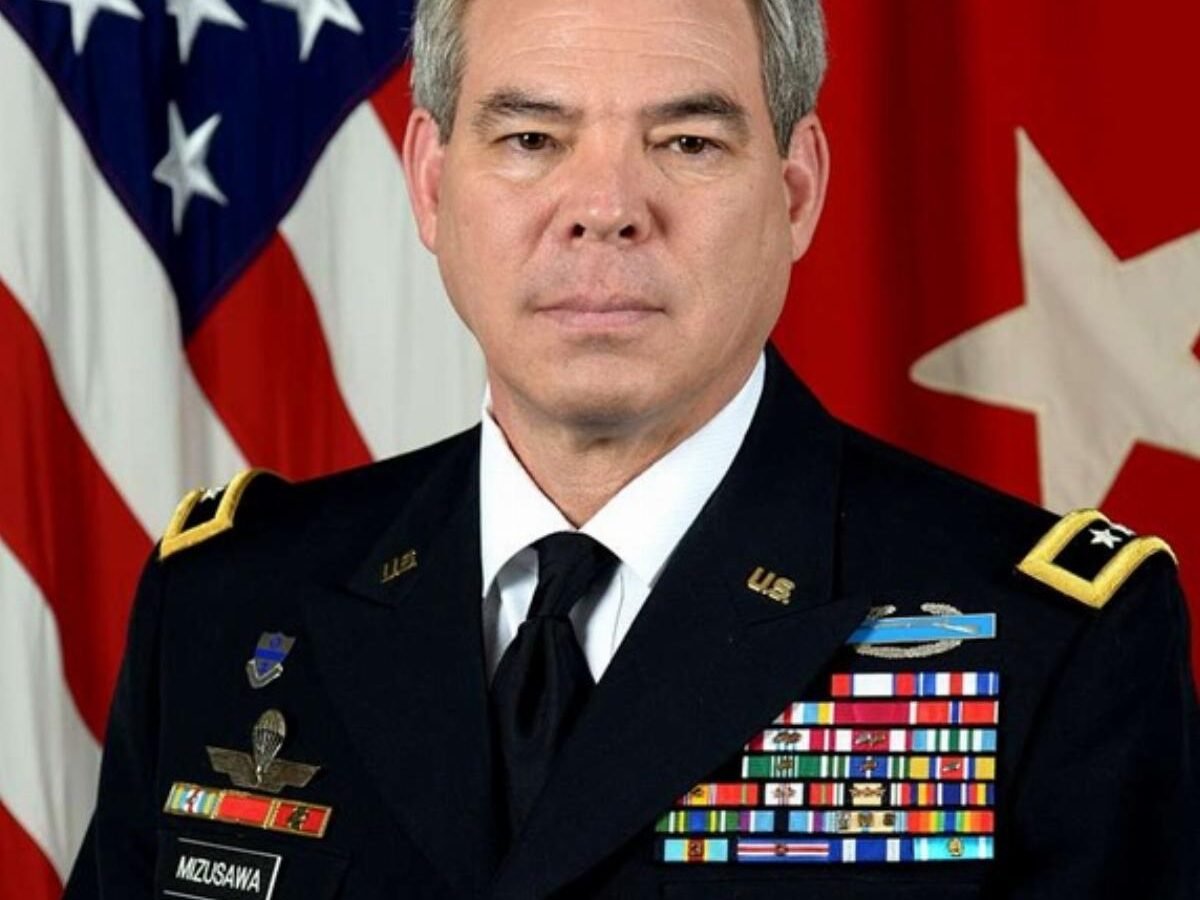
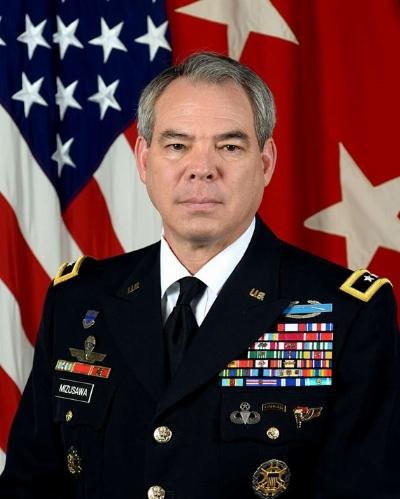
Mizusawa, born in Honolulu in 1957, grew up in a military family that eventually settled in Hampton, Virginia. He graduated first in his class from West Point in 1979 and served in the U.S. Army until 2015, retiring as a Major General. Along the way, he earned a Juris Doctor from Harvard Law School and a Master of Public Policy from Harvard’s Kennedy School, where he was twice selected as a MacArthur Fellow in International Security.
His military service included commanding the Joint Security Force in the Korean DMZ and the Combined Joint Interagency Task Force in Afghanistan during Operation Enduring Freedom. He also held senior positions in Iraq and at the Pentagon, including Deputy Director for Strategic Initiatives on the Joint Staff.
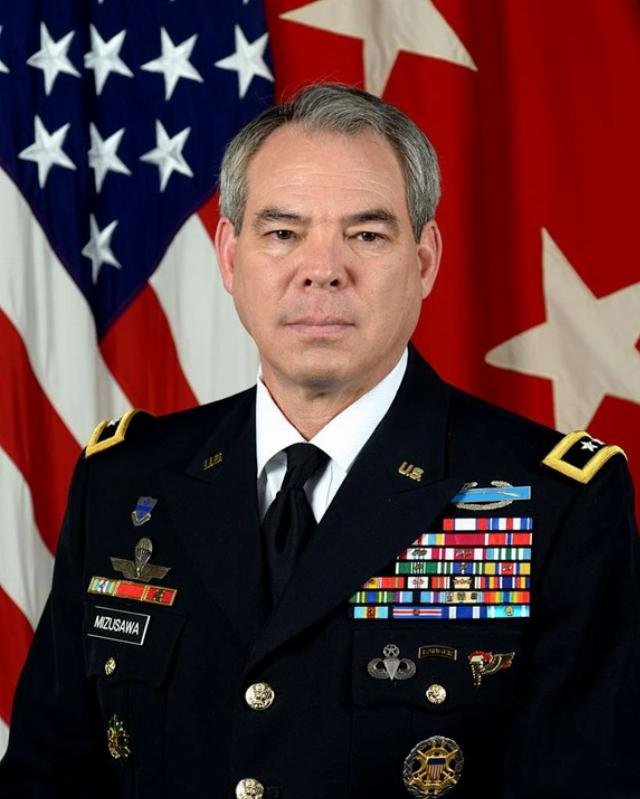
Beyond the military, Mizusawa served as a professional staff member on the Senate Armed Services Committee, Deputy Under Secretary of the Army, and senior advisor to the CIA Director. He also advised Donald Trump’s 2016 presidential campaign on foreign policy and authored the “Trump doctrine” on national security.
A call for party support
Stansbury’s piece is more than a retrospective — it’s a plea. He argues that Republican Party leaders, at both the Virginia and national levels, need to get serious about supporting Mizusawa’s general election campaign. “Winning this Senate seat will add a strong, intelligent, and reliably conservative senator,” Stansbury wrote, suggesting that a Mizusawa win could provide a critical vote to help pass legislation like the SAVE Act.
Stansbury, writing from a deeply conservative viewpoint, warns that Warner will continue to align with the Democratic Party’s “big-tent” agenda — a characterization that reflects the author’s own perspective rather than a neutral assessment. For Stansbury, the stakes are existential: he frames the race as important to the survival of “America’s Constitutional Republic.”
The bigger story, as Stansbury tells it, is the party’s failure to promote its own candidates. “Whoever runs the Virginia and National Republican Party had better wake up,” he wrote, urging them to fund the advertising and TV appearances necessary to compete.
For now, Mizusawa faces an uphill battle against Warner, a well-established incumbent with deep name recognition. But Stansbury argues that the party’s apparent decision to write off the race is precisely the kind of defeatism that could doom promising candidates — and the party’s chances.
Source: www.americanthinker.com — https://www.americanthinker.com/blog/2026/08/a-critical-campaign-in-virginia/