
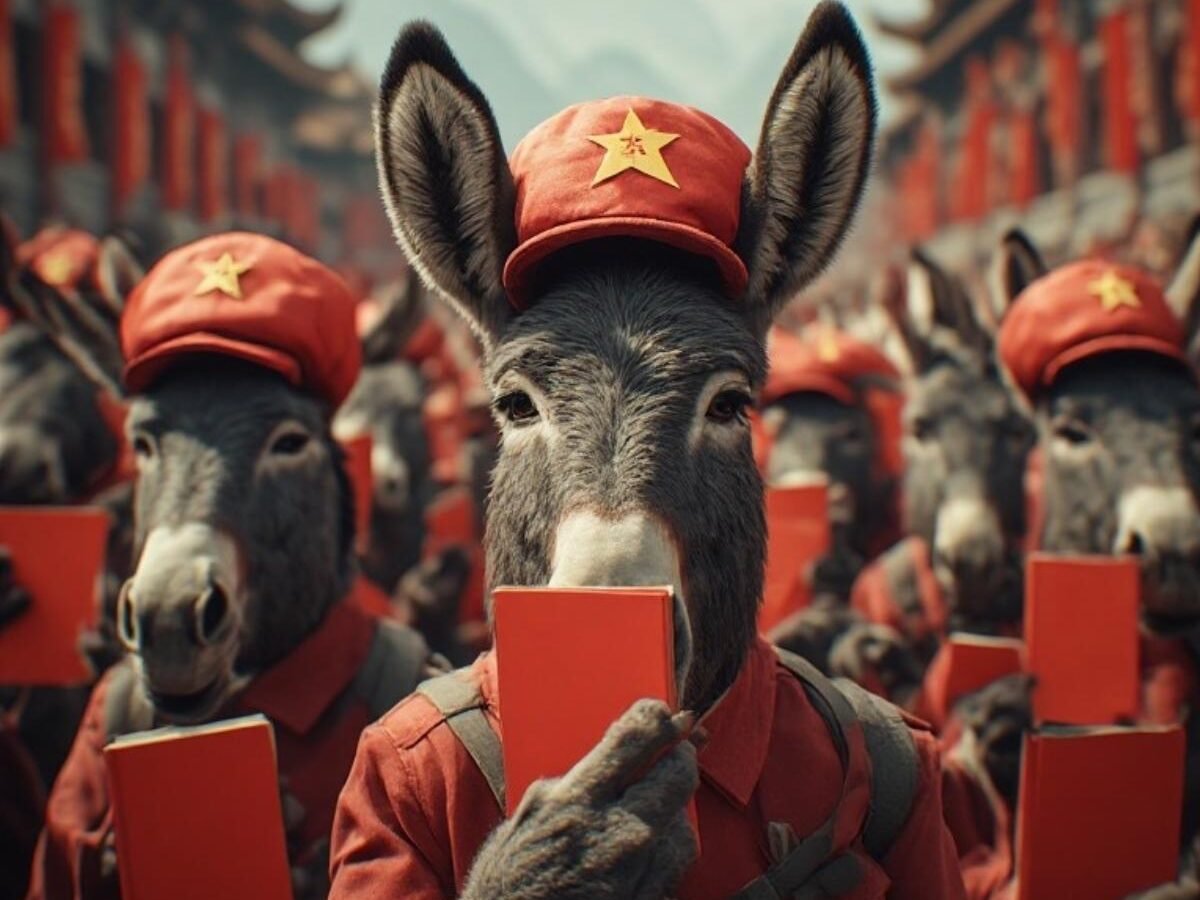
For many Americans, the recent leftward lurch of the Democratic Party has come as a shock. But according to a new opinion piece in American Thinker, the party’s embrace of Marxist-influenced politics was not an accident or a sudden betrayal—it was the culmination of generational trends that have been building for decades.
Attorney Frank Friday argues that the Democrats’ current stance was “inevitable” given the erosion of the party’s traditional pillars: organized labor, mainline Protestantism, and a commitment to centrist governance. The piece, published on August 15, 2026, contends that the party’s leadership—by rigging rules and suppressing internal dissent—only delayed a takeover by far-left activists like Bernie Sanders and his DSA allies.
“If the party elders had not bent the rules so ruthlessly, Bernie Sanders and his DSA gang would have taken over years ago,” Friday writes. “But make no mistake, massive political realignment is coming for the Democrats.”
From Flexible Centrism to Single-Idea Governance
Friday traces the party’s transformation back to the mid-20th century, when Democrats offered a “flexible liberal centrism” that won elections and masked internal fractures. That approach worked for a time, but the party eventually ran out of answers—first for the Cold War, then for the inflation-plagued economy of the 1970s.
Later presidents like Bill Clinton and Barack Obama were “talented but facile,” according to Friday, leaving no lasting principles behind. The party’s only consistent idea became “more government,” and far-left activists became the most energetic force within it.
The shift took time to register with voters because of old habits. Friday cites political analyst Michael Barone’s Almanac of American Politics, which showed that as late as the 1970s, most counties voted the same way they had a century earlier. By the 1990s, however, demographic and economic changes had reshaped the electorate.
Decline of Labor Unions and Protestantism
Two long-term trends stand out in Friday’s analysis: the collapse of private-sector unions and the evaporation of mainline Protestantism.
At the end of World War II, 34% of American workers belonged to a private-sector union. Today, that figure is below 6%. As manufacturing jobs vanished and the economy shifted toward white-collar work, unions lost both their practical relevance and their moral authority among workers. Friday argues that many workers now view unions as “leeches” that take dues without delivering results.
The decline of unions also dismantled organized Democratic Party machinery in many areas. Friday points to Vigo County, Indiana, which until 2020 had voted for every winning presidential candidate since World War II. When its major General Motors plant closed and the UAW left, the county began voting like other predominantly white Midwestern locales.
Mainline Protestantism, once the nation’s dominant religious force and a home for Democrats of all stripes, suffered a similar fate. The Social Gospel movement pushed these churches leftward, and leaders like William Sloane Coffin in the 1970s drove many congregants away with anti-American rhetoric and cultural activism. White Democrats, Friday notes, largely abandoned church attendance altogether.
The Role of Muslims, Jews, and the Brain Drain
The piece also ventures into controversial territory, arguing that some Muslim communities have disproportionately benefited from affirmative action and DEI policies in elite institutions. Friday distinguishes between groups like Balkan and Kurdish Muslims—whom he praises for embracing American ideals—and those from Somalia, Palestine, and South Asia, whom he characterizes as prejudiced or Marxist-influenced.
At the same time, Friday says the party’s leftward drift has alienated its historic Jewish donor base, which has been a financial backbone of the Democrats since the Civil War. He cites Wall Street figures like Bill Ackman as examples of longtime donors who now feel unwelcome. This loss of support, combined with an exodus of talented Jewish activists from the party’s ranks, has left the DNC with both a financial hole and a “brain drain.”
A Party That Won’t Die—But Will Shrink
Friday acknowledges that the Democrats are unlikely to disappear entirely, due to America’s two-party duopoly and the near-impossibility of a third party competing effectively. Instead, he predicts the party will continue to win some elections by capturing the “protest vote” and relying on voter inertia.
But he argues the party will keep getting “smaller, nuttier, and more irrelevant” as it loses touch with ordinary working Americans. The Democrats of today, he writes, bear little resemblance to the party of Hubert Humphrey and Scoop Jackson—liberals who built their reputations fighting communism, not aligning with it.
The piece is a provocative take on a major political story, and it’s sure to generate debate. But its core argument—that the Democrats’ leftward shift was not a fluke but a long-developing trend—is one that both critics and defenders of the party will have to wrestle with.
Source: www.americanthinker.com — https://www.americanthinker.com/articles/2026/08/democratic-communists-were-inevitable/