
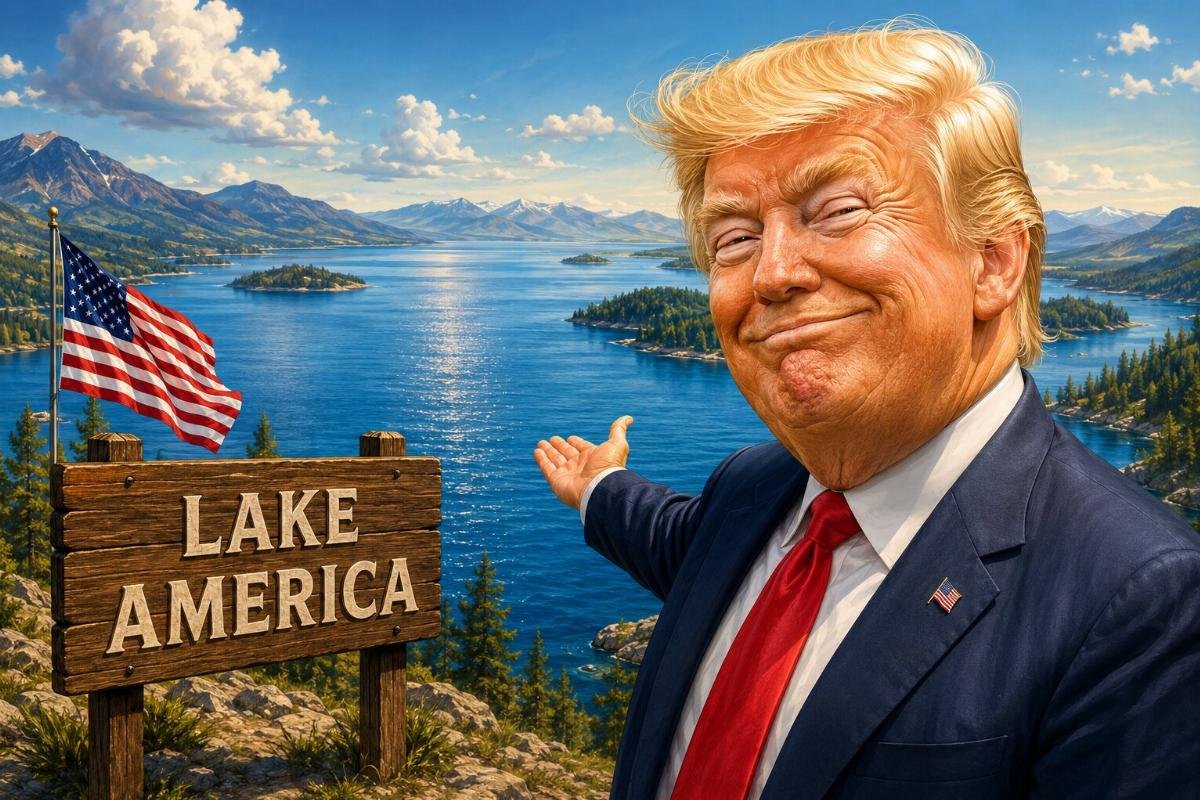
Political observers may scoff, but the map has changed. As of last weekend, Google Maps has officially adopted the label ‘Lake America’ for the easternmost of the Great Lakes, according to a report from American Thinker. The renaming follows President Donald Trump’s executive order and marks the latest in a series of unilateral geographic rebrandings that have drawn praise from some conservatives and mockery from critics.
American Thinker’s J.R. Dunn, writing in a commentary piece, acknowledged the measure may elicit eye-rolls from Democrats, scorn from outlets like The Washington Post and The New York Times, and accusations of gauche politicking from the Bulwark. But Dunn argues the move is justified—part of a broader historical pattern of renaming that began with authoritarian regimes and was later embraced by Western progressives.
A Sixty-Year History of Map Overhauls
Dunn traces the modern renaming craze back to 1958, when China replaced its Wade-Giles transliteration system with the new Pinyin system, transforming ‘Peking’ into ‘Beijing’ and dozens of other names. The change gained international acceptance in 1979. Soon after, other non-Western states followed suit, often for what Dunn describes as the purpose of ‘messing with the West.’ Myanmar replaced Burma, and Kampuchea replaced Cambodia—the latter a particularly troubling shift given that the Khmer Rouge regime that had adopted the name was later responsible for the deaths of roughly two million people.
By the following decades, even more Westernized nations like India began changing place names, with Bombay becoming Mumbai and other similar rechristenings. The trend eventually reached the Western world, where progressive activists pushed to replace names considered ethnically demeaning with indigenous designations. Dunn points to one controversial campaign that sought to remove all place names containing the word ‘squaw,’ arguing that the effort destroyed what little recognition Native American women had in those landmarks—an ‘own goal,’ as he puts it.
From Denali Back to McKinley
The renaming movement has cooled in recent years, according to Dunn. In 2025, Mount Denali—a name officially adopted during the Obama administration—was restored to its original Mount McKinley. Dunn notes that a future Democratic administration could likely revert that change, adding, ‘Who needs a mountain named after a Republican?’
But President Trump, as Dunn observes, has ‘overturned the table’ with his latest action. The Gulf of America and now Lake America stand as the most prominent examples, both officially recognized on Google Maps. Dunn frames these changes as a matter of fairness: if communists, petty tyrants, and the PC crowd could rename places to suit their own agendas, then why not the United States?
Reactions and Broader Implications
The move has not been without controversy. Critics on the left argue the renaming is a distraction from more pressing issues, while conservative commentators have generally applauded the change as an assertion of national identity. Dunn acknowledged the apparent triviality of the matter but suggested that dismissing it outright ignores the motivations of those who started the trend in the first place.
In his closing lines, Dunn emphasized the importance of free speech in a republic, tying the debate over names to broader concerns about discourse. His commentary ends with an appeal for readers to support American Thinker’s work—a reminder that this particular viewpoint remains one side of a larger conversation.
As of this week, Google Maps users searching for the easternmost Great Lake will find it labeled ‘Lake America.’ Whether the name will persist beyond the current administration remains to be seen, but for now, the cartographic record reflects the latest chapter in a global history of renaming that shows no sign of ending.
Source: www.americanthinker.com — https://www.americanthinker.com/blog/2026/09/welcome-to-lake-america/