
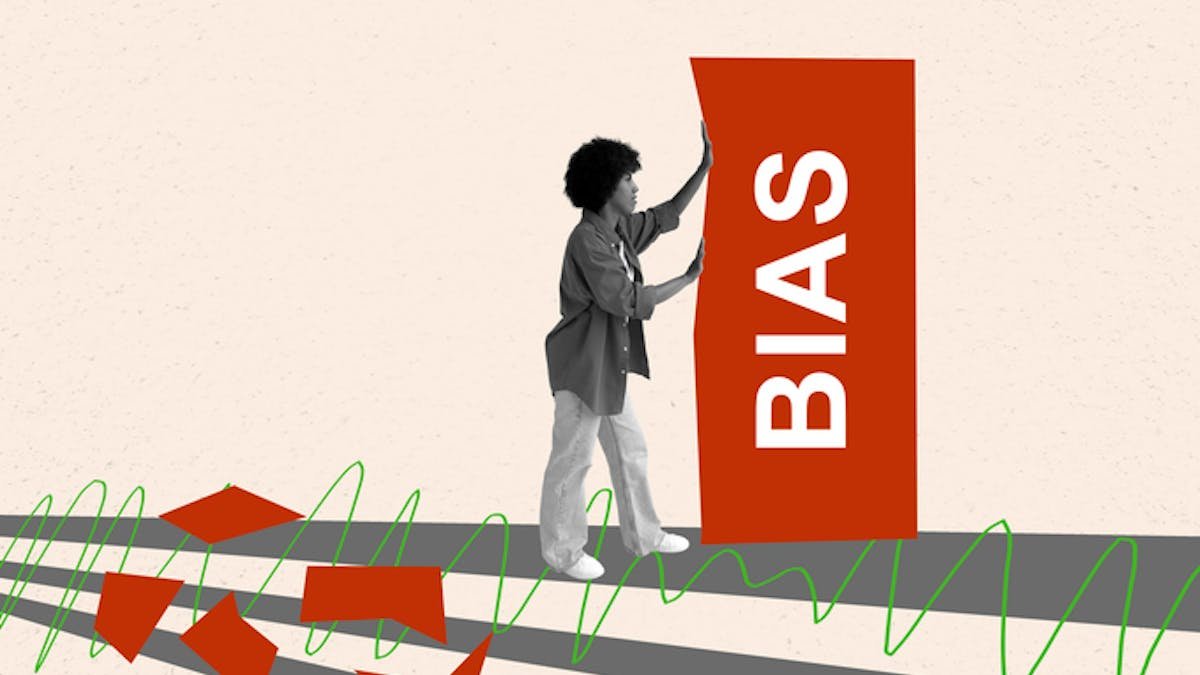
Trust in American media is at rock bottom, and the partisan split has never been starker. According to recent polling cited in a Daily Wire analysis, only 8% of Republicans say they trust newspapers, television, and radio to report the news fully, accurately, and fairly. By contrast, 51% of Democrats express trust in mass media.
The question is why the gap is so wide. In a piece published this week, freelance journalist Ella Dawson argues that the answer lies in how the two parties approach bias: Democrats tend to pretend it doesn’t exist, while Republicans tend to embrace it.
Headlines that raised eyebrows
Dawson points to several high-profile headlines from mainstream outlets that she says illustrate a pattern of subtle but consequential bias. After the assassination attempt on Donald Trump in 2024, CNN ran the headline: “Secret Service Rushes Trump Off Stage After He Falls at Rally.” The Associated Press similarly reported: “Donald Trump has been escorted off the stage by Secret Service during a rally after loud noises ring out in the crowd.”
More striking, after the assassination of conservative activist Charlie Kirk, The New York Times published a story headlined: “Charlie Kirk, Right-Wing Force and a Close Trump Ally, Dies at 31.”
Dawson argues these headlines aren’t factually inaccurate, but they are deeply biased — leaving out critical context that would have been included had the subjects been Democrats. The problem, she says, is that these same newsrooms claim to produce objective, unbiased reports.
A pattern of ‘nonpartisan’ groups that aren’t
Dawson also recounts her own investigation of the Campaign Legal Center (CLC), which she conducted in summer 2024 with the National Journalism Center. The CLC describes itself as a “nonpartisan legal organization dedicated to solving the wide range of challenges facing American democracy,” and claims to focus on “democracy, not particular political parties or electoral results.”
But according to Dawson, research into the organization shows otherwise. On a call with an anonymous source, she says she was given a data sheet that showed the CLC disproportionately attacks Republicans by a wide margin. She describes the organization as “almost completely partisan” and says its website is “lying.”
The CLC, she argues, is emblematic of a broader trend among liberal organizations that pretend to be nonpartisan while being anything but.

The conservative contrast: embracing bias openly
Dawson contrasts this with conservative outlets, which she says are generally unafraid to admit their bias. Andrew Breitbart founded Breitbart News specifically to counter left-wing reporters who pretend to be objective. The Daily Wire, she notes, “does not claim to be without bias. We’re opinionated, we’re noisy, and we’re having a good time.” National Review was founded as an explicitly ideological project, and The Spectator’s motto is famously “firm, but unfair.”
Of course, there are exceptions on both sides, but Dawson argues the overall pattern holds: conservatives prefer honesty about bias, even if it means the news they consume is openly opinionated.
The ‘Podcast Election’ and what it revealed
The 2024 election — dubbed “The Podcast Election” by many talking heads — illustrates the trend. Trump’s three-hour interview with Joe Rogan drew 62 million views and more than half a million comments.
Kamala Harris and Tim Walz, by contrast, had a rougher time in the podcast arena. Walz’s attempts to project masculinity backfired when he struggled to load a shotgun. Harris spent six figures for an appearance on the “Call Her Daddy” podcast — a seven-minute interview that reportedly took months to reach one million views. Harris was invited to Rogan’s show under the same terms as Trump, but she declined; ABC, Dawson notes, reported that it was Rogan’s fault she didn’t appear.

Trump won more young voters in 2024 than in previous cycles, while Harris gained more older voters — an inversion of typical demographic patterns. Dawson suggests the podcast strategy explains why: young people are on TikTok and YouTube, not the Weather Channel.
A billion dollars and a message mismatch
Harris’s campaign chiefs later explained on a podcast how they spent $1 billion. “We put her on the Weather Channel. In part, because that’s where people were watching,” they said. Dawson dryly notes that the last time she watched the Weather Channel was while helping out at a rest home.
The episode, she says, highlights a broader lesson: liberals want to believe that because established outlets side with their point of view and are often labeled “center,” their perspective must be objectively true. Conservatives, on the other hand, would rather have a wolf than a wolf in sheep’s clothing.
What this means for trust — and for journalism
Dawson’s central argument is that the trust gap isn’t an accident. Republicans are more skeptical of media because they sense, correctly or not, that mainstream outlets hide their bias behind a veneer of objectivity. That skepticism extends beyond media to institutions more broadly.
For journalists, the lesson, she writes, is to stop pretending that unbiased, nonpartisan reporting is possible. “Objective reporting doesn’t exist,” she argues. “It’s sterile. It’s not entertaining to read. It hides behind lies. And it will ultimately create more distrust and division in society because it is founded on deception.”
The piece doesn’t call for abandoning fairness, but rather for honesty about perspective — a tougher sell in a media landscape where “balanced” is often treated as a synonym for “true.” As Dawson puts it, the 2024 election showed that more than half of voters trusted Joe Rogan more than The New York Times, even when Rogan is openly more biased and subjective.
Source: www.dailywire.com — https://www.dailywire.com/news/the-real-reason-trust-in-media-collapsed