
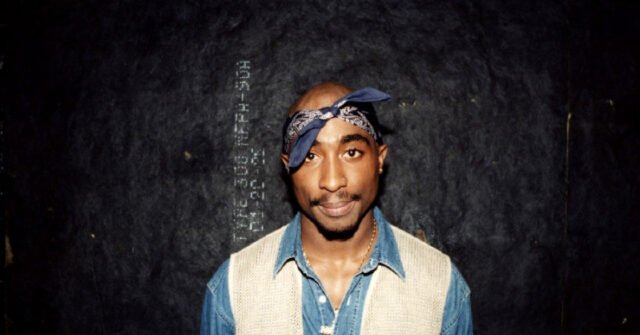
After nearly three decades of unanswered questions and mounting public fascination, a jury has finally delivered a verdict in the killing of one of rap’s most enduring legends. Duane “Keffe D” Davis, 63, was found guilty on Monday of murder in the death of Tupac Shakur, a case that has haunted Las Vegas and the music world since 1996.
Jurors deliberated for less than three hours before returning a unanimous conviction on a charge of murder with the use of a deadly weapon with the intent to promote, further or assist a criminal gang, according to ABC News. The quick decision followed a trial that centered on Davis’s own admissions, including statements he made on tape and in a memoir.
Davis is the only person ever tried and convicted in connection with Shakur’s death. He now faces a maximum sentence of life in prison. His sentencing has not yet been scheduled, but the verdict marks a historic close to one of the most high-profile unsolved murders in American music history.
The Night of the Shooting
Shakur was gunned down on the night of September 7, 1996, while riding in a black BMW with Death Row Records chief Marion “Suge” Knight. The car was stopped at a red light near the Las Vegas Strip when a white Cadillac pulled up alongside it and opened fire. Shakur was struck multiple times and died in the hospital six days later. He was 25 years old.
Prosecutors say Davis did not fire the fatal shots. They allege that the gunman was either Orlando “Baby Lane” Anderson — Davis’s nephew — or another man riding in the backseat of the Cadillac. But they argued that Davis, a self-admitted longtime leader of a Los Angeles street gang, was the “shot caller” who handed the weapon to the shooter and orchestrated the attack.
A Case Built on Confessions
Davis’s own words became the centerpiece of the prosecution’s case. In 2008, during an FBI interview connected to the killing of Shakur’s rival, the Notorious B.I.G., Davis stated on tape that he remembered handing a gun to the men in the backseat of the white Cadillac before the drive-by that killed Shakur and wounded Knight. That confession, along with other statements he made over the years, gave investigators the break they needed to arrest him in 2023.
Prosecutors also relied on Davis’s co-authored memoir, Compton Street Legend, which detailed his involvement in the Crips gang and the events surrounding Shakur’s murder. In the book, Davis wrote that Shakur’s entourage “crossed the line” when they beat up his nephew at a Las Vegas casino. Prosecutors argued that beating was the motive for the shooting — a retaliation for the assault on Anderson.
Chief Deputy District Attorney Binu Palal told jurors that even if Davis did not pull the trigger, he “planned the shooting in retaliation of the beating of his nephew.” Palal’s argument painted Davis as the architect of a gang-driven revenge attack, a narrative the jury accepted after weighing the evidence.
Defense Pushes Back on the Memoir
Davis’s attorneys fought to keep the memoir out of the trial. They argued that the book was fictionalized and that, because it had a co-author, it was impossible to know which portions Davis actually wrote. The judge ultimately allowed some of the book’s content into evidence, but prosecutors said they focused more on Davis’s documentary appearances and police interviews than on the memoir itself.
The defense also highlighted the fact that Davis did not fire the weapon, though they faced the challenge of explaining his repeated statements suggesting otherwise. Davis had long spoken openly about his role that night, at times describing himself as a witness and at others as a participant. His inconsistent accounts gave prosecutors ample material to work with.
The Others Are Gone
The three other men who allegedly took part in the shooting are all dead. Anderson died in 1998, and the other suspects have since passed away as well, leaving Davis as the sole living figure connected to the attack. That made his prosecution a singular moment — the last chance to hold anyone accountable for Shakur’s murder.
The Associated Press reported that prosecutors presented mounds of evidence linking Davis to the crime, including his confessions in his memoirs and on tape. The breadth of that evidence proved decisive, even as the case relied heavily on a defendant who was not the trigger man.
A Long-Awaited Verdict
For fans of Tupac Shakur, the verdict brings a measure of closure after 30 years of speculation. Shakur, whose influence on hip-hop remains enormous, was shot to death during a period of intense rivalry between East Coast and West Coast rap scenes. His murder, like that of the Notorious B.I.G. months later, became a symbol of the era’s violence and remains a subject of documentaries, books, and endless debate.
Davis’s conviction does not answer every question about that night — or about the broader conflicts that shaped it. But it does deliver a legal reckoning for a crime that had gone unpunished for three decades.
The case against Davis was built on his own words, and in the end, those words proved enough. The jury’s verdict, reached in under three hours, suggests they were not persuaded by the defense’s attempts to cast doubt. Davis now faces the prospect of spending the rest of his life in prison for a murder that shocked the world and changed music forever.
Source: www.breitbart.com — https://www.breitbart.com/entertainment/2026/08/31/jury-finds-duane-keffe-d-davis-guilty-in-the-murder-of-rap-icon-tupac-shakur/