
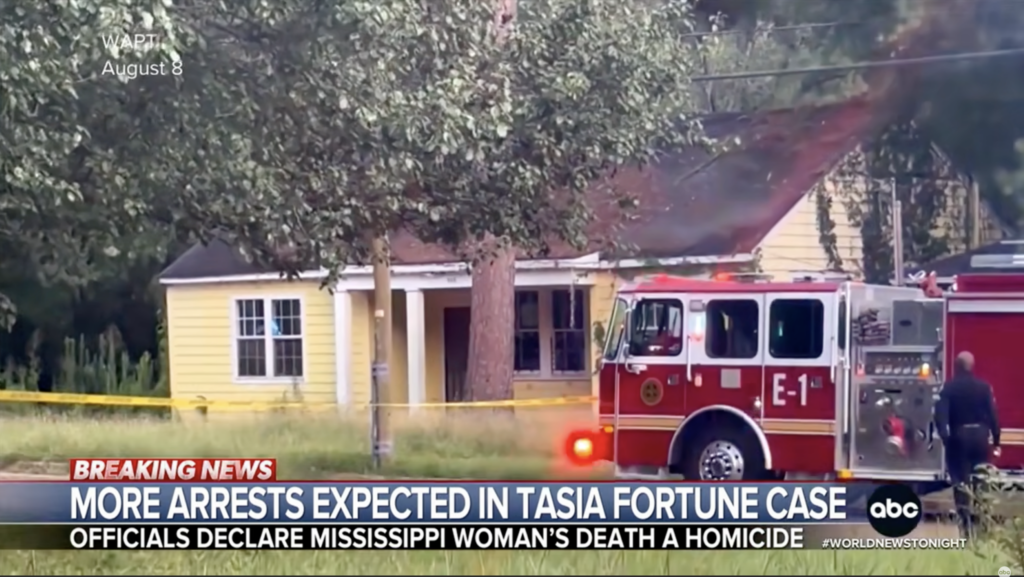
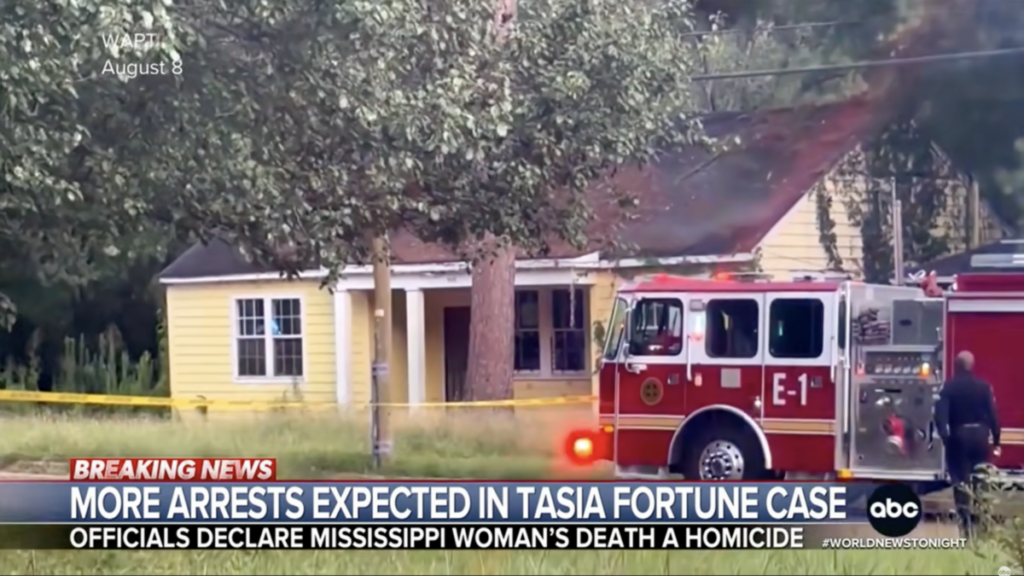
The Associated Press is drawing sharp criticism after publishing coverage that connects the August death of a Black Mississippi woman found hanging from a tree to the nation’s history of racist lynchings—even though authorities had already arrested a Black suspect in the case and the victim’s own mother said she did not believe race played a role.
According to reporting by The Federalist, the controversy centers on the death of Tasia Fortune, whose body was discovered hanging behind an abandoned home in Jackson, Mississippi, on Aug. 3. The AP initially covered the case in a straightforward manner, reporting that authorities had arrested Jarques Ratliff, a Black man, in connection with Fortune’s death. That article also noted that Fortune’s mother told the outlet she thought the killing was “something very personal, very personal” and “doesn’t believe race had anything to do with her daughter’s death.”
Three days later, the wire service published a follow-up piece titled “Cases of Black people found hanged in the US South are a reminder of nation’s lynching history.” In its opening line, the AP wrote that Fortune’s death “has stirred distressing memories of the grim history of lynchings across the U.S. South.” The framing suggested a racial dimension to a case in which the alleged perpetrator and the victim were both Black.
The AP article acknowledged the suspect’s race but argued that the historical resonance remained relevant regardless. “Regardless of the circumstances of the case, for many Black people, the imagery of a rope and noose evokes the legacy of lynching and vigilante violence against Black people in the U.S. and brings with it deep pain and trauma,” the piece stated.
The article also quoted Brad Franklin, a Jackson activist, who said that what is happening today is the same “feeling” and experience Black Americans felt “in 1956 and 1966” during the era of racially motivated lynchings.
A Pattern of Premature Framing
The Federalist noted that the AP’s approach mirrored earlier coverage by CNN. Weeks before the AP’s lynching-history piece, CNN’s Omar Jimenez reported on Fortune’s death before a suspect had been arrested. Jimenez said that while no details were known about the alleged killer, “The raw imagery of a black person hanging from the tree in the American South evokes a very painful history.” The CNN report grouped Fortune’s death with two other hangings in the area, though it acknowledged that the other two individuals were reported to have died by suicide and that one of the deceased was white.

According to The Federalist’s account, no information presented in the CNN segment established a pattern of racism, and linking the three deaths together while emphasizing a “painful history” in “the American South” was a misleading attempt to suggest a racial motive.
The AP did not immediately respond to a request for comment on the criticism, and it remains unclear whether the outlet stands by the framing of its lynching-history article. The Federalist reported that the AP had the essential facts—including the suspect’s race and the victim’s mother’s statement—before publishing the piece that centered on lynching.
The Human Cost of a Narrative
At the heart of the dispute is a family grieving the loss of a woman whose death authorities have treated as a homicide. Fortune’s mother told the AP she viewed the killing as personal, not racial. Yet the subsequent coverage, critics argue, transformed a specific tragedy into a broader commentary on Southern racism.

The Federalist argued that Fortune deserves justice and her family deserves answers, and that neither is served by outlets using her death to push what it called a “bogus narrative of racism.”
The case has also raised questions about how media outlets handle racially charged imagery in criminal cases where facts are still emerging. In this instance, the AP’s own reporting had already provided context that undercut the lynching frame it later adopted.
As of this report, no additional arrests have been announced in Fortune’s death, and the case against Ratliff is proceeding. The AP’s lynching-history article remains online, with no correction or clarification appended. The Federalist’s coverage suggests the episode is part of a broader pattern by some outlets to prioritize narrative over facts, a charge the AP has not publicly addressed.
Source: thefederalist.com — https://thefederalist.com/2026/09/23/the-ap-wont-let-facts-get-in-the-way-of-a-lynching-narrative/
Source: thefederalist.com
Related coverage
- Democratic Socialist David Morales Ousts Providence Mayor Brett Smiley in Primary
- Elliot Page Goes Partially Nude for New York Magazine’s First ‘Men’s Style’ Issue
- Two Men Accused of Kidnapping and Raping 17-Year-Old Girl in Rural Missouri Town
- Autistic Boy, 6, Found Alive After 3 Days in Kentucky Wilderness, Rescued by Trail Riders