
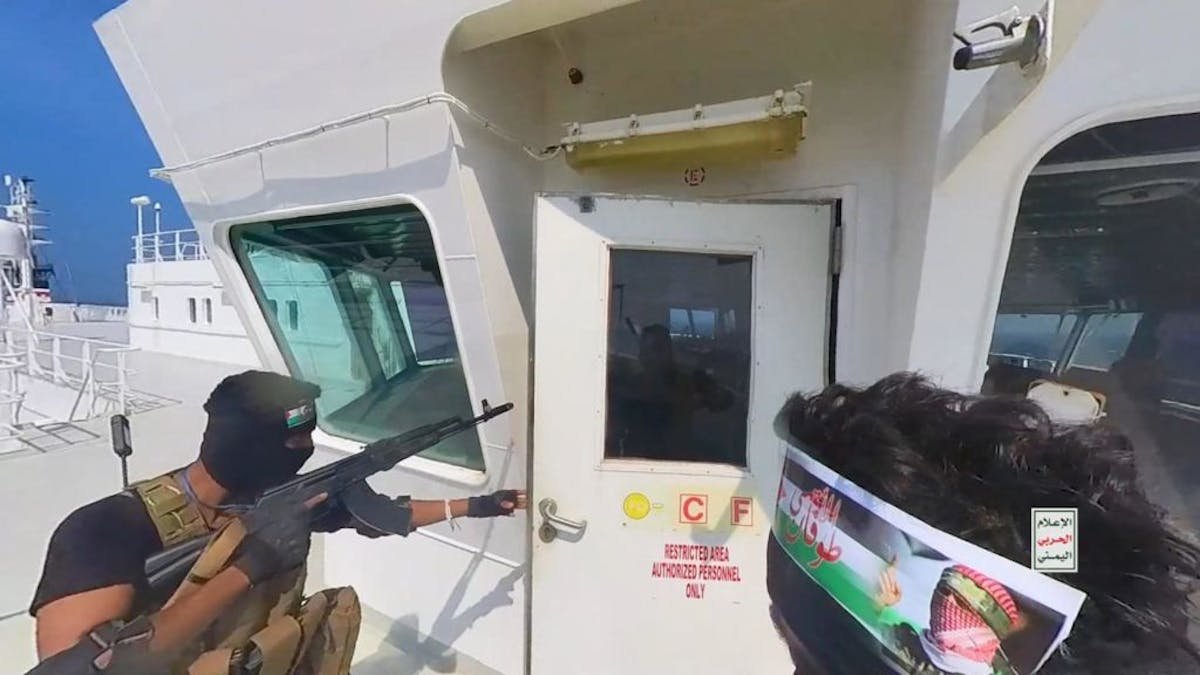
Yemen’s Houthi militants have announced a maritime blockade against Saudi Arabian vessels in the Red Sea, a provocative move that could draw the Iran-backed group more deeply into the expanding U.S.-Iran conflict while jeopardizing a crucial global energy corridor.
The declaration, made Monday, marks a significant shift for Yemen, which had largely remained on the sidelines during five months of escalating tensions between Washington and Tehran. The Houthis control substantial territory in Yemen, including strategic areas along the Bab al-Mandab Strait, a narrow waterway connecting the Red Sea to the Gulf of Aden.
The announcement raises immediate concerns about disrupted oil and gas shipments through yet another Middle Eastern chokepoint. With the Strait of Hormuz already heavily affected by the U.S.-Iran confrontation, a Red Sea blockade could compound pressure on global energy markets.
From Civil War to Regional Proxy Conflict
The Houthis, originating from Yemen’s northern highlands, seized the capital Sanaa over a decade ago with Iranian support. Their takeover prompted Saudi Arabia to launch a military intervention in 2015 aimed at restoring the internationally recognized government, triggering a devastating civil war. A 2022 ceasefire brought relative calm, freezing the conflict into an uneasy stalemate.
That fragile peace shattered last week following a disputed incident at Sanaa’s main international airport. The Houthis accused Saudi Arabia of striking the facility after an Iranian plane attempted to land there. The aircraft was carrying a Houthi delegation returning from Tehran, where they had attended the funeral of Iran’s slain supreme leader, Ayatollah Ali Khamenei.
Yemen’s Saudi-backed government claimed responsibility for the airport strike, asserting the Iranian plane was “carrying personnel and military dual-use equipment.” However, the government lacks a functional air force and relies heavily on Saudi military capabilities for any air operations.
In retaliation, the Houthis struck Abha airport in southern Saudi Arabia, marking the first direct attack on Saudi territory by the group since early 2022. Houthi leader Abdul Malik al-Houthi had previously warned that all Saudi oil and energy infrastructure would become legitimate targets if Riyadh escalated militarily.
Tehran’s Regional Leverage
Regional analysts interpret the Red Sea threat as part of Iran’s broader strategy in its confrontation with the United States. Ahmed Nagi, a Yemen analyst at the International Crisis Group, suggested the move signals Tehran’s diverse array of pressure points.
“I think the message from Iran is: Don’t assume our leverage is limited to the Strait of Hormuz,” Nagi said. “We also have an ally that can threaten the Bab al-Mandab if needed.”
The Houthis have demonstrated their capacity to disrupt Red Sea shipping before. During the two-year Gaza war that began in late 2023, they targeted commercial vessels using drones, missiles, and hijackings, driving up insurance costs and creating uncertainty in global shipping markets.
Economic Stakes
The potential blockade carries significant economic implications, particularly for Saudi Arabia. According to maritime data firm Kpler, the kingdom currently exports more than 3.6 million barrels of oil and related fuels daily through Red Sea routes, with most shipments destined for Asian markets.
Yasir al-Rumayyan, chairman of Saudi Arabia’s state oil company, has described the ability to use Red Sea export terminals as a “lifeline” for the country’s economy, especially with the Strait of Hormuz compromised. A sustained Houthi campaign could affect over 3 percent of the global oil market.
Farea Al-Muslimi, a research fellow at Chatham House, highlighted the Houthis’ proven ability to create economic disruption. “The Red Sea is always an easy way in which they can make the world bleed,” Al-Muslimi said. “The Houthis are banking on insurance costs going up and panic among the global shipping industry like what happened during the war in Gaza.”
Responses and Warnings
The Saudi-led coalition has vowed to respond decisively to any threats against maritime traffic. Coalition spokesman Turki al-Malki stated the alliance would act “swiftly and firmly” against Houthi interference with transiting vessels.
Yemen’s defense minister, Taher al-Aqili, said the internationally recognized government’s military forces stand prepared “to end the Houthi coup.” Exiled president Rashad al-Alimi urged residents in Houthi-controlled areas to “align themselves around the state.”
Iranian Arms Pipeline
The confrontation unfolds against a backdrop of persistent Iranian efforts to arm the Houthis with increasingly sophisticated weaponry. According to the Daily Wire, U.S. Central Command praised Yemeni National Resistance Forces in July 2025 for intercepting the largest seizure of Iranian advanced conventional weapons in their history.
The cache exceeded 750 tons and included hundreds of advanced cruise, anti-ship, and anti-aircraft missiles, along with warheads, drone engines, air defense equipment, radar systems, and communications gear. Manuals accompanying the weapons were written in Farsi, and many systems originated from a company affiliated with Iran’s Ministry of Defense.
CENTCOM Commander Gen. Michael Erik Kurilla described Iran as “the most destabilizing actor in the region” and emphasized that limiting Iranian support to the Houthis remains critical for regional security, stability, and freedom of navigation.
The Houthis have not yet detailed their enforcement mechanisms for the announced blockade, leaving uncertainty about whether the declaration represents a genuine operational threat or primarily serves as psychological and economic pressure.
Source: www.dailywire.com — https://www.dailywire.com/news/a-familiar-terrorist-foe-may-be-about-to-enter-the-iran-war