
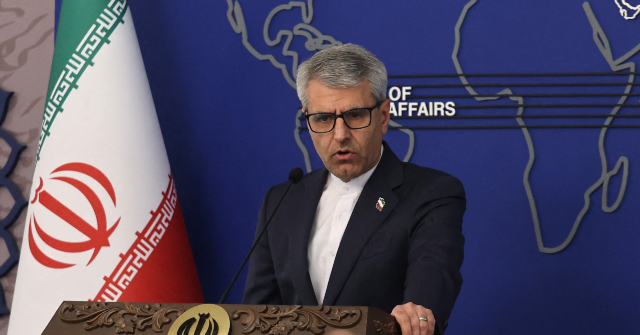
Iran has issued a stark warning to South Korea, threatening “serious consequences” if Seoul follows through on reported plans to send military assets to help secure the Strait of Hormuz against Iranian aggression. The threat, delivered Monday by Iranian Foreign Ministry spokesman Esmaeil Baqaei on social media platform X, escalates a diplomatic standoff that has drawn in Washington and tested Seoul’s balancing act between its alliance with the United States and its economic ties to the Middle East.
Baqaei opened his message by praising the 64-year history of “mutual respect” and “friendly relations” between Iran and the Republic of Korea, but quickly pivoted to a stern admonition. He framed Iran’s current confrontation as a defensive struggle against American “aggression” and “war crimes,” and warned that any country maintaining a military presence or participating in operations in the Persian Gulf and the Strait of Hormuz would be seen as “directly supporting the perpetrators of the aggression.”
“It will lead to serious consequences,” Baqaei wrote.
He concluded by urging South Korea not to “yield to America’s pressure and threats” or become “complicit in the aggressive acts and horrific crimes against the great Iranian people.”
The warning comes days after the South Korean government acknowledged it is weighing a potential deployment to the Strait of Hormuz, one of the world’s most vital maritime chokepoints for oil shipments. Speaking on Friday, a South Korean official said “nothing has been decided,” but confirmed that options under discussion include sending troops, maritime patrol aircraft, and a support ship to help protect international shipping against Iranian piracy and terrorism.
South Korea’s deliberations follow public frustration from President Donald Trump, who told reporters weeks ago that Seoul had responded “no thanks” to his request that it join U.S.-led efforts to denuclearize Iran. Trump’s remarks put South Korea on the defensive, and the government of President Lee Jae-myung — who has sought to maintain close ties with Washington while also preserving economic relations with Tehran — is reportedly considering what “contributions” it could make to repair the relationship.
A Vulnerable Ally
The Iranian threat was amplified over the weekend by Mohammad Marandi, an Iranian academic with close ties to the regime, who told the Arab news service Al Mayadeen that South Korea’s assets across the Persian Gulf region would be exposed to Iranian retaliation.
Marandi noted that South Korea has military and economic assets in Saudi Arabia, Bahrain, Kuwait, the United Arab Emirates, and Qatar — all of which, he said, would be vulnerable to Iranian terror attacks if Seoul chooses to participate in operations against Iran.
“If the South Koreans participate in this war against Iran, Iran will see it as the enemy,” Marandi said.
He also mocked the prospect of a symbolic South Korean deployment, questioning what a ship or two could accomplish in the strait. “What is a ship or two from South Korea going to do? It’s foolish,” he scoffed.
“Iran will not only target the South Korean military assets, but Iran could easily destroy their economic assets across the Persian Gulf region,” Marandi boasted. “The Koreans are very vulnerable to Iran. Iran can hurt them very badly.”
Stakes in the Strait
The Strait of Hormuz, a narrow waterway between the Persian Gulf and the Gulf of Oman, handles roughly a fifth of global oil consumption, making its security a top international concern. Iran has repeatedly threatened to disrupt shipping through the strait in response to U.S. pressure, and recent attacks attributed to Iranian forces have heightened fears of a broader conflict.
For South Korea, the decision is a delicate one. The country relies heavily on energy imports, much of which pass through the strait, and it maintains significant economic interests in the region, including construction contracts and energy investments in Gulf states. At the same time, its alliance with the United States remains the cornerstone of its national security, and Seoul has come under increasing pressure to contribute to U.S.-led efforts in the Middle East.
Analysts say South Korea’s potential deployment — which appears to be more about political signaling than military muscle — could be an attempt to satisfy Washington without provoking Tehran. But Iran’s warning suggests that even a nominal presence could carry serious risks.
The Iranian threat also raises the stakes for the broader U.S. campaign against Iran, which has included economic sanctions, military posturing, and diplomatic pressure. The Trump administration has sought to build a coalition of nations to secure the strait and counter Iranian aggression, but has faced reluctance from allies wary of being drawn into a conflict.
South Korea’s final decision remains uncertain, and officials in Seoul have stressed that no deployment has been approved. But the exchange between Tehran and Seoul underscores the difficult choices facing U.S. allies in a region where tensions show no sign of abating. For now, all eyes are on Seoul to see whether it will heed Iran’s warning or risk the consequences.
Source: www.breitbart.com — https://www.breitbart.com/national-security/2026/09/07/iran-threatens-south-korea-with-serious-consequences-for-deploying-to-strait-of-hormuz/