
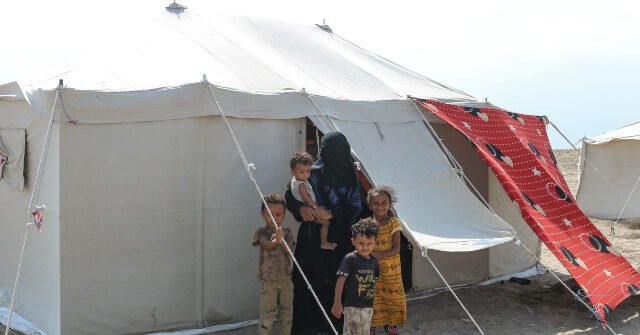
More than 3,000 Yemenis have crossed the Gulf of Aden into Djibouti since the start of September, part of a displacement wave of over 82,000 people driven by the Houthi offensive in their home country, according to the U.N. International Organization for Migration. The arrivals are landing in a small nation that was already hosting thousands of refugees from Somalia and Ethiopia.
The narrowest point of the crossing is the Djiboutian port town of Obock, roughly 12 nautical miles from the Yemeni coast. In quieter years, Obock served as a staging point for Africans traveling the other direction — through Yemen and on to the wealthier Gulf Arab states. That traffic reversed sharply last week, when more than 1,400 Yemenis reached Obock in a single day, according to Breitbart’s account of the crisis.
A Route That Flipped Direction
Sources in Yemen told Al Jazeera that entire villages along the Red Sea coast were emptied as Houthi forces advanced. Some residents fled inland; many others followed the coastline and boarded small boats for Obock. A large share of those arriving in Djibouti are women and children, carrying few supplies or possessions.
The IOM said the emergency has been compounded by the roughly 65,000 Somali and Ethiopian refugees who had been sheltering in Yemen and are now displaced a second time. “Our resources are very, very, very limited and our stocks will be depleted very soon,” Abdusattor Esoev, the agency’s mission chief for Yemen, warned.
Pregnant Women and Malnourished Children
Francesco Galtieri of the U.N. Population Fund said Friday that hundreds of the new arrivals are pregnant women, describing a crisis that is “growing by the hour.”
The speed of the influx caught humanitarian teams off guard. “This was a surprise, it took us by storm. First it was small numbers, around 50 a day. Then 1,000 people crossed on September 13,” UNICEF representative Ramatou Toure told The National on Monday.
Toure said the heavy presence of pregnant women and children means aid workers are “dealing with the most vulnerable part of the population.” Refugees coming ashore are often exhausted and dehydrated, she said, and many children are severely malnourished. Fights over scarce food and water have been reported inside the camps.
UNICEF is now planning for as many as 10,000 arrivals over the next few months and has requested $2.7 million in additional funding to cover the next three months.
A Camp Built for 5,000
The U.N. refugee agency, UNHCR, said some Yemenis “describe having to leave family members behind,” while others “have been unable to flee due to insecurity and shortages of fuel for boats.”
Djibouti’s main coastal refugee village, Markazi, was designed to hold 5,000 people and already housed 2,700 Yemenis and 1,500 Eritreans before the latest wave began. UNHCR warned that existing school facilities cannot accommodate all the newly arrived children, and that overcrowding could raise the risk of communicable diseases, including scabies and diarrhoeal illness.
Funding is another constraint. UNHCR said its Djibouti operation is “only 15% funded,” while its work inside Yemen is “just 18% funded” — shortfalls that leave the agencies absorbing a sudden maritime exodus on budgets built for quieter times.
Source: www.breitbart.com — https://www.breitbart.com/africa/2026/09/21/djibouti-struggles-process-thousands-yemeni-refugees-fleeing-houthis/