
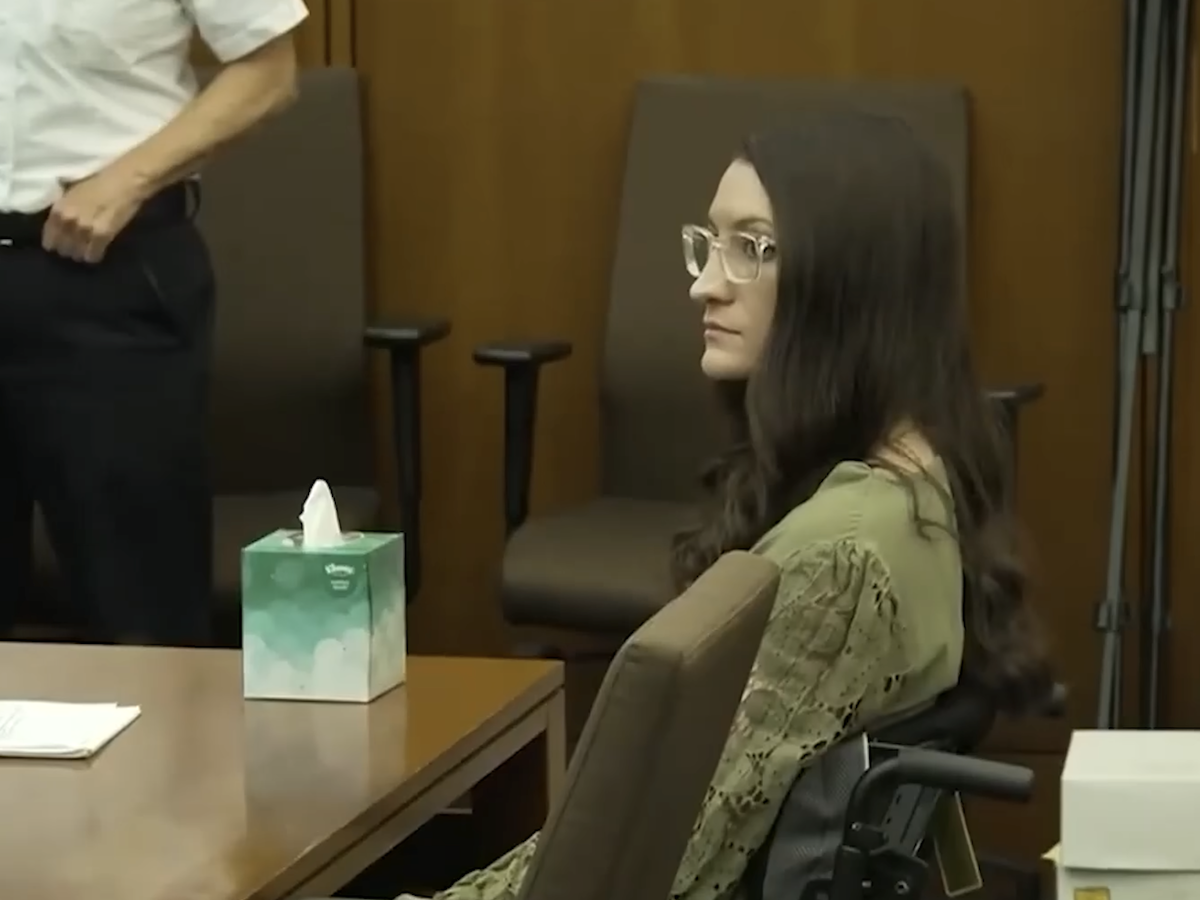
The murder trial of Lindsay Clancy, the Massachusetts mother accused of strangling her three young children, has entered a new phase of jury deliberations—but a growing chorus of social media users is questioning her guilt, a trend that one commentator says is being fueled by TikTok.
In a piece published Wednesday, The Federalist’s [Author Name] highlights the case of Clancy, who faces charges for the 2023 deaths of her three children. According to the article, the defense has not disputed that Clancy killed the children—using rubber exercise bands—but has argued she suffered from mental illness at the time.
Despite this, the Federalist piece notes that many on TikTok are pushing alternative theories, including that Clancy’s husband is the real culprit. The author writes that a friend who had been following the trial on TikTok expressed doubt about Clancy’s guilt, suggesting the timeline of events ‘doesn’t add up’ and that the defense was actually targeting the husband.
The author, a self-described true crime enthusiast, argues that this phenomenon isn’t new. The piece recalls the 2023 trial of Alex Murdaugh, the South Carolina lawyer convicted of murdering his wife and son, where TikTok users also floated conspiracy theories despite Murdaugh’s admission that he had lied about his whereabouts at the time of the killings.
In the Clancy case, the Federalist piece emphasizes that Clancy herself has admitted to killing her children and that no other suspect has been named by authorities. Yet, TikTok posts continue to question her guilt, with some users suggesting she is being framed.
‘When otherwise rational people are seduced by TikTok posters into fantasy scenarios about an obvious criminal being framed, to the extent that even a woman who admits she killed her children is now viewed as the victim, there’s a crisis at hand,’ writes the author.

The Federalist piece is a sharp critique of the role of social media in shaping public perception of high-profile trials, arguing that TikTok’s format—short, decontextualized clips—can easily mislead viewers.
On Tuesday, a judge instructed the jury in the Clancy case to continue deliberating after they failed to reach a verdict in four days. The jury is expected to resume deliberations, with legal experts saying the case could hinge on whether the defense’s mental illness argument convinces jurors that Clancy was not criminally responsible.
Clancy, who attempted suicide after the alleged killings, has pleaded not guilty by reason of insanity, according to court records. Her trial has drawn intense media attention, and the Federalist piece acknowledges that even mainstream cable news has covered the case, but it argues that TikTok’s influence is particularly problematic.

The author’s central argument is stark: if TikTok is causing people to side with killers, then those people ‘cannot be trusted to look at TikTok.’
The piece has sparked debate online, with some defending TikTok as a platform for alternative perspectives, while others agree that unregulated true crime commentary can spread misinformation.
Neither Clancy’s defense team nor prosecutors have commented on the Federalist article. The trial continues, and the jury’s verdict will be closely watched by those on both sides of the social media debate.
Source: thefederalist.com — https://thefederalist.com/2026/09/02/if-you-have-mixed-feelings-about-lindsay-clancys-guilt-youre-too-stupid-and-broken-to-be-on-tiktok/