
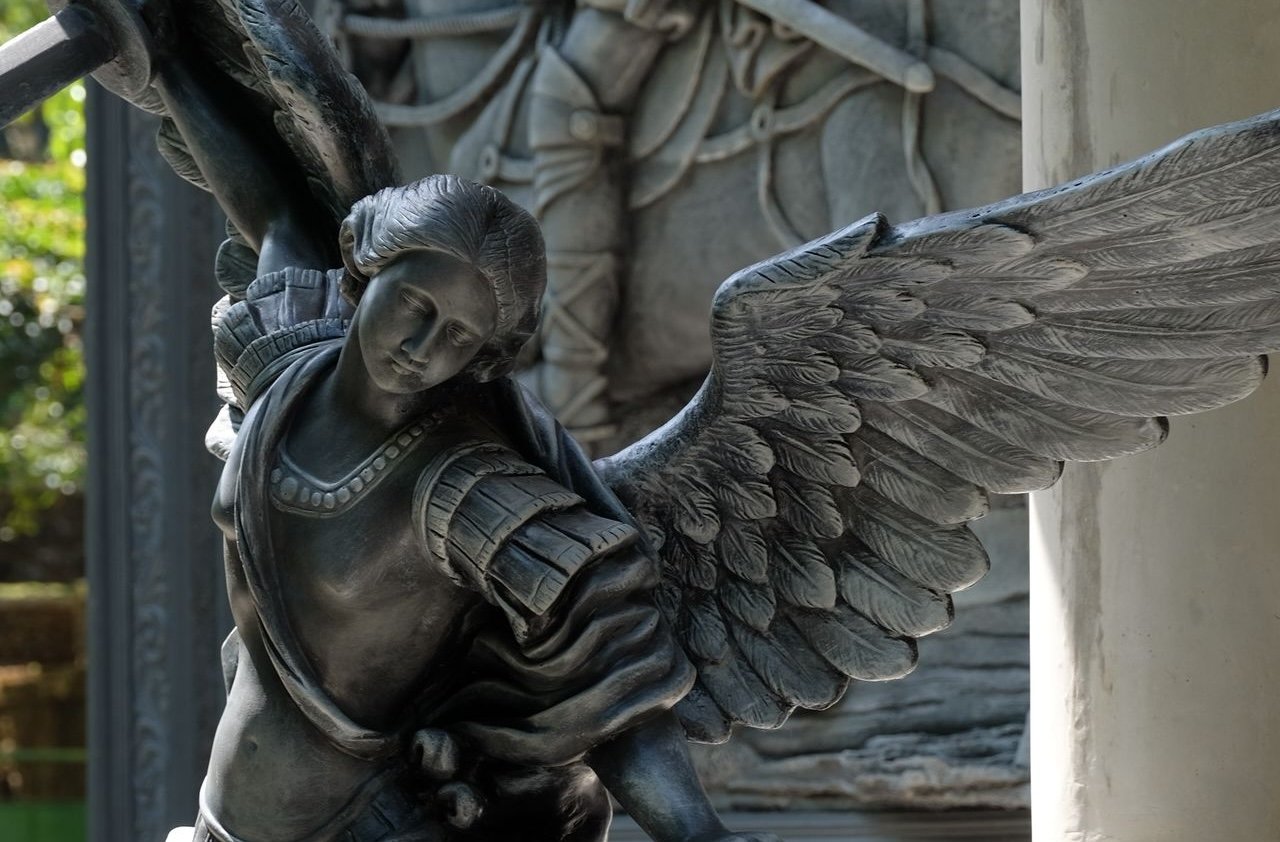
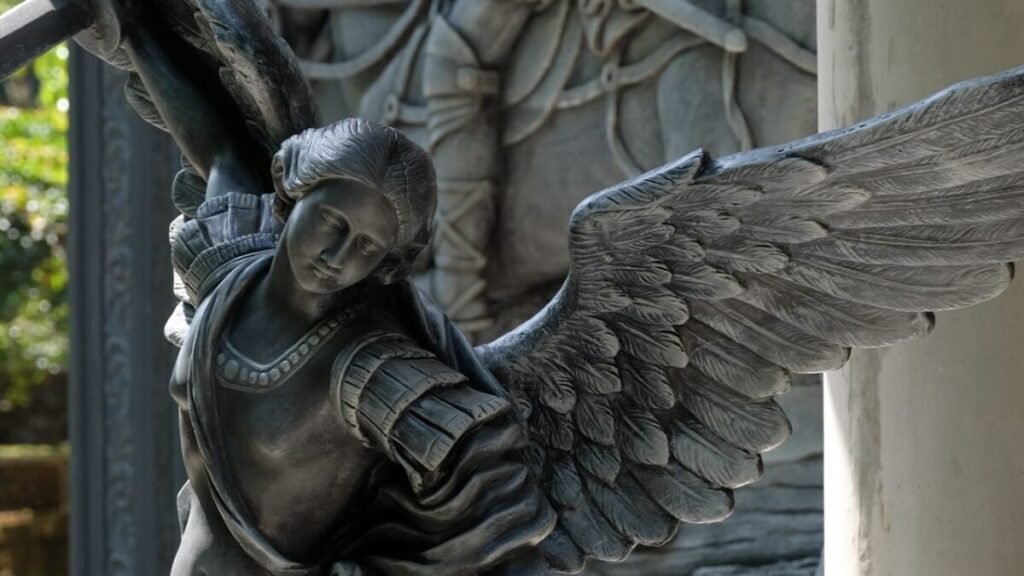
Massachusetts’ highest court has ruled that the city of Quincy cannot install two bronze statues of St. Michael the Archangel and St. Florian outside its new public safety building, holding that the statues could be seen as an unconstitutional endorsement of religion. The decision, issued by the Supreme Judicial Court, has sparked sharp criticism from religious liberty advocates who warn it could have far-reaching implications for public memorials across the country.
The statues were commissioned by Quincy at a cost of $850,000 to honor the city’s police officers and firefighters. Mayor Thomas Koch selected the two saints because they have long been invoked by those in dangerous professions, the court’s opinion noted, but it nonetheless concluded that the statues—being new, large, and closely tied to Catholicism—could convey “implicit government support” for that faith and thus “subordination of other religions.”
The ruling did not accuse the city of coercing anyone into worship, funding a church, or discriminating against residents. The violation, according to the court, was simply that the statues might remind someone of Catholicism. That reasoning, critics say, treats religious expression as inherently suspect the moment it appears on public property, a stance they argue is not neutral but hostile to religion.
A Shift Away from Federal Precedent?
The decision appears to revive a legal framework that the U.S. Supreme Court has moved away from in recent years. For more than half a century, courts applied the three-part Lemon test to any law touching religion, examining whether it had a secular purpose, whether its primary effect advanced or inhibited religion, and whether it fostered excessive government entanglement. In practice, that test often treated minor public acknowledgments of religion as constitutional threats.
The federal courts have since abandoned Lemon in favor of a history-and-tradition inquiry that takes the nation’s religious heritage into account. The Massachusetts ruling, critics argue, resurrects Lemon’s spirit under a different name, using the state constitution to create a test that singles out religious imagery for special scrutiny.
In an amicus brief supporting Quincy, Stanford Law’s Michael McConnell and Emory’s John Witte Jr. warned the court against exactly this outcome. They argued that nothing in the text of the Massachusetts Declaration of Rights supports grafting onto it a test the U.S. Supreme Court has deemed unworkable.

Broader Implications for Religious Memorials
The ruling’s logic could extend far beyond two statues in Quincy. Martin Luther King Jr., an ordained Baptist minister who led the Southern Christian Leadership Conference, often framed the civil rights struggle in theological terms rooted in the concept of the imago Dei. Statues of King stand in cities across the country. Under the Massachusetts court’s reasoning, a freshly installed statue of King—publicly identified as “Reverend”—might be challenged as endorsing Christianity or a particular reading of Scripture.
The decision also provides fresh legal ammunition for campaigns against religious figures in other states, including California, where statues of Junipero Serra, a Catholic missionary, were toppled in Los Angeles and San Francisco in 2020, and removed by vote of the Ventura City Council. The ruling, critics say, dresses what is essentially religious discrimination in the language of constitutional caution.
Quincy itself made the point that America has long commemorated religious figures in public spaces without treating that as establishment of religion. Stained glass windows in old courthouses, the National Cathedral hosting state funerals, and Ten Commandments friezes on the Supreme Court’s own walls all reflect a founding-era understanding that acknowledging religion’s role in civic virtue is not the same as creating a state church. The Massachusetts high court, critics say, brushed past that tradition in favor of a test that asks whether a statue “might convey” the wrong message to the wrong observer—a test with no limiting principle.

A Clash with Changing Cultural Attitudes
The ruling comes at a time when younger generations appear to be embracing religious identity in unexpected ways. Recent surveys suggest Gen Z, raised in the most secular environment in American history, is increasingly drawn to Catholic identity. Historians and legal scholars across the ideological spectrum also increasingly acknowledge that religious conviction was not incidental to the republic’s creation but constitutive of it.
The decision has been condemned by The Federalist, which reported on the ruling and noted that the ACLU, which supported the challenge, has gained a powerful new tool for scrubbing religious references from public life. The outlet argued that the court “invented an injury nobody has suffered,” as no one was coerced, funded a church, or discriminated against.
Supporters of the ruling, however, maintain that the establishment clause requires government neutrality toward religion, and that large, permanent displays of particular religious symbols on public property can reasonably be seen as endorsing one faith over others.
The practical effect of the ruling is that Quincy will have to find another way—perhaps a secular one—to commemorate its first responders. But the broader question remains: how far can governments go in honoring figures whose religious identity is inseparable from their contributions? If courts cannot distinguish between commemoration and establishment, the real loss, as The Federalist put it, will be “every city’s ability to honor its history honestly—saints, ministers, missionaries, and all.”
Source: thefederalist.com — https://thefederalist.com/2026/09/01/massachusetts-court-says-town-cant-build-statues-of-christian-heroes-because-theyre-christian/