
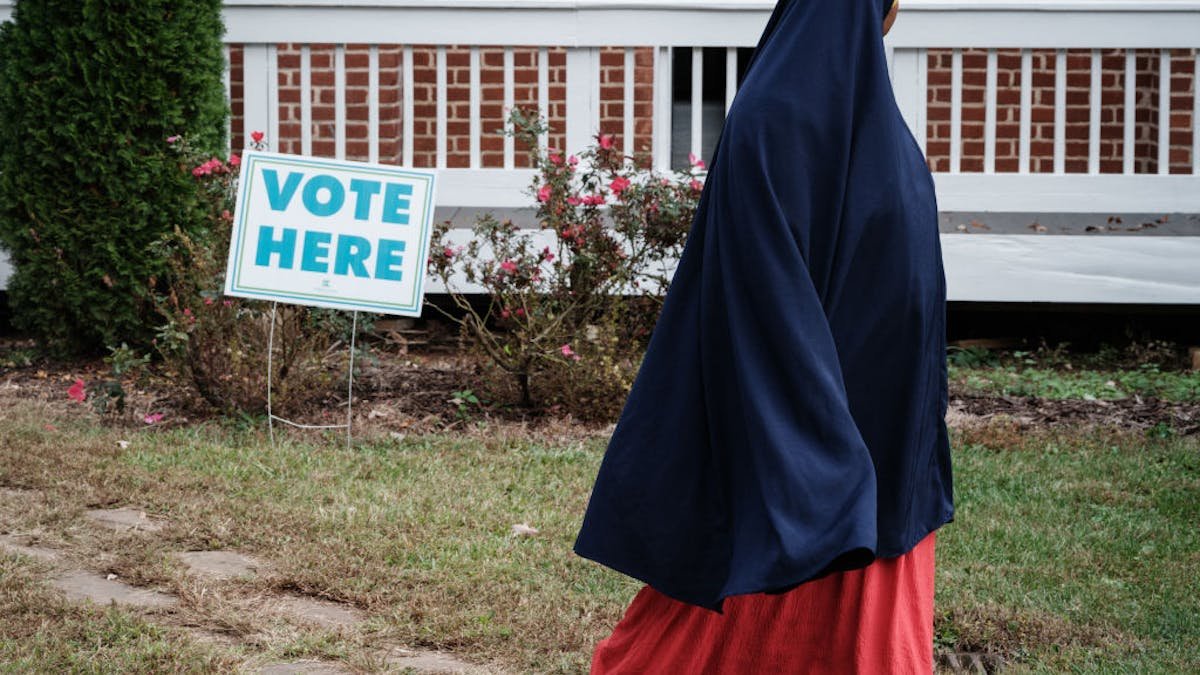
The number of Muslims holding elected office in the United States has hit a historic high, with 255 now serving at every level of government, according to a new tally from the Council on American-Islamic Relations (CAIR). The group says the milestone reflects a community that is more engaged and organized than ever before — but a new investigative report paints a far more contentious picture, alleging that the surge is backed by a coordinated effort to wield political power in ways that critics say threaten the Constitution.
CAIR’s latest directory shows that the vast majority of these officials are concentrated at the local level. Ninety-eight hold city council seats, representing 38.4% of the total, while 63 serve on local school boards. The directory also counts 18 state-level lawmakers, 11 mayors, and 18 judges spread across 26 states. At the federal level, four Muslims hold U.S. House seats: Reps. Rashida Tlaib (D-MI), Ilhan Omar (D-MN), Andre Carson (D-IN), and Lateefah Simon (D-CA).
“This record-breaking number represents far more than a statistic. It reflects an American Muslim community that is increasingly engaged, organized and committed to serving our nation,” CAIR Executive Director Nihad Awad declared in a statement reported by The Washington Times.
The surge comes ahead of the 2026 midterms, and Awad framed the numbers as a “powerful message” against anti-Muslim rhetoric. Nearly two-thirds of the elected officials identified in the directory are entrenched at the local level, a pattern that some analysts say could reshape community politics in ways that are only beginning to be understood.
But an investigation by RealClearInvestigations, published in mid-August, offers a starkly different explanation for the rise. According to the report, the political wave is backed by a potential $140 million annual war chest, fueled in part by a new religious ruling that, for the first time, unlocks Muslim charitable giving — known as zakat — for political purposes.
Earlier this year, the Fiqh Council of North America, led by Sheikh Yasir Qadhi, issued a fatwa in coordination with the Assembly of Muslim Jurists of America that declared: “[G]iving one’s zakat for influencing political causes is warranted.” The stated goal, according to the ruling, is to “empower” Muslim communities in America — but the report claims the specific objective is to fund the campaigns of politicians who oppose Israel and support policies such as criminalizing criticism of the Prophet Muhammad and Islam in general.

The investigative report also highlights specific examples of this new political muscle. In Michigan, Democratic senatorial candidate Abdul El-Sayed reportedly secured his primary win with money from donors tied to Muslim Brotherhood front groups. In New Jersey, Democratic congressional nominee Adam Hisham Hamawy was revealed to have maintained past ties to the “Blind Sheikh” behind the 1993 World Trade Center bombing.
At the local level, the report points to rapidly shifting enclaves. Cities like Hamtramck and Dearborn, Michigan, now feature majority-Muslim city councils, loudspeaker calls to prayer, halal-only school mandates, and altered noise ordinances. In New York, CAIR was reportedly critical in organizing financial support and getting out the vote for Mayor Zohran Mamdani, and the group now has former employees in top posts inside his administration.
Texas and the ‘No-Go Zone’ Debate
Down in Texas, concerns are erupting over massive “Sharia-compliant” housing developments. Projects like the 400-acre “EPIC City” outside Dallas have sparked outrage among residents and lawmakers who worry about the creation of self-segregated communities that operate outside traditional American legal norms.

Rep. Chip Roy (R-TX) is among the most vocal critics, warning that America is moving toward the same European-style “no-go zones” that have fractured nations like France and Germany. While defenders dismiss such concerns as Islamophobia, national security experts have warned that using the ballot box to push Sharia-conforming policies poses a direct threat to the U.S. Constitution.
The tension is not new, but the scale is. The CAIR directory represents a doubling of Muslim political representation compared to a decade ago, according to the group’s own data. And with the 2026 midterms on the horizon, both sides are gearing up for a fight over what this rise means for the future of American politics.
Supporters of the movement argue that Muslims are simply exercising the same civic rights as any other religious or ethnic group, and that their growing presence in office is a sign of healthy democratic participation. They point to the diversity of Muslim officials — from progressive Democrats to conservative Republicans — and argue that the community’s political engagement is a normal part of the American melting pot.
But the RealClearInvestigations report suggests that the driving force behind this surge is not grassroots activism alone. It alleges a coordinated strategy, backed by a legal ruling that allows religious charity to flow into political campaigns, and aimed at electing candidates who will advance an Islamist agenda. The report cites specific policy goals, including criminalizing blasphemy laws and opposing Israel, as evidence of a broader ideological project.
For now, the election results speak for themselves. From city councils to Congress, Muslims are winning at the ballot box. Whether that represents the flowering of American pluralism or the creeping advance of a foreign ideology is a question that is likely to dominate political discourse in the run-up to 2026.
The Washington Times, which first reported on CAIR’s announcement, noted that the group’s executive director celebrated the numbers as proof that Muslims are stepping forward to “serve their neighbors.” But the competing narrative from RealClearInvestigations raises a more unsettling possibility: that the rise of Muslim political power is not just about representation — it is about transformation.
Source: www.dailywire.com — https://www.dailywire.com/news/the-disturbing-rise-of-muslim-political-power-across-america