
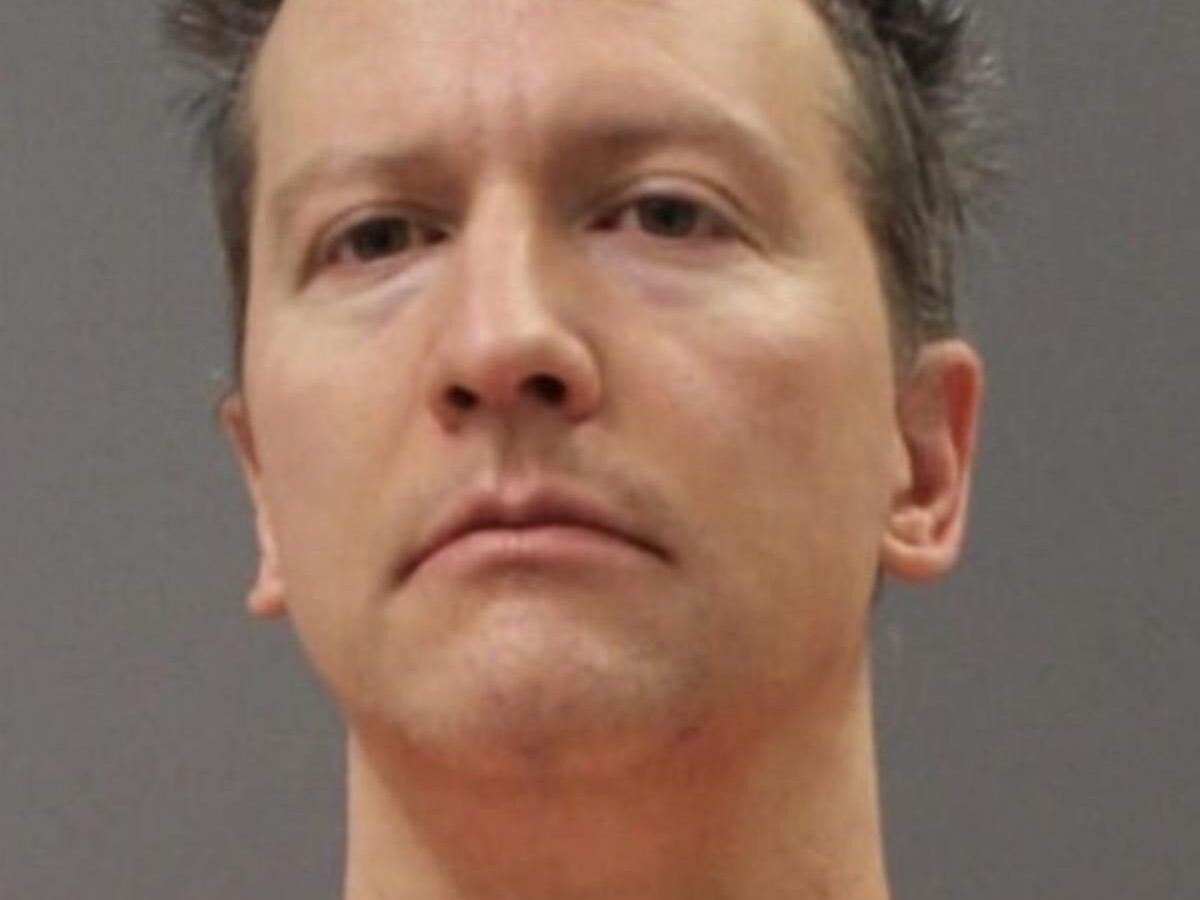
Nearly six years after George Floyd’s death sparked a summer of upheaval, a conservative commentator is asking readers to sit with an uncomfortable question: If we believe no innocent person should be imprisoned, can we justify keeping Derek Chauvin locked up to prevent possible riots?
In a September 7, 2026, essay for American Thinker, Iowa-based writer DC Larson lays out what he calls a “thought exercise based on principle and morality” — not legal expertise, he admits, but a moral audit of Chauvin’s conviction and the forces that surrounded it.
The case for doubt
Larson, who is not an attorney, argues that “cause for fair-minded men to question one-time officer Chauvin’s culpability in the death of George Floyd has always existed.” He points to a cluster of facts that, in his view, have been overshadowed by the emotional weight of the moment.
Among them: Floyd’s criminal history, which Larson notes included an incident involving a gun aimed at a pregnant woman — details he implies complicate Floyd’s elevation to martyrdom. He also cites the first coroner’s report, which attributed Floyd’s death in part to fentanyl intoxication and recent methamphetamine use, though a second report commissioned by Floyd’s family did not include those factors. Both reports, Larson acknowledges, classified the death as homicide by asphyxiation.
Larson further notes that Floyd reportedly told officers he had trouble breathing as soon as he exited his vehicle — before any officer made contact with him. And he revisits a contested aspect of the case: the claim that the knee-on-neck technique Chauvin used was recommended in official training he received, and that a police department representative who testified otherwise was not truthful.
“That bears reconsideration,” Larson writes.

The cost of principle
The essay’s central tension emerges when Larson weighs what justice requires against what justice might unleash. He recalls the summer of 2020 vividly: “Mass riots roiled the nation; cities burned; attacks on passersby were perpetrated; mobs filled avenues chanting for police deaths; unscrupulous politicians leapt atop the awful tide.” He puts the damage in the billions of dollars.
Given that, Larson posits a grim trade-off: If Chauvin is freed or granted a new trial, similar chaos could follow. “Lest such terror again be reality, Chauvin’s liberty must not be restored to him,” he writes — before immediately pulling back.
“Wait, though — that means keeping a man possibly innocent of any offense behind bars. And that would be a roaring violation of principle.”
That tension, Larson suggests, is the heart of the matter. A society that claims to value the presumption of innocence cannot selectively abandon it to avoid unpleasant consequences.
A possible middle path?
Larson floats an alternative: perhaps Chauvin could be found guilty of a lesser offense, if asphyxiation is viewed as only one of several contributing factors. But he does not rest there.
“We can control only our own actions,” he writes. “We exercise no complete control over those that others choose.” Therefore, he concludes, a just society must grant Chauvin a new and wholly open trial — even if he is held in custody while awaiting the outcome.

“Yes, sadly, fresh violence and arson are 99.99% likely,” he writes. “But the system, and law-abiding citizens, would bear no direct responsibility.”
His conclusion is deliberate and uneasy: “A reasonable man could judge that violent, mass unlawful reaction by others would be likely. But an innocent man should not be wrongly punished by us to forestall possible wrongs. Period.”
Larson admits he is “not entirely comfortable” with his own reasoning.
Context and pushback
The piece arrives at a moment when public debate about the Floyd case and Chauvin’s conviction has cooled but not settled. Chauvin was convicted of murder and manslaughter in 2021, and his appeals have revolved around issues including jury bias and the adequacy of his legal representation.
Larson’s essay is deliberately provocative — an opinion piece that invites readers to separate the question of Chauvin’s guilt from the political uses of his case. It also leans heavily on facts that have been disputed or contextualized in court, such as the training-defense claim, which prosecutors and expert witnesses challenged during the trial.
Critics are likely to argue that Larson’s framing gives undue weight to selective details and underplays the evidence jurors heard, including video of Chauvin’s knee on Floyd’s neck for more than nine minutes. Supporters may see the piece as a rare willingness to question a conviction many treat as settled.
Either way, Larson’s underlying question is not really about Chauvin alone. It is about whether the justice system can withstand being used as a tool of social pacification — and whether principle, once compromised, can ever be fully restored.
Source: www.americanthinker.com — https://www.americanthinker.com/blog/2026/09/a-derek-chauvin-thought-exercise/